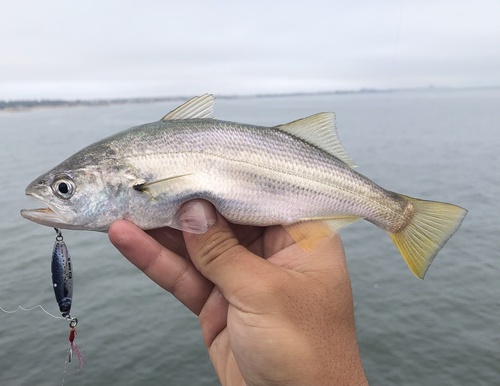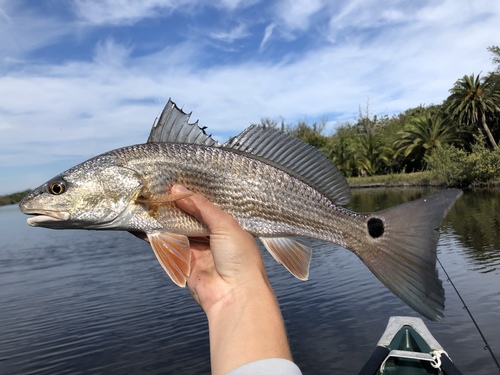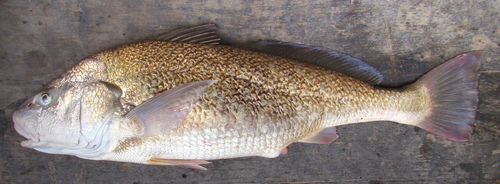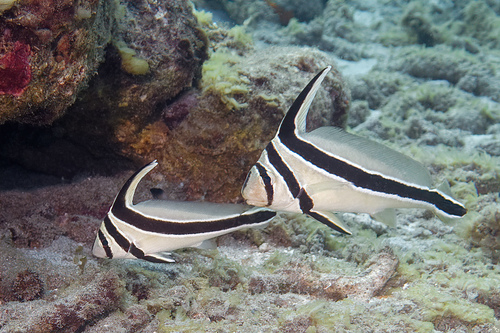
About Micropogonias undulatus (Linnaeus, 1766)
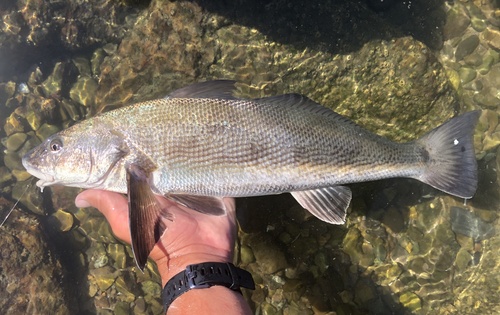
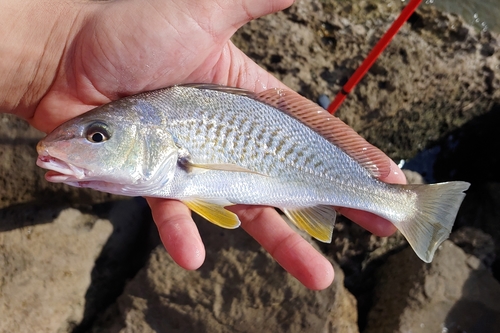
Description: The common name "croaker" describes the noise this fish produces by vibrating strong muscles against its swim bladder, which acts as a resonating chamber similar to a ball. The Atlantic croaker is the loudest species in the drum fish family. It is also called hardhead, while smaller individuals are called pin heads. During its spawning season, which runs from August to October, croakers develop a deep golden color, which is how the alternative name "golden croaker" originated. Starting in August, tiny young Atlantic croakers enter the Chesapeake Bay and move into low-salinity and freshwater creeks. For the winter, they travel to deeper sections of tidal rivers. Juveniles leave the bay alongside adults the following autumn. When fully grown at 2 to 3 years old, croakers measure between 18 and 20 inches in length and weigh 4 to 5 pounds at maximum, though the average adult weight is 1/2 to 2 pounds. The maximum recorded lifespan of this fish is up to 8 years. The Chesapeake Bay record Atlantic croaker, caught in August 2007 off New Point Comfort Lighthouse in Virginia, weighed 8 pounds 11 ounces and measured 27 inches long. Native Americans have traditionally used Atlantic croakers as food, and their remains have been found in shell middens. These fish are popular targets for recreational anglers.
Distribution and habitat: The Atlantic croaker is native to coastal waters of the western Atlantic Ocean. Its range extends from Massachusetts to Mexico, and includes the northern half of the Caribbean Sea, but it likely does not occur in the southern Gulf of Mexico or the Antilles. It is also thought to inhabit the coasts of southern Brazil and Argentina. It is most often found in bays and estuaries over sandy or muddy bottoms, where it feeds on polychaete worms, crustaceans, and small fish. Croakers visit the Chesapeake Bay from March through October, and can be found throughout the bay as far north as the Susquehanna Flats.