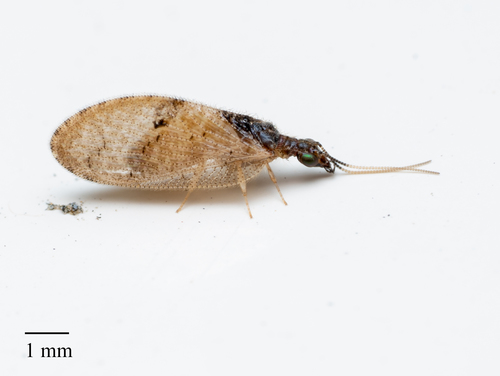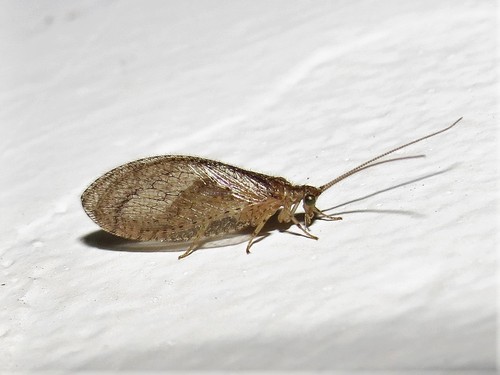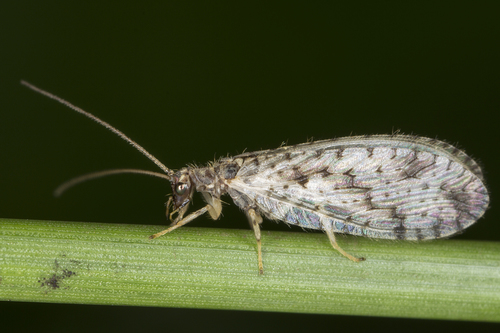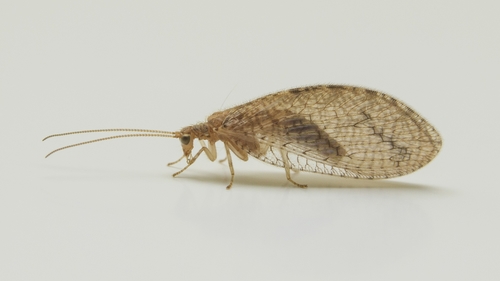
About Micromus tasmaniae (Walker, 1860)
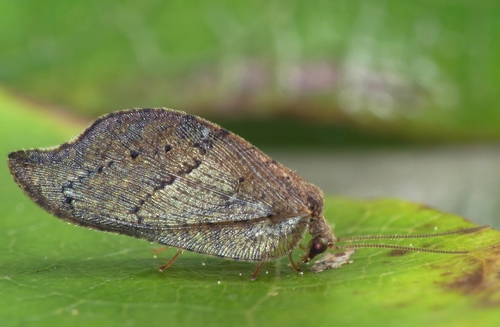
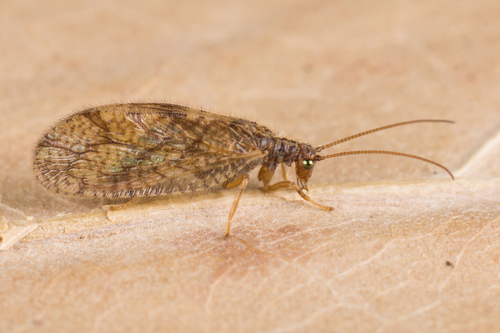
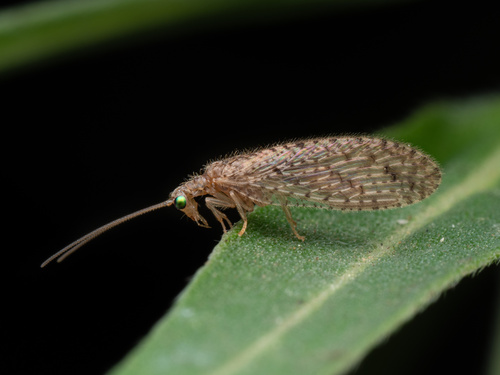
Adults of Micromus tasmaniae, the Tasmanian Brown Lacewing, measure 7.5–10 mm (0.30–0.39 in) in length and are typically nocturnal. During the daytime, both adults and larvae hide; larvae hide at the bases of plants. This lacewing’s lifespan is temperature dependent: higher temperatures produce shorter larval stages. The species breeds year-round and can survive at temperatures as low as 5 °C (41 °F). It typically has a brown body and clear wings, with a spotted pattern on its anterior wings that distinguishes it from Micromus bifasciatus, which has brown transverse bands on its wings. It feeds on nectar, aphids, and psyllids, and has specifically been observed feeding on aphids, especially spruce aphids. Micromus tasmaniae is widely distributed across Australia, and is likely the most common species of its type in both Australia and New Zealand. It has been established in New Zealand since at least 1869, and has been identified in remote New Zealand areas including the Chatham Islands, Auckland Islands, Antipodes Islands, and Kermadec Islands. This species has been found on alfalfa, and associates with a very broad range of plants and habitats. In contrast, Micromus bifasciatus is typically associated only with Podocarpus trees. The oval, white eggs of Micromus tasmaniae are most often laid on plant hairs and spider webs, positioned close to the prey that the adults feed on.