About Microlophus jacobii (Baur, 1892)
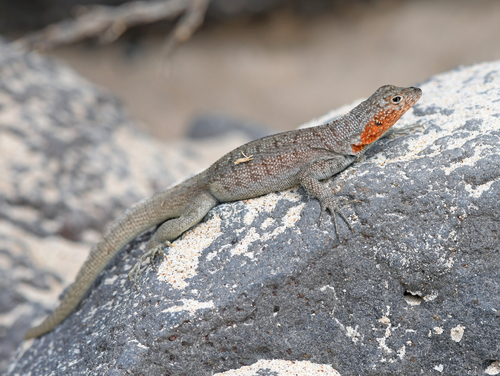
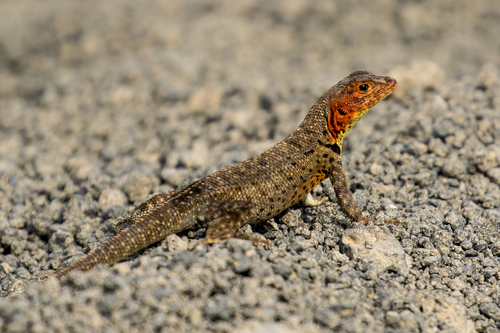
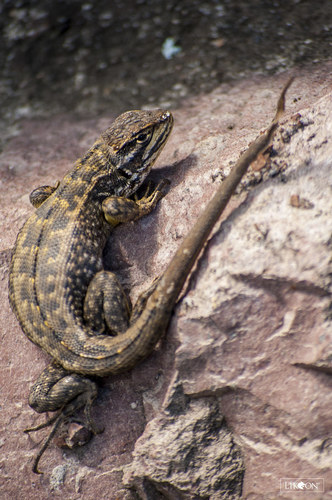
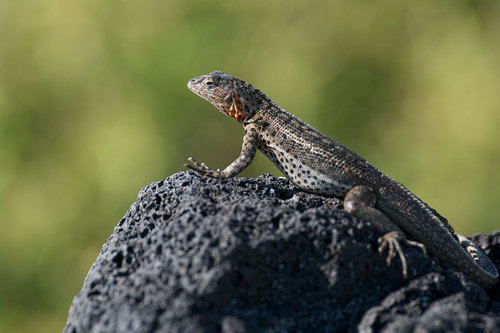
Microlophus jacobii, commonly known as the Santiago lava lizard, is a diurnal lizard species that is present year-round in its range. These lizards inhabit rocky volcanic areas, dry shrubland, and grassland on their native islands. To avoid midday heat, they typically shelter in shade during midday hours. They spend nights under the soil, among rocks, or within leaf litter. This species feeds on both plant material including leaves, fruit, and seeds, and insects. Native predators of the Santiago lava lizard include Thomas's racer, while invasive human-introduced threats include black rats. To escape predators, these lizards run and hide in rock crevices, and will also climb into the abandoned nests of Santiago Island giant tortoises. This species is endemic to Santiago, Rábida, Bartolomé, and six surrounding islets located in the central Galapagos archipelago. The entire global range of this species adds up to an estimated 463 km². Santiago lava lizards are oviparous. Females dig nests in sandy areas near rocks or vegetation, and lay 1 to 3 eggs per clutch. Females guard their nests to protect them from predators and other interfering females. During courtship, males perform push-up displays and fight with other males to claim and hold territory.