About Metaltella simoni (Keyserling, 1878)
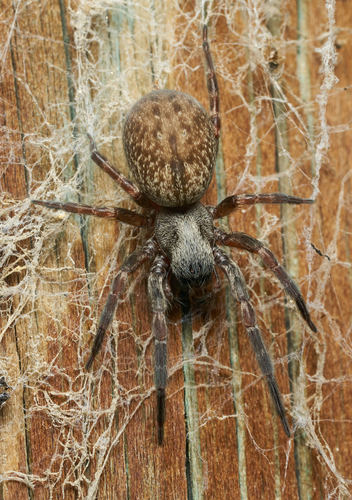
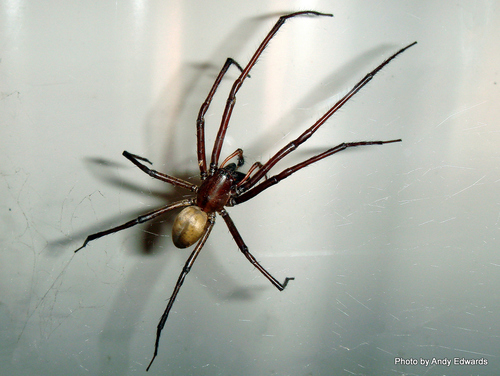
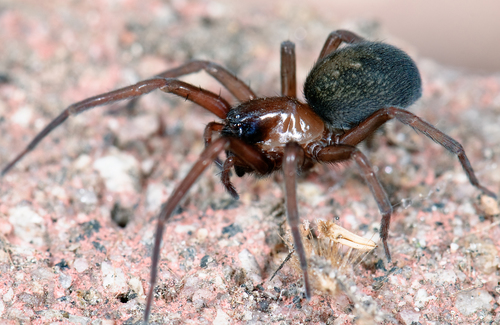
Metaltella simoni was first formally described in 1878 by Keyserling. For body length, females measure approximately 8 to 9 millimeters, while males measure approximately 7 to 8.5 millimeters. Both sexes are overall brown, with darker coloration on specific body parts: the front of the carapace, which is the upper surface of the cephalothorax, the leg tips, and the chelicerae. The abdomen, also called the opisthosoma, has a mottled grey or grey-black pattern, with faint, paler chevron-shaped markings toward the rear. Males have a distinct orange-yellow area on the rear portion of the carapace, which darkens to brown toward the front. In both sexes, the lateral eyes are larger than the median eyes. This species is native to South America, where it occurs in Brazil, Uruguay, and Argentina. It was first collected in North America in Louisiana in 1944. By 1971, it was recorded as common in Mississippi and parts of Louisiana, where individuals are found under logs at ground level. By 2008, the species was documented as widespread across coastal southern California.