About Metalasia muricata (L.) R.Br.
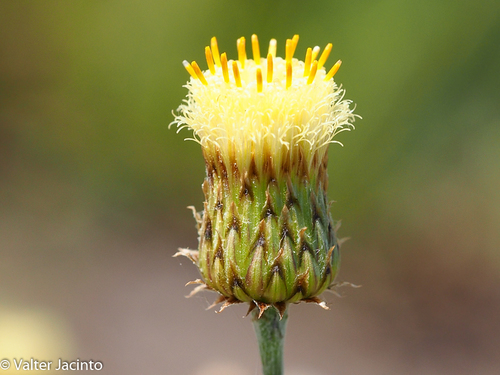
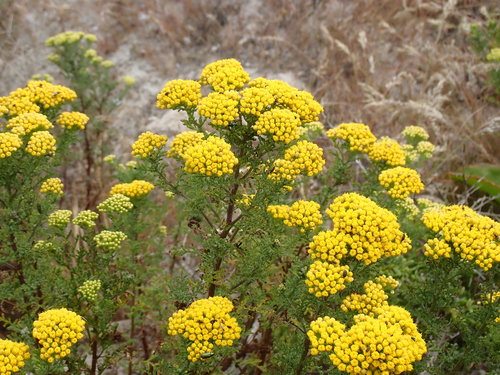
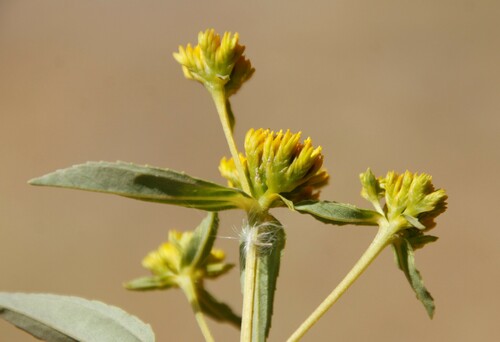
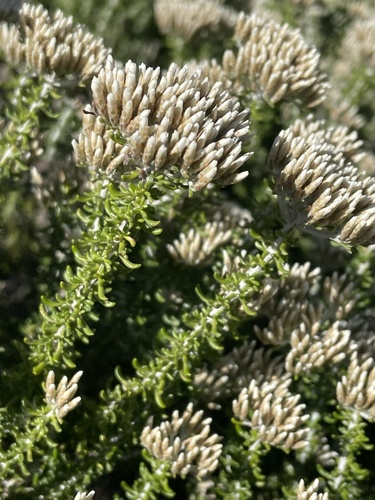
Metalasia muricata, commonly called white bristle bush or blombos, is a hardy virgate or twiggy woody shrub that usually grows 2–4 m tall, with a rounded crown. It produces honey-scented flowers and belongs to the daisy family (Asteraceae). The genus Metalasia contains around 54 species native to South Africa, many of which occur in the Western Cape. The genus name is derived from two Greek words: 'meta', meaning 'reverse' in this context, and 'lasios', meaning 'woolly', which refers to the woolly texture of the reverse sides of the genus's leaves. The specific epithet 'muricata' means warty, with short, sharp points similar to the shell of a Murex. This species is native to the Cape Provinces of South Africa, and is an important component of coastal and mountain fynbos regions. It is also found across a broader distribution that includes KwaZulu-Natal, Free State, Eastern Cape (South Africa) and Lesotho. Across this extended range, it occurs in a number of forms; some of these forms are tolerant of frost, wind, and poor sandy soils. The leaves of Metalasia muricata are approximately 6 mm long. They grow in clustered tufts (fascicles), packed closely around the stem, and are needle-like (acicular) with sharp tips. They have a greenish-grey colour, and may be either glabrous or woolly. Flower colour ranges from white to pink or purple, and all flowers are bisexual. Fruits produced by this species are cypselae; in this genus, cypselae are ribbed nutlets topped with bristly pappi. The greyish bark of the shrub is slightly striated. Metalasia muricata is one of the first plant species to regrow after a fire. When less resilient plant species emerge after fire, this shrub provides them with shelter. It is occasionally used alongside Marram grass and Chrysanthemoides monilifera to stabilise coastal dunes.