About Mespilia globulus (Linnaeus, 1758)
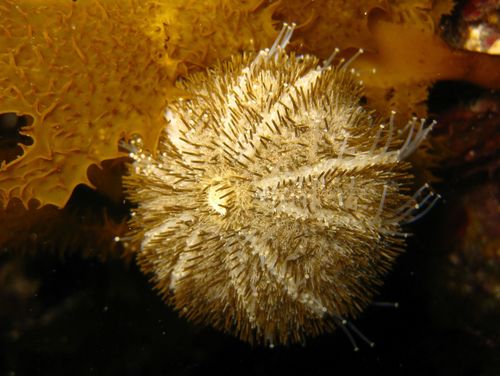
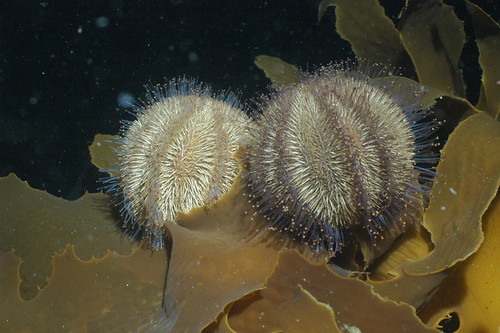
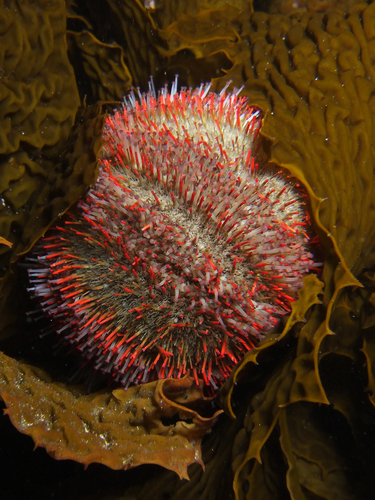
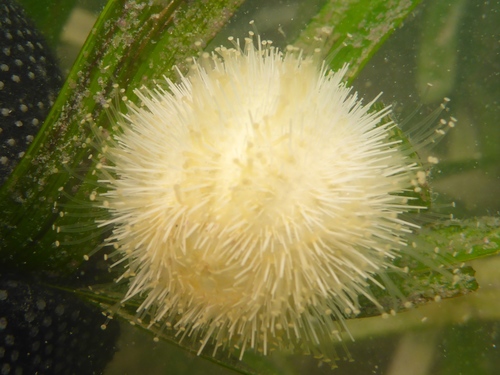
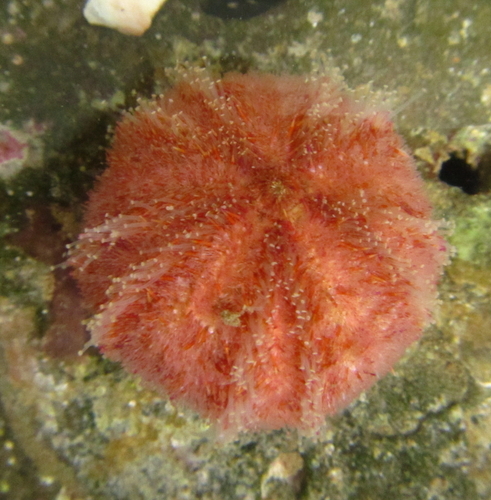
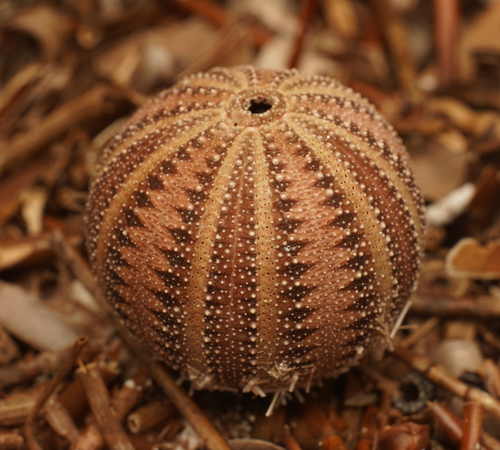
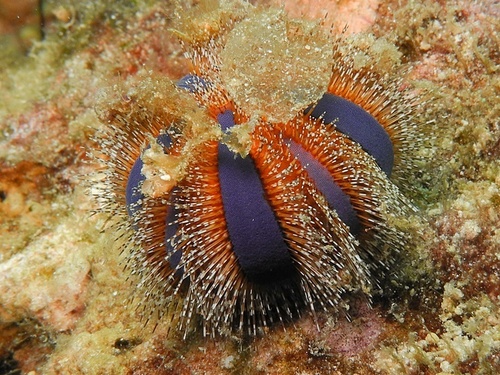
Mespilia globulus (Linnaeus, 1758) can reach a maximum diameter of 5 cm (2.0 in). It is identifiable by its radial symmetry and relatively small spines, which grow up to 2 cm long and are usually brown, red, or dark in color. Its body has ten vertical spine-free zones; these zones are distinct for their bright blue or green shades and have a velvety texture. This species mainly lives in shallow water reefs, coral rubble, and seagrass bed habitats, typically at depths between 0 and 200 meters (660 ft). It is found in shallow tropical waters across the Indo-Pacific, the Indian Ocean, the southwest coast of the western Pacific, and off Japan. During the breeding season, Mespilia globulus is abundant near the coast; when it is not breeding, it migrates slightly offshore, so it is much less common in nearshore areas outside of breeding season. Like all sea urchins, Mespilia globulus is gonochoric, meaning it has separate male and female sexes. Its breeding season typically runs from July to September in the Pacific and Indian Oceans. Fertilization is often external, but brooding is also common; eggs are held either on the peristome or deep within the concavities of the petaloid. Individuals release clouds of sperm and eggs into the water, where fertilization takes place. It is predicted that future ocean acidification will threaten this sea urchin's existing reproductive process. Mespilia globulus is commonly harvested and bred for commercial sale, because it is a popular species for recreational home aquariums thanks to its bright colors and distinctive morphology. It is well-suited for recreational aquariums because it is low-maintenance and generally does not harm other tank inhabitants. Currently, the aquarium pet trade relies on wild-caught M. globulus, as there are only a few documented reports of successful captive breeding of this species.