About Mesobuthus eupeus (C.L.Koch, 1839)
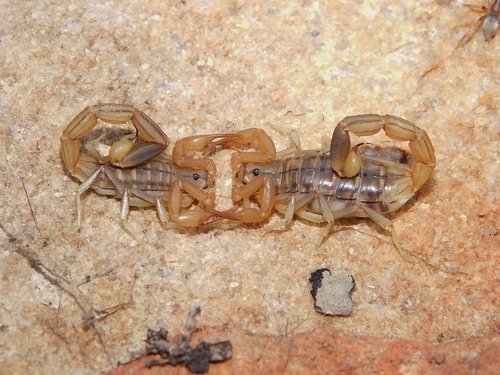
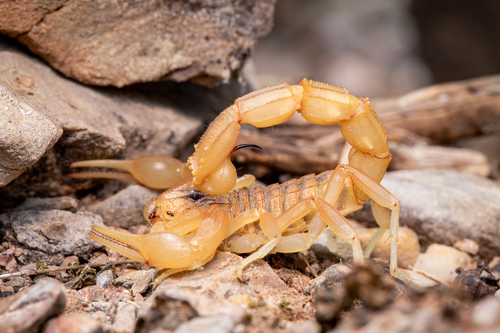
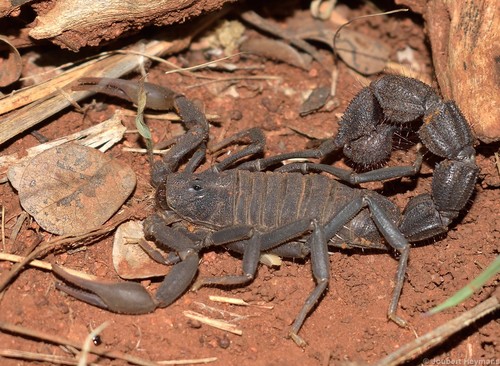
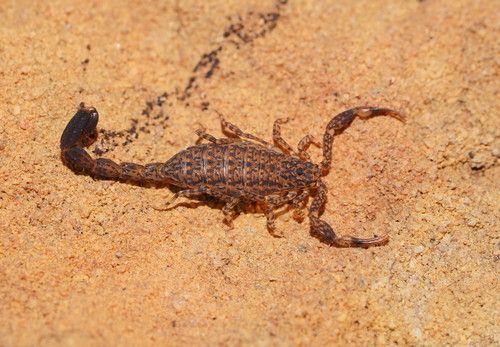
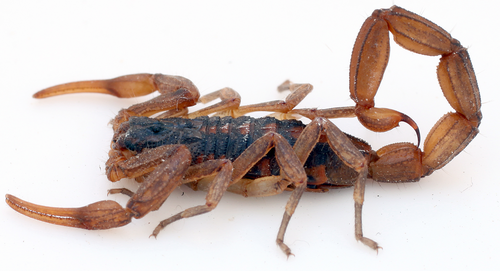
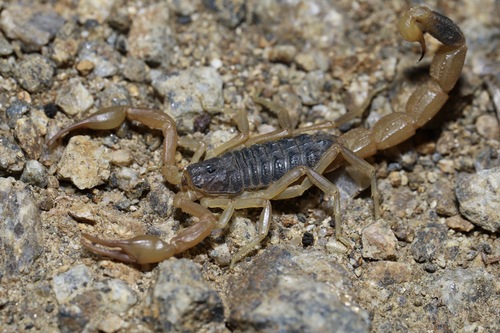
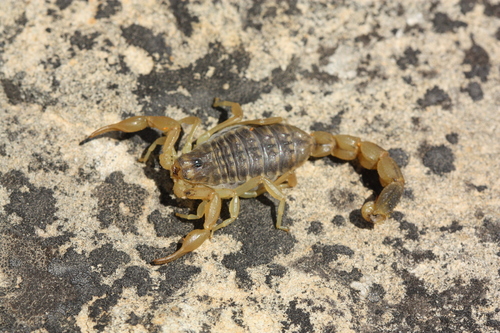
Mesobuthus eupeus, first described by C.L. Koch in 1839, can reach an adult length of 4 to 5 centimeters (1.6 to 2.0 inches). The entire body ranges in color from yellow to yellowish brown. The dorsal segments (called tergites) of the mesosoma often bear irregular longitudinal stripes that are black to dark brown. This species exhibits clear sexual dimorphism: adult females are generally larger than males, but have fewer pectinal teeth, with 16 to 23 teeth compared to 22 to 28 in males. On the pedipalps, the fixed finger has a maximum of ten diagonal rows of granules, while the movable finger has eleven. The pedipalp pincers (chelae) are wider than the patella (the fourth segment of the appendage). The segments of the metasoma are thick and marked with eight keels, a trait called octocarination. The telson is subglobose and has a flat dorsal surface.
Mesobuthus eupeus primarily inhabits arid or semi-arid habitats with little to no vegetation. Its known geographic range includes eastern Turkey, Armenia, Azerbaijan, Georgia, southern Russia, northern Syria, eastern Iraq, Iran, Afghanistan, Pakistan, Turkmenistan, Uzbekistan, Kyrgyzstan, Tajikistan, Kazakhstan, Australia, southern Mongolia, and northern China.
Ecologically, M. eupeus feeds on small insects such as crickets and small cockroaches. Cannibalism is very rare in this species. M. eupeus does not dig its own burrows, and instead prefers to use natural spaces and existing burrows located under stones and other objects. It has slender pedipalps, so it usually relies on its sting to kill its prey.