About Mesembryanthemum digitatum (Sol.)
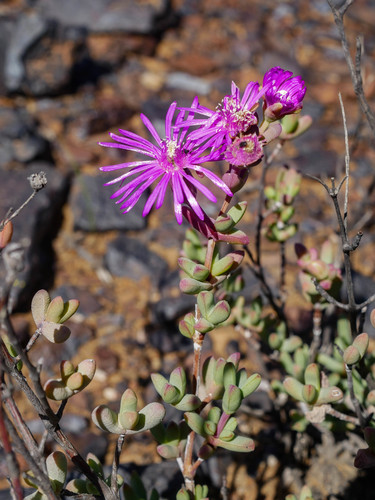
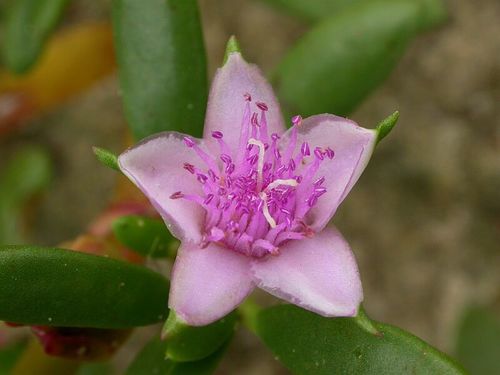
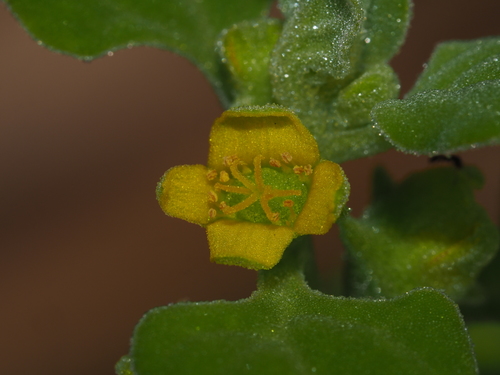
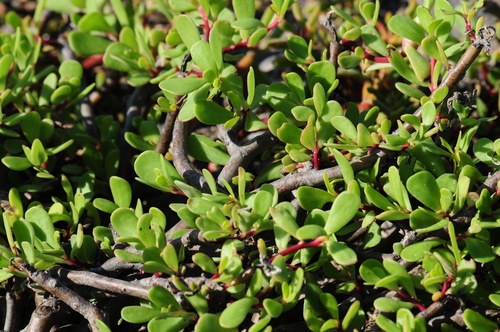
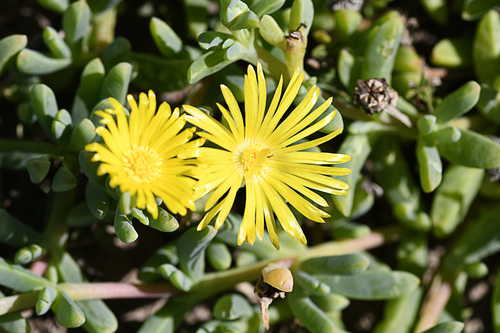
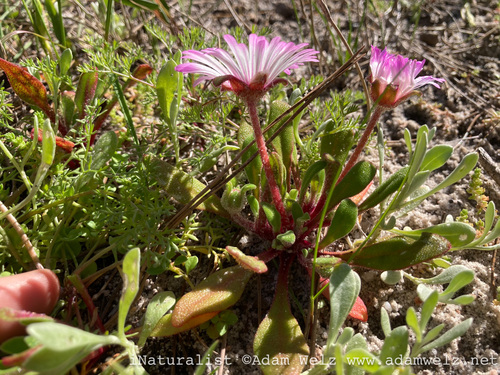
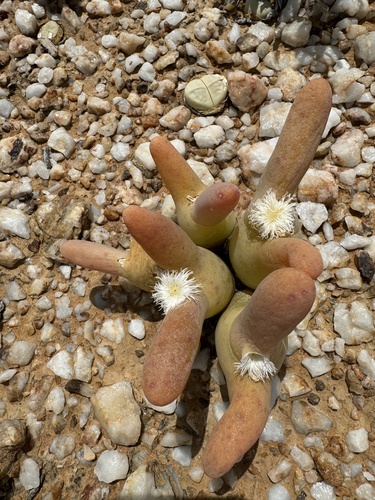
Mesembryanthemum digitatum (Sol.) grows as a dwarf shrub, with cylindrical leaves that only reach about 10 cm in height. Its leaf epidermis is made up of bladder cells, which are tiny hair-like structures that help the plant retain water, particularly during drought periods. This species produces white or cream-colored flowers that start blooming in late winter. The flower sepals and petaloid staminodes fuse together to create wispy linear tubes, arranged concentrically around a shell-shaped nectary. Fruits formed by the flowers have fused valve wings and five locules that hold light brown seeds. The roots of M. digitatum are fasciculate, meaning they are arranged in a bundle. The species name digitatum comes from Latin, meaning "to have fingers", and refers to the finger-like shape of the plant's leaves.
Mesembryanthemum digitatum is native to Cape Province, South Africa. It is especially abundant in the Karoo region of South Africa, where the environment is ideal for its growth: the area has winter rainfall, rocky and sandy soil, and a warm, arid climate.
Like most succulents, Mesembryanthemum digitatum requires a warm climate and cannot tolerate over-watering, since it stores water very effectively. It should only be watered when the soil is dry, and it needs well-draining soil to grow well. This species also needs a large amount of sunlight, so growing it outdoors or placing it near a window is necessary. M. digitatum is a perennial plant, but it cannot survive extremely cold winters, so growing it indoors is required in cold regions to protect it from frost. Seeds should be planted after the end of the last spring frost, around late May, which provides ideal conditions for its flowers to bloom. Germination of seeds takes approximately three weeks.