About Merops superciliosus Linnaeus, 1766
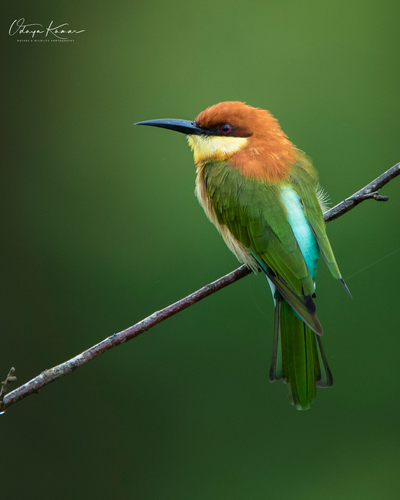
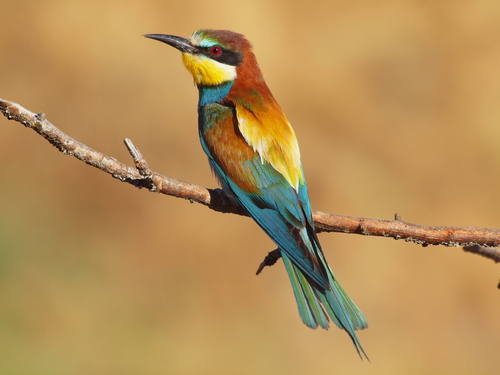
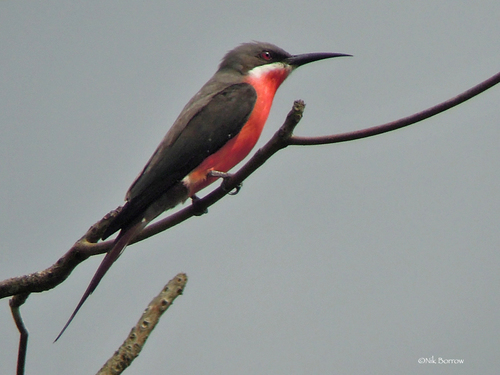
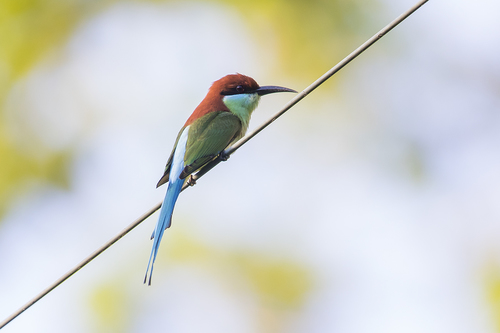
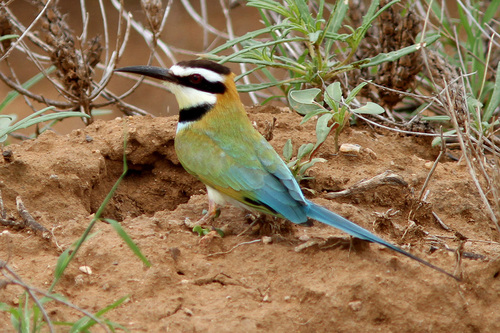
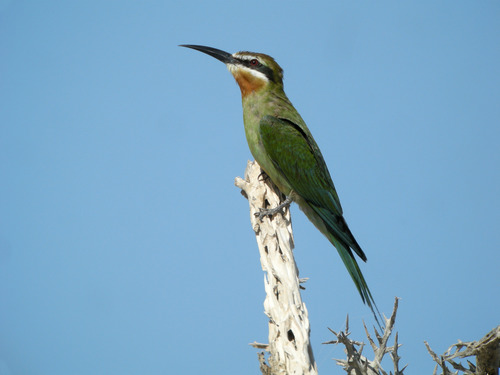
The olive bee-eater, scientifically named Merops superciliosus Linnaeus, 1766, reaches a body length of 23 to 26 cm (9.1 to 10.2 in), with its distinctive tail streamers adding up to an additional 7 cm (2.8 in) of total length. Males and females have identical appearances. Adult individuals have overall bronzy-green plumage, paired with an olive-colored cap, and white markings on the forehead, eyebrows, chin, and cheeks. The rump and main tail are blue, while the tail streamers themselves are black. This species occurs in grassland and coastal mountain forest habitats across East Africa and Madagascar. One isolated population lives in coastal Angola. There are two recognized subspecies. The nominate subspecies M. s. superciliosus is found in eastern Ethiopia, Somalia, and Kenya, and ranges southward through East Africa to southern Mozambique, the Zambezi Valley, the Comoro Islands, and Madagascar. The subspecies M. s. alternans occupies western Angola and northwestern Namibia. The olive bee-eater is partially migratory. It usually only breeds in the southern portion of its range, and moves north during the dry season in southern Africa. It lays four eggs inside a burrow nest at the start of the southern African wet season, and chicks typically hatch at the beginning of December. Unlike most other bee-eater species, this species does not engage in cooperative breeding. The post-fledging dependence period for young olive bee-eaters is only around 19 days. This timeline matches what is typical for temperate zone passerines, and is roughly half the length of the post-fledging dependence period seen in most other species in the Meropidae (bee-eater) family.