About Merops malimbicus Shaw, 1806
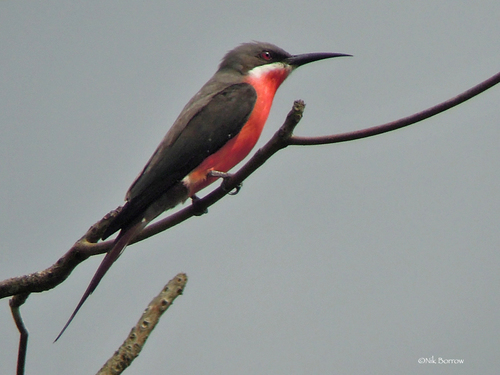
Scientific name: Merops malimbicus Shaw, 1806. Description: Adult Rosy bee-eaters (Merops malimbicus Shaw, 1806) are distinctively colored birds, reaching a body length of 22 to 25 cm (9 to 10 in); tail streamers add an extra 5 cm (2 in) to this measurement, and adults weigh approximately 45 g (1.6 oz). There are no obvious visual differences between male and female members of the species. The forehead and crown are dark grey, the facial mask is black, and the chin and cheeks are white. The mantle is black, while the wings and back are slate-grey, and the rump is a lighter pale grey. The tail is carmine red, fading gradually to grey towards the end. The throat and underparts are bright pink, and the undertail coverts are grey. The undersides of the flight feathers and large tail feathers are glossy black. The beak is black, the iris is reddish-brown, and the legs are yellowish-brown. Juvenile birds have a similar color pattern to adults, but their overall coloration is paler, and most smaller feathers have pale edges. Ecology: Like other bee-eater species, Merops malimbicus feeds on insects, which it catches by swooping down from a perch or by hawking prey while in flight. It forages across a range of different habitats: close to the surface of bodies of water, over savannas and woodlands, and above forest canopies, sometimes climbing to considerable heights during foraging. A large portion of its diet is made up of flying ants, but the birds also eat bees, butterflies, dragonflies, grasshoppers, flies and beetles. Foraging flocks can reach very large sizes, and individual birds may dip into the water during flight to bathe. This species nests on raised beaches and sandbars of large rivers, exposed when water levels fall. Nesting holes are dug using the birds' feet, and the passage leading to the nest chamber can be around 2 meters (7 feet) long. Only a small number of nesting colonies have been documented, but these can be extremely large; estimated counts of nests range from 8,000 to more than 27,300 nests, with a nesting density of approximately two holes per square meter. Colonies may return to nest at the same location in following years, but any nests that were flooded during the rainy season must be re-excavated before use.