About Meristogenys kinabaluensis (Inger, 1966)
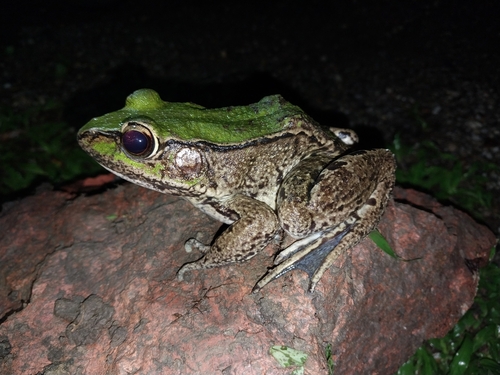
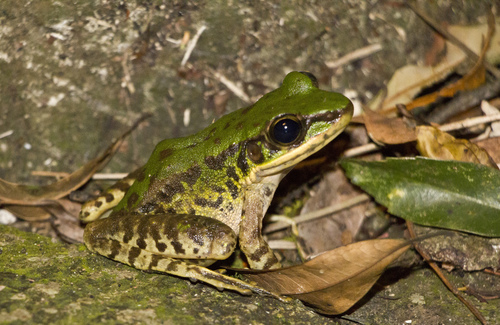
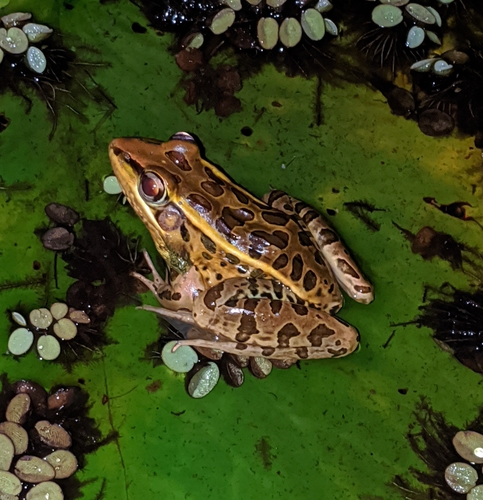
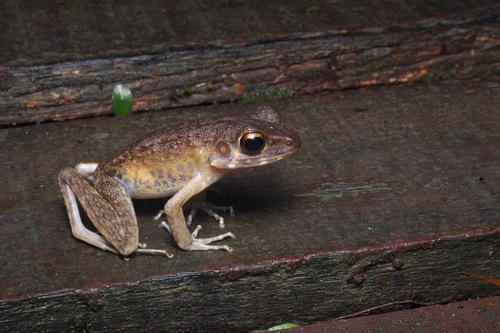
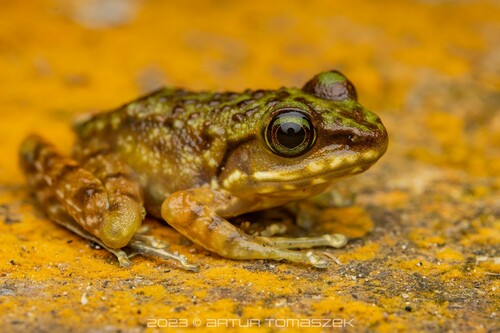
In Meristogenys kinabaluensis, males typically measure 50–68 mm (2.0–2.7 in) in snout–vent length, while females can reach up to 90 mm (3.5 in) in this measurement. This species has a blunt snout, and its body is slightly more stocky than that of many other Meristogenys species. The skin on its dorsum bears smooth warts. The dominant body color is green, and this green coloration extends to the eyes. Tadpoles of this species can grow to 60 mm (2.4 in) in total length; they are light brown with a yellow tint. Tadpoles have a strong tail, and their snout and body are depressed and streamlined. The natural habitats of Meristogenys kinabaluensis are submontane and montane forests located 750–1,700 m (2,460–5,580 ft) above sea level. Breeding occurs in small, clear, rocky streams. Adult frogs of this species are commonly found at night perching 1–2 meters high on tree trunks or branches alongside rocky streams. Tadpoles cling to rocks in areas with strong current, and they are thought to feed on lithophytic algae. This species is threatened by habitat loss, even though it is present in multiple protected areas, including Kinabalu Park, Crocker Range National Park, Kayan Mentarang National Park, and Gunung Mulu National Park.