About Meridiastra calcar (Lamarck, 1816)
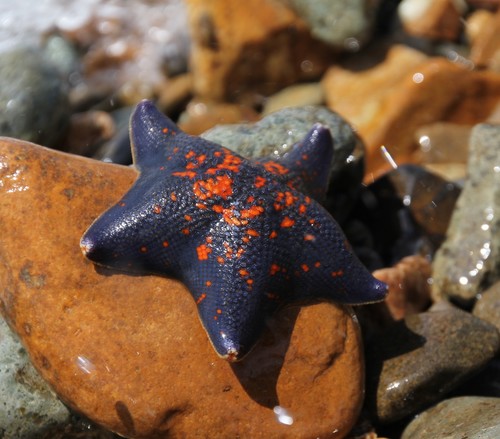
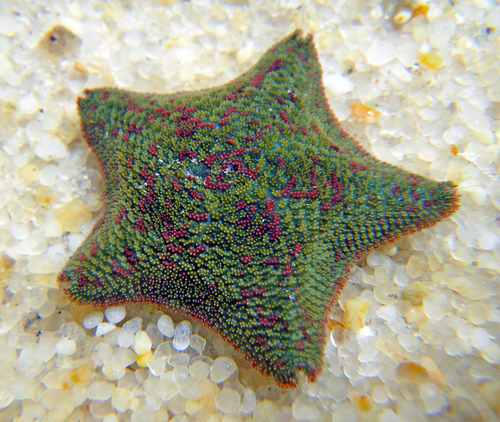
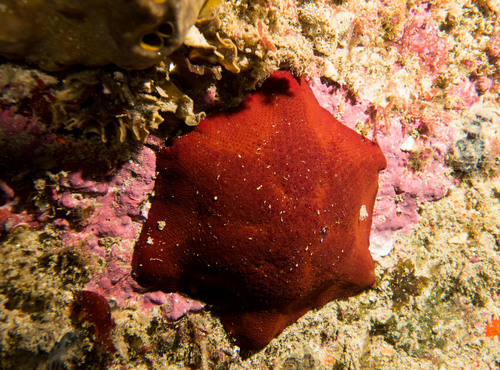
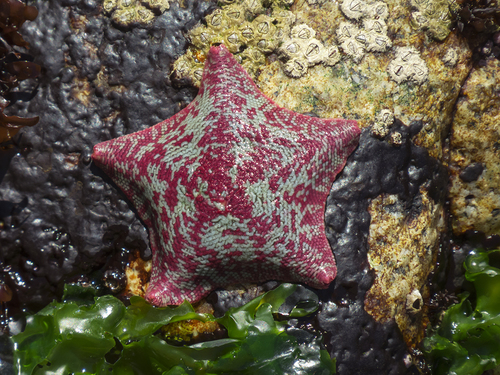
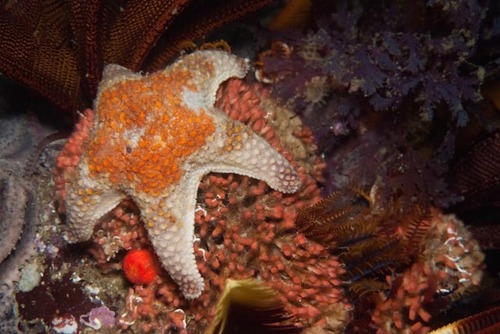
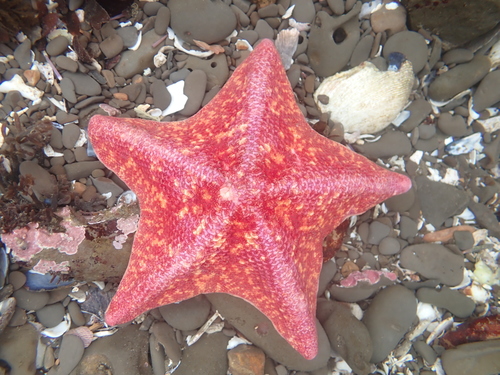
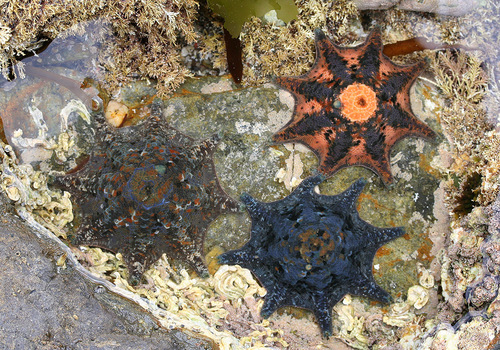
The cushion sea star, scientifically named Meridiastra calcar, typically has eight short, distinct triangular "arms", though individuals with 7 or 9 arms also occur. A portion of the length of these "arms" is laterally fused together, with ray-like tips of varying length extending out from the species' disk-shaped body. The aboral surface of this species may be any single color or combination of colors, while its oral side is uniformly pale. The maximum diameter of this sea star, measured from arm tip to opposite arm tip, ranges from 5 cm to 10 cm.
The cushion sea star occurs in the intertidal zone of Australian coasts, ranging from the south coast of Western Australia to the Queensland coast off Currumbin. Its range also includes Tasmania, South Australia, Victoria, and New South Wales. This species prefers rocky coasts, and lives in tide pools as well as at depths down to a maximum of 3 meters below sea level.
Like other sea stars, the cushion sea star moves slowly, using its tube feet to travel and to collect or subdue its food. This omnivorous species feeds on algae, detritus, mussels, and other invertebrates. It is viviparous, similar to some other species classified in the genus Patiriella, and broods its young inside its body.