About Meracantha contracta (Palisot de Beauvois, 1812)
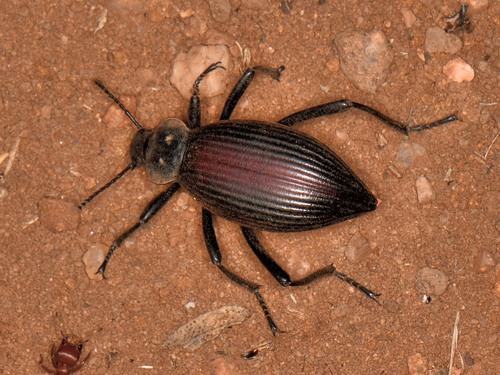
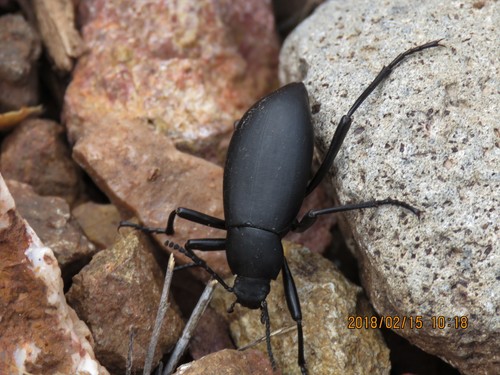
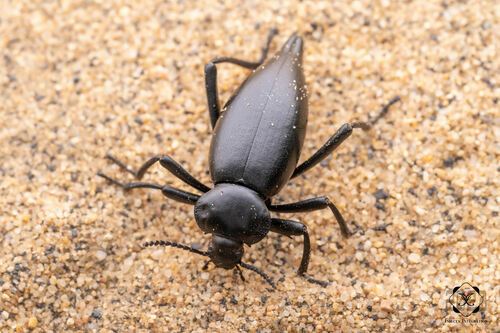
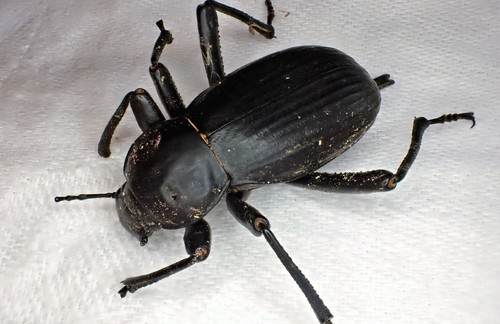
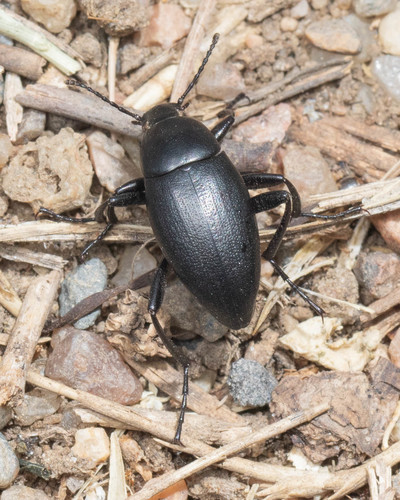
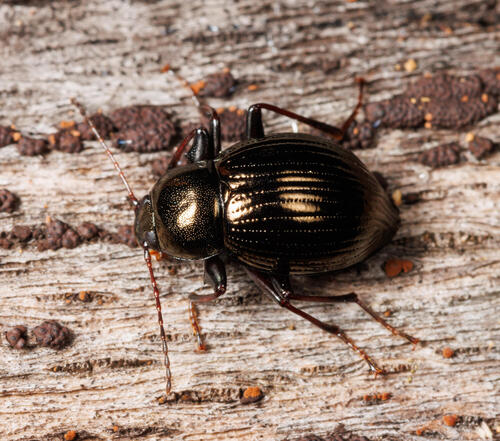
Adult Meracantha contracta measure 11–14 mm in length. They have a large pronotum, and both the abdomen and the elytra covering it are very convex, giving the species a humped overall appearance. Both the pronotum and elytra are covered in punctures. Mature adults are bronze-black in color; newly emerged adults are creamy-white, and gradually darken to reach this mature coloration. Larvae of Meracantha contracta are elongate, cylindrical, and reddish-brown. They are distinguished by the shape of their ninth abdominal segment, which is obliquely truncate, ending abruptly. The truncate end surface is strongly concave and has sharp acute margins, a trait that is unique among the larvae of North American darkling beetles. Pupae of this species are approximately 15 mm long. They are mostly cream-colored, with darker head and legs, and develop much stronger coloration just before adult emergence. The first five abdominal segments each have a two-lobed protuberance on their side, while the eighth and final abdominal segment ends in two diverging points. This beetle lives under tree bark and on dead tree stumps, most often on stumps that host lichens and moss. Like all beetles, Meracantha contracta has a four-stage life cycle consisting of egg, larva, pupa, and adult. This species overwinters in the larval stage, inside rotting logs. To survive cold winter temperatures, it produces a macromolecular antifreeze similar to the antifreeze made by cold-water fish. This antifreeze allows larvae to survive temperatures as low as approximately -11 °C. The pupal stage of Meracantha contracta lasts 10–14 days, and adult individuals live for a few months.