About Menyanthes trifoliata L.
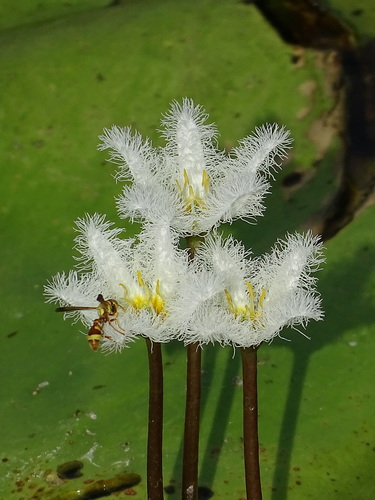
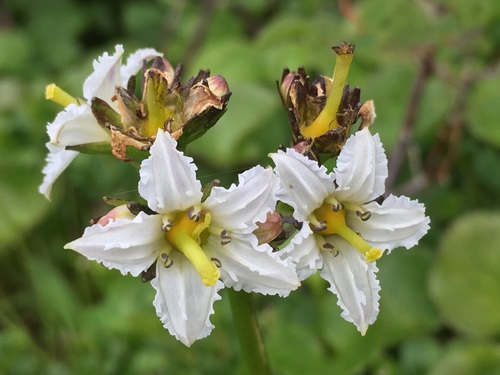
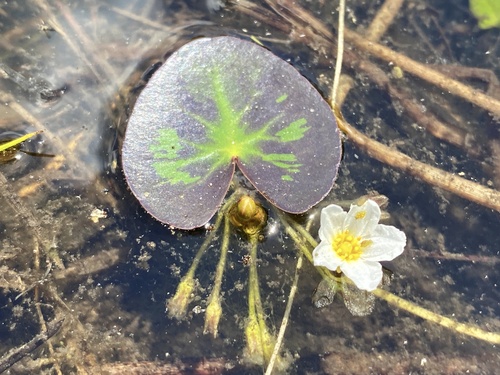
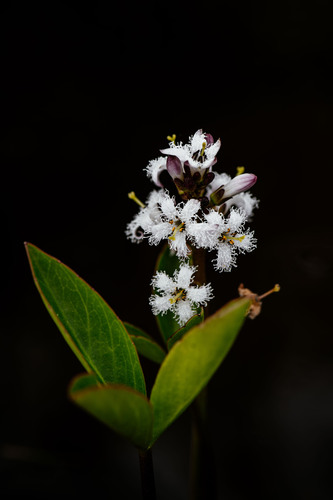
Menyanthes trifoliata L. has a horizontal rhizome that produces alternate, trifoliate leaves. Its inflorescence is an erect raceme bearing white flowers; the unopened buds are rose-pink. When fully open, the flowers resemble "white stars", and their petals are edged with fringed white whisker-like structures. This species grows in fens and bogs across Asia, Europe, and North America. In eastern North America, it is recognized as a diagnostic species for fens. Its thick roots sometimes form large quagmires. For uses, the rootstock can be ground into an unpalatable flour that is suitable for emergency use. The plant has a distinctive strong, bitter taste, and it is used to flavor schnapps. The 1845 work British Flora Medica notes that the peasants of Westrogothia often use the leaves of this plant in place of hops to preserve beer, giving the beer an agreeable flavor and protecting it from going sour. In China, this plant is known as "sleeping herbs" (睡菜) or "herbs that calm consciousness" (暝菜). The 1677 Qing dynasty text Guangdong Xing Yu, written by Chiu-Da-Jun, records that eating Menyanthes trifoliata helps people sleep well. The Compendium of Materia Medica records that it treats insomnia and restlessness.