About Menidia menidia (Linnaeus, 1766)
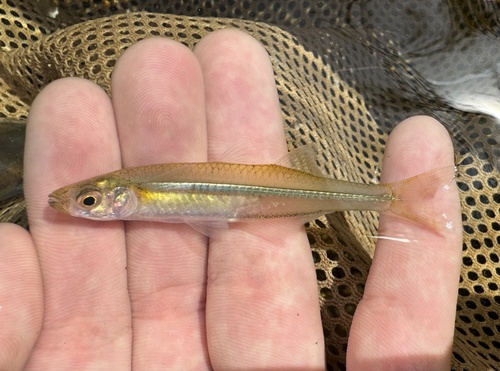
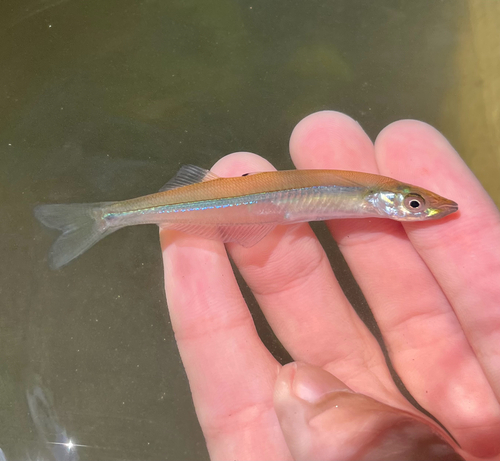
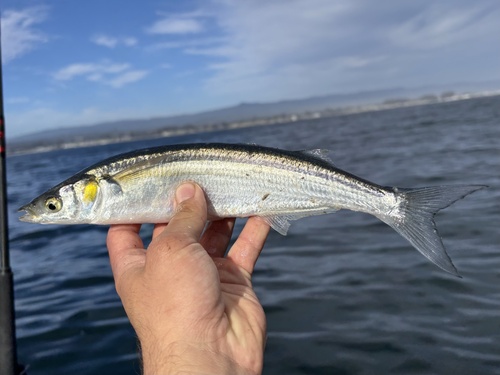
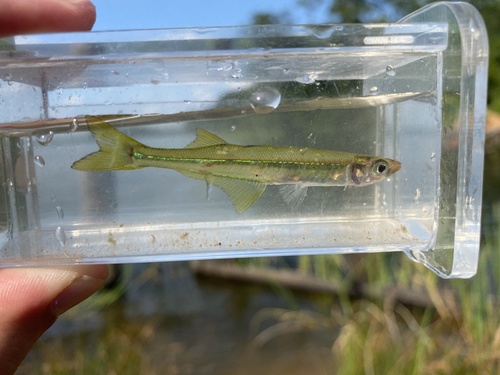
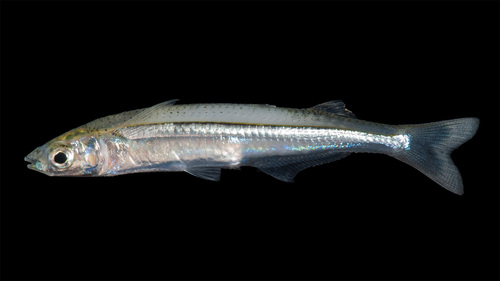
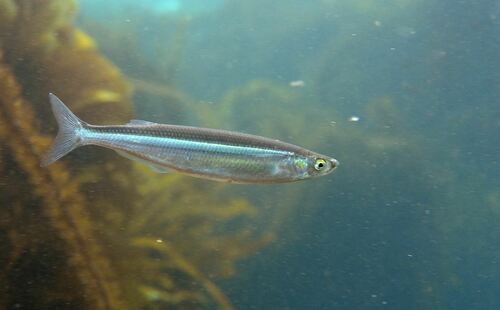
The Atlantic silverside, scientifically named Menidia menidia, is also commonly called spearing in the northeastern United States. It is a small fish species and one of the most abundant fish found in estuarine habitats along the Atlantic coast of North America. Due to its sensitivity to environmental changes, it is frequently used as a subject for scientific research. On the IUCN Red List, this species is classified as Least Concern, as its overall population is stable and faces no major threats. Though it is an extremely common species, most individuals die within one year after migrating offshore, with only a few surviving up to two years. The body of this fish is mostly translucent, with white coloring on the anterior end, and brown speckling on the top of the head, the posterior scales on the back, and near the jaw. A distinct silver band runs the full length of the body, next to the lateral line. Compared to other species in the Menidia genus, Atlantic silversides have larger mouths, and their first dorsal fins are positioned farther back than those of other silverside species.
Atlantic silversides are distributed across the western Atlantic Ocean, with their range stretching from the Gulf of St. Lawrence in Canada to northeastern Florida in the United States. They are one of the most common fish species found in both Chesapeake Bay and Barnegat Bay. Recent research has found their range may extend farther north than previously recorded, as juvenile Atlantic silversides have been captured in beach seines north of the Laurentian Channel.
Atlantic silversides consume a wide variety of prey. Due to their small adult size of roughly 5 to 9 centimetres (2.0 to 3.5 inches), they are limited to feeding on small prey items including copepods, mysids, cumaceans, barnacle larvae, and amphipods. Inshore and offshore Atlantic silversides have very similar diets overall, but offshore individuals tend to have a more diverse diet, which is likely due to the greater variety of available prey in offshore areas. During summer, when Atlantic silversides are more abundant inshore, copepods make up the majority of their diet, and they tend to feed higher in the water column. In winter, when the fish move farther out into the ocean, they tend to feed lower in the water column near the seabed, so offshore Atlantic silversides primarily feed on epibenthic mysids.
The abiotic conditions Atlantic silversides need to survive vary between populations based on their geographic location. They can tolerate an average temperature of 70 °F (21 °C), and can live in water with salinity ranging from 0 to 37 parts per thousand (ppt), as long as the water is well-mixed to avoid hypoxic conditions. Individuals have been found in salinities as low as 2 ppt, but they prefer salinities of at least 12 ppt. They are eurythermal, meaning they can tolerate a broad range of water temperatures. Atlantic silversides generally inhabit areas close to the water's edge, and are most often found swimming in brackish water such as the mouths of rivers and streams that connect to the ocean. These small schooling fish gather in seagrass beds, which provide shelter from predation for these nearly defenseless fish, as well as a safe area for spawning. During winter, most Atlantic silversides swim into deeper water to avoid low air and water temperatures, while in summer most are found in shallow areas along the shoreline.
The primary defense Atlantic silversides use is hiding in seagrass beds. They are fast swimmers, and their silver and white coloration makes it difficult for predators to track the direction they are moving. Their most effective defense is the strength-in-numbers strategy: large schools of fish reduce the chance that any single individual will be targeted and eaten by a predator. Predators of Atlantic silversides include larger predatory fish such as striped bass, blue fish, and Atlantic mackerel, as well as many water birds including egrets, terns, cormorants, and gulls. Some predators specifically feed on newly emerged Atlantic silverside larvae, including semipalmated sandpipers, ruddy turnstones, and blue crabs.
Atlantic silversides spend most of their lives in brackish water, but they travel further inland into freshwater and estuarine systems to reproduce and spawn. They prefer to use cordgrass as a spawning substrate, and spawning only takes place during the day. After reaching sexual maturity, both male and female Atlantic silversides develop their gonads on a seasonal cycle. Spawning occurs between April and June, but can start as early as March or end as late as August depending on latitude. Reproductive activity is influenced by water temperature: the water must be warm enough to support both spawning and egg development. The minimum water temperature required for spawning is 16 °C (61 °F), while the optimal temperatures for egg and larvae development are between 17 °C (63 °F) and 20 °C (68 °F) respectively. Eggs incubate for roughly seven to fifteen days, with incubation length dependent on water temperature. Once incubation finishes, larvae emerge and travel downstream in large groups. To avoid predation, larval Atlantic silversides emerge during nighttime high tides. In this species, the sex of larvae is determined by both genetics and the water temperature that the eggs experienced during development. For populations closer to the equator, temperature influences sex ratio, with higher water temperatures producing a higher proportion of male larvae. Populations at northern latitudes have evolved to not use environmental sex determination, so sex is determined solely by genetic factors in these groups.
Small Atlantic silversides are considered a delicacy in countries such as Portugal, where they are eaten either raw or fried in batter. They are also commonly used as bait fish by recreational and commercial fishermen. This species is an important model for studying environmental sex determination (ESD) in juvenile fish, and many studies on ESD have been conducted using this species, since southern populations have environment-influenced sex determination while northern populations have only genetically determined sex.