About Menegazzia terebrata (Hoffm.) A.Massal.
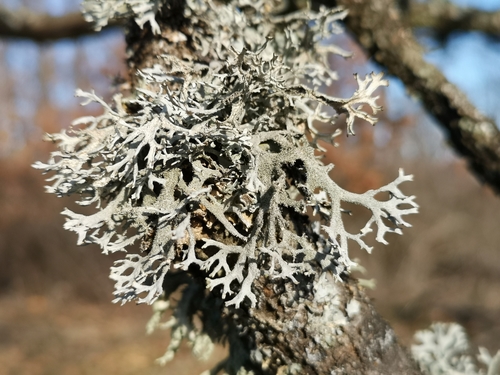
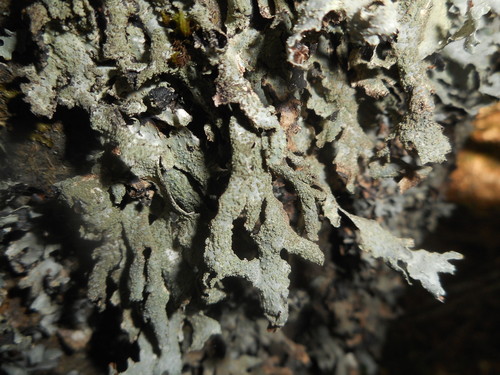
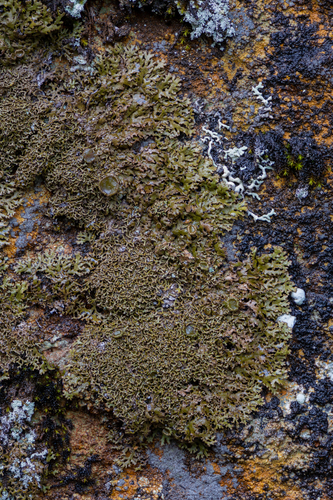
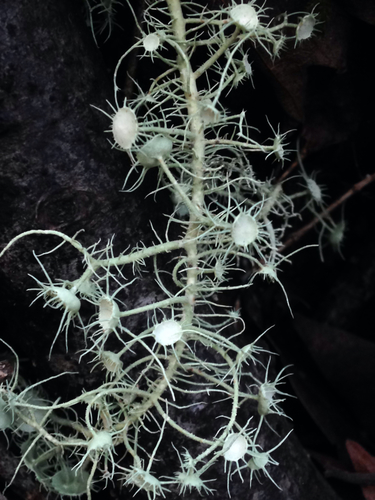
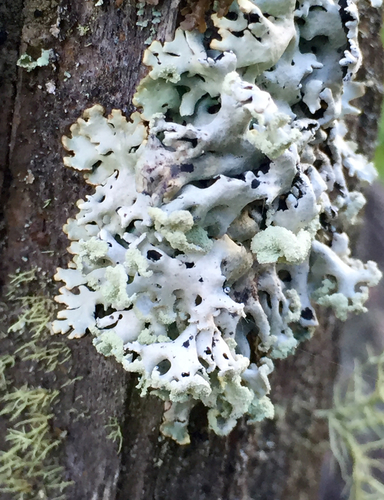
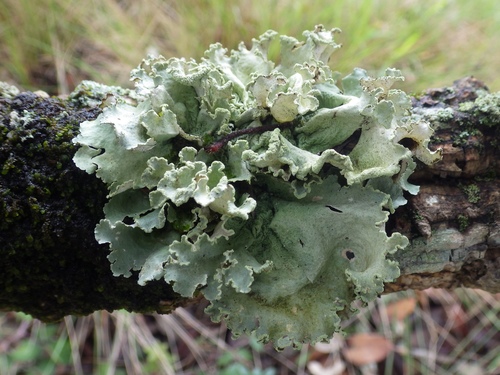
Menegazzia terebrata (Hoffm.) A.Massal. is a lichen with a glossy blue-grey thallus and a black, wrinkled undersurface that lacks rhizines. Its medulla is white, and like most Ascomycota species, its asci hold eight single-celled ascospores. These spores test amyloid positive, and the outer edges of the lichen appear in different shades of brown. This species is set apart by small holes present in its upper thallus; the holes give rise to its common names: treeflute lichen, honeycomb lichen, and keyhole lichen. Apothecia are rarely observed in this species, so it mostly reproduces asexually. Its lobes are rounded, nearly tube-like, and produce soredia at the lobe tips. A potassium hydroxide test gives a K+ yellow result on both the surface and the medulla of this lichen.
Menegazzia terebrata grows on acidic substrates, including tree bark and rock. It favors acidic tree species such as Alder, Beech, and Northern white cedar, and also prefers more acidic siliceous and siliciferous rock. It is most common in northern wet-mesic forests, and can act as an indicator of old growth forest. It sometimes grows alongside moss, which very often grows between the lichen's lobes. It is frequently found on coastlines near the ocean. In Western Oregon and Washington, Menegazzia terebrata has been identified as an indicator species for clean air. The photosynthetic partner algae found in this lichen are chlorococcoid.