About Membras martinica (Valenciennes, 1835)
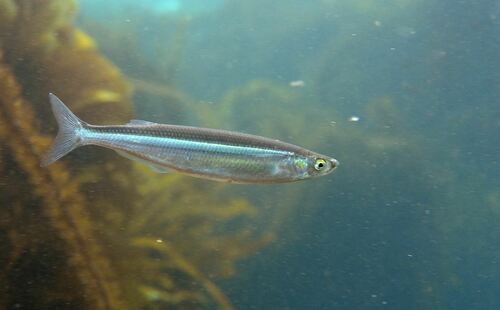
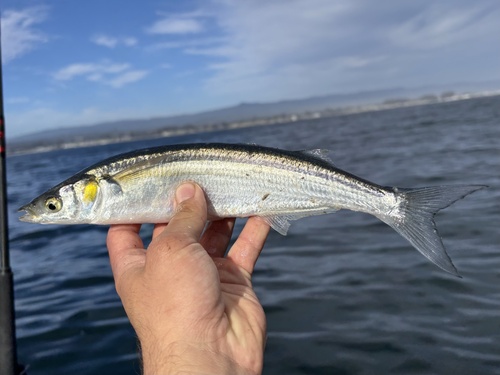
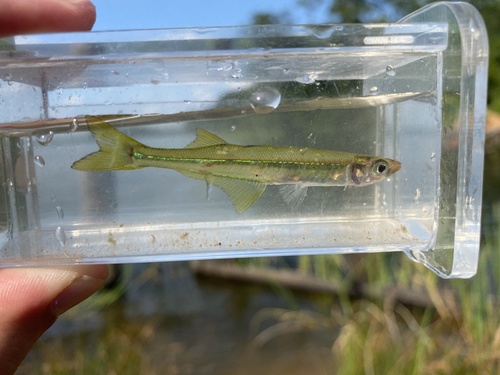
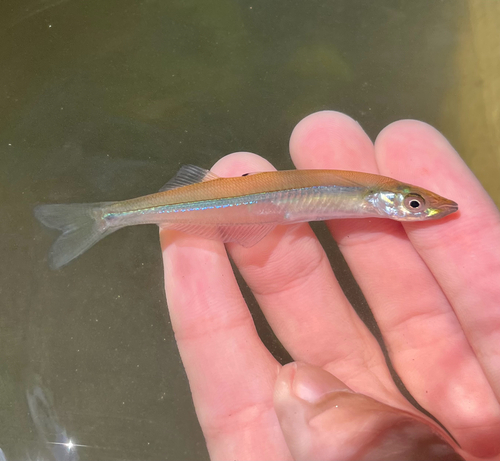
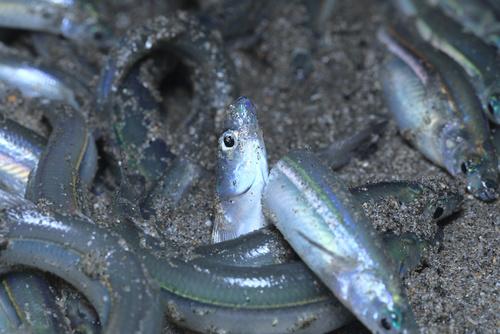
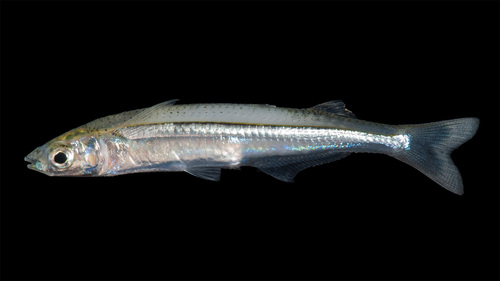
Membras martinica has an elongated body, a rather pointed snout, and an oblique mouth. Its base color ranges from pale yellow to off-white, with a silvery stripe running along the flanks; a white swimbladder is visible through its flesh, and the back bears parallel colored rows. It has two dorsal fins; the first dorsal fin consists of spines only. Its pectoral fins are positioned high on the flanks, and its scales are rough to the touch. The caudal fin has a dusky margin. The maximum recorded total length of this species is 12.5 centimetres (4.9 in). Membras martinica is the type species of the genus Membras. It was first described by Achille Valenciennes in 1835, under the original name Atherina martinica, from a type locality of Martinique — the island that the species' specific name is taken from. This species is found in the western central Atlantic, ranging as far north as New York and south to Veracruz, Mexico. It has also been recorded in rivers: it has been found as far upstream as Peekskill, New York in the Hudson River, far upstream in Florida's St. John's River, and in a number of Mexican river systems. Membras martinica is a pelagic species that occurs in a variety of habitat types. Its typical habitat is exposed shorelines and beaches with firm substrate, and it also occurs in coastal rivers. Along Gulf of Mexico coastlines, females are ripe during the warmer months from early spring into early fall, with a reported hiatus between May and July. This annual reproductive pattern produces two size classes of juveniles each year. Spawning takes place just beyond the surf zone. The eggs are demersal, stick to one another to form large clusters, and are carried into the intertidal zone by waves.