About Melo melo (Lightfoot), 1786
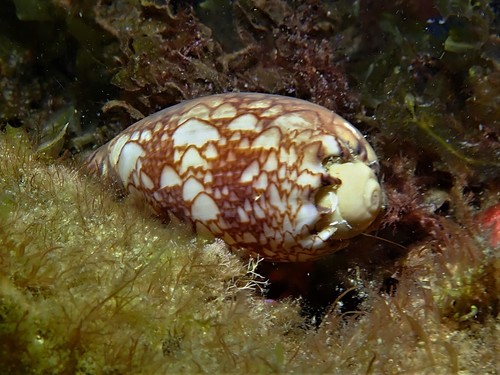
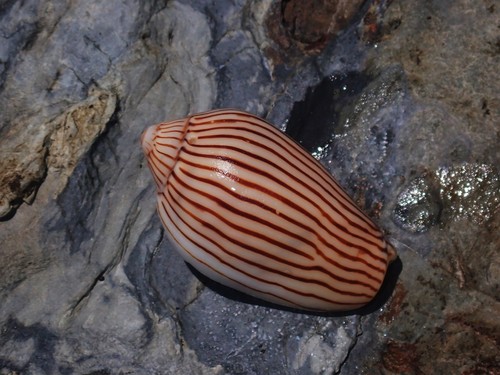
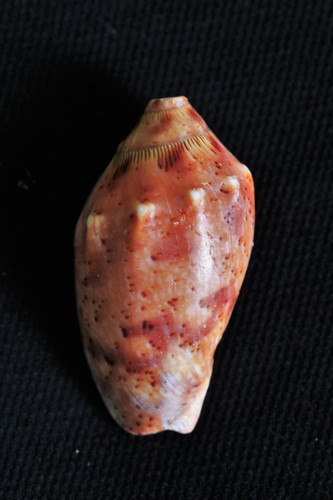
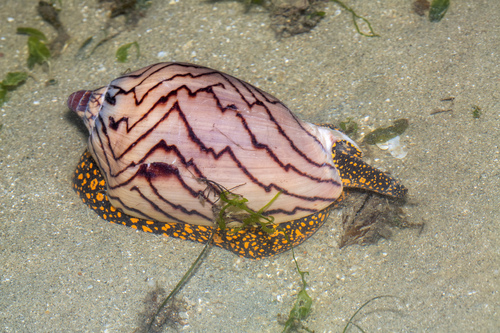
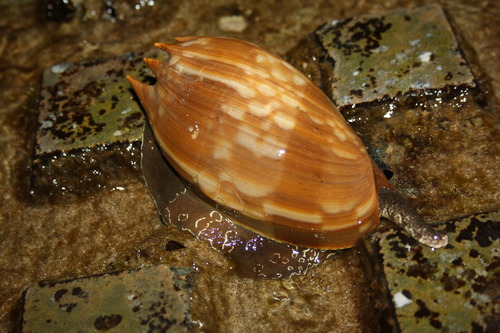
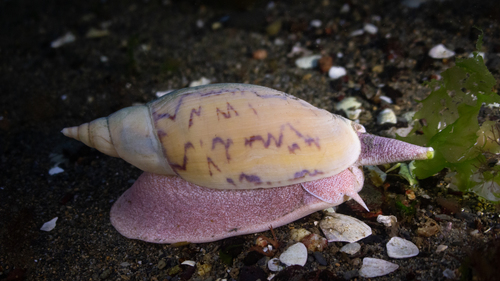
This species, Melo melo, has a maximum shell length of up to 275 millimeters, and commonly reaches 175 millimeters. Its notably large shell has a bulbous or nearly oval outline, with a smooth outer surface that shows clear, distinguishable growth lines. The outer shell color is most often pale orange, and sometimes has irregular bands of brown spots. The shell interior is glossy cream, fading to light yellow near the margin. The columella has three or four long, easily identifiable columellar folds. It has a wide aperture that is almost as long as the entire shell, but this species has no operculum. The shell's spire is completely enclosed by the large, inflated body whorl, which has a rounded shoulder with no spines. The apex is smooth. Melo melo is restricted to Southeast Asia, ranging from Burma, Thailand, and Malaysia to the South China Sea and the Philippines. This large sea snail lives in littoral and shallow sublittoral zones, and usually dwells on muddy bottoms at a maximum depth of around 20 meters. This volute is often collected as seafood by local fishermen. Its shells are also frequently used for decoration, or as scoops for powdery substances in local markets. Native fishermen have traditionally used the shell to bail water out of their boats, which is why it is commonly called the "bailer shell". This snail is eaten in Vietnamese cuisine, including in the dish coconut milk sea snails (Vietnamese: Ốc Len Xào Dừa).