About Melithreptus lunatus (Vieillot, 1802)
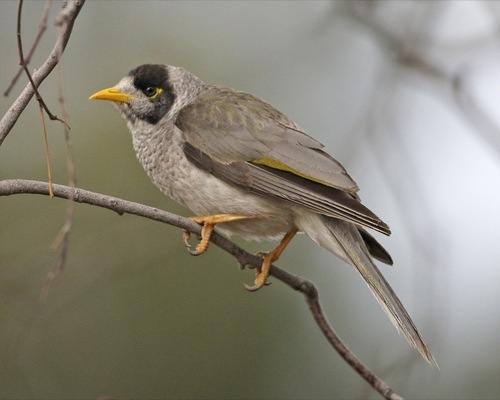
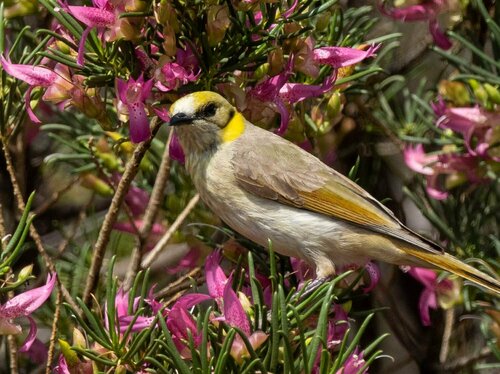
Melithreptus lunatus, commonly the white-naped honeyeater, is a mid-sized honeyeater, measuring 13–15 cm (5–6 inches) in total length. Adult birds have an olive-green upper body and white underparts, with entirely black heads, napes, and throats. They have a distinct red patch above each eye, and a white crescent-shaped marking on the nape. Compared to other similar species, this bird has a slimmer build. Juvenile individuals have brownish crowns, and the base of their bill is orange. The characteristic call of this species is repeated mjerp mjerp. This species inhabits eucalypt forests and eucalypt woodlands. Its diet consists mainly of nectar collected from a range of flower species, and is supplemented by insects and other various invertebrates. White-naped honeyeaters can nest between July and December, and breed one or two times within this nesting window. They build a thick-walled bowl-shaped nest from grasses and small pieces of bark, placed in the fork of a tall tree, most commonly a eucalypt. Females lay clutches of two or three eggs. Each egg measures 18 mm × 14 mm (0.71 in × 0.55 in), has a shiny buff-pink base color, and is sparsely marked with red-brown spots.