About Melica mutica Walter
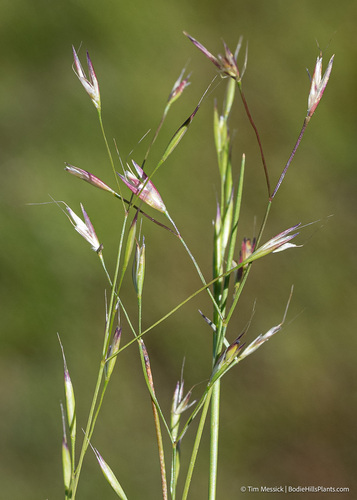
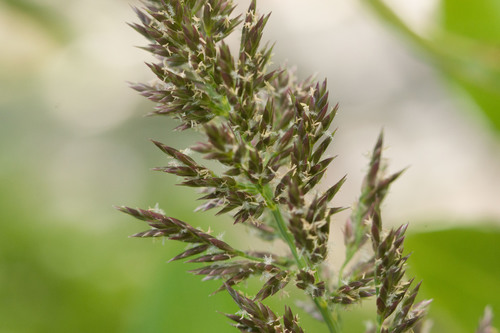
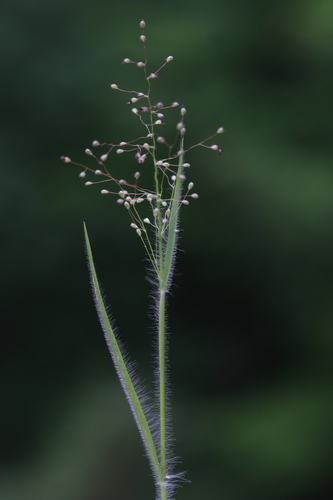
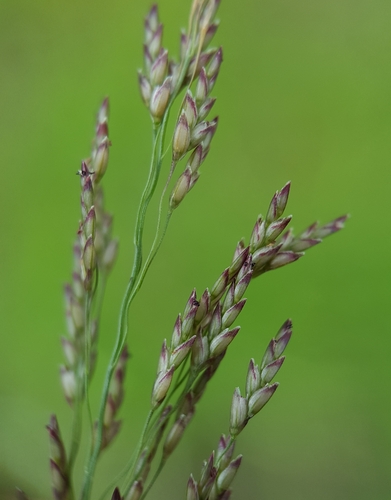
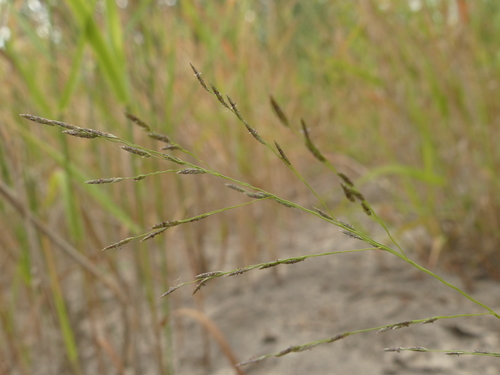
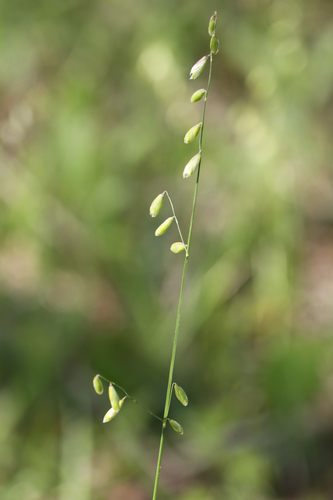
Melica mutica Walter is a perennial, caespitose species with elongated rhizomes. Its culms grow 45 to 100 centimeters (18 to 39 inches) long. Leaf sheaths are tubular and scaberulous, and its eciliate membrane measures 0.5 to 1 millimeter (0.020 to 0.039 inches) long. This species has either conduplicated or flat leaf blades that are 2 to 6 millimeters (0.079 to 0.236 inches) wide. The lower surface of the leaf blades is either scaberulous or smooth, and it is either glabrous or puberulous. The panicle is open and lanceolate, and grows 4 to 16 centimeters (1.6 to 6.3 inches) long. The main branches of the panicle are widespread and almost racemose. Its spikelets are cuneated, pendulous, and solitary, measuring 7 to 11 millimeters (0.28 to 0.43 inches) long. Fertile spikelets have filiform pedicels and carry 2 fertile florets that are diminished at the apex. The lemmas have ribbed lateral veins, with a rugulose and scaberulous lower surface. The palea is ciliolate and has scaberulous keels. The rhachilla is extended, while the sterile florets are barren, cuneate, and clumped. The sterile florets are 2 millimeters (0.079 inches) long and also have truncated sterile lemmas. The species' glumes are short and wide. Both the lower and upper glumes are keelless and oblong, and measure 6 to 9 millimeters (0.24 to 0.35 inches) long. The flowers are fleshy, oblong, and truncate, growing in clusters; they have 3 anthers that are 3 millimeters (0.12 inches) long. The fruits are caryopses with an additional pericarp, and measure 2 to 3 millimeters (0.079 to 0.118 inches) long.