About Melibe leonina (A.Gould, 1852)
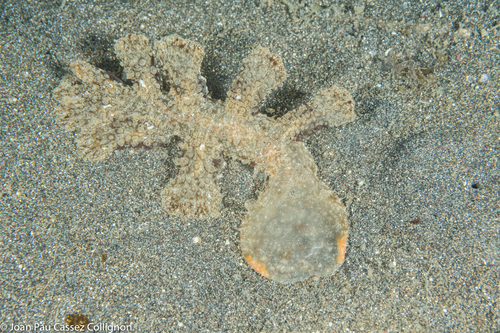
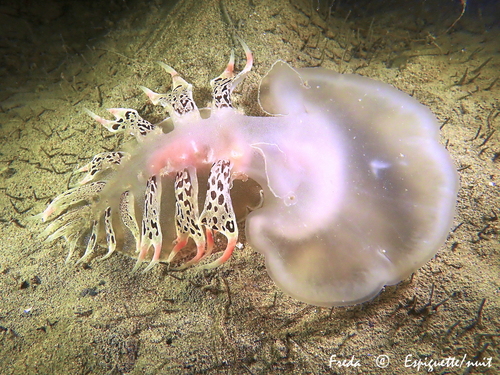
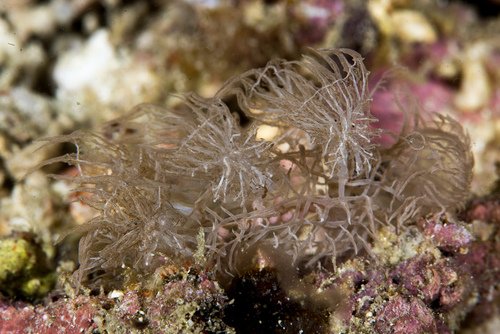
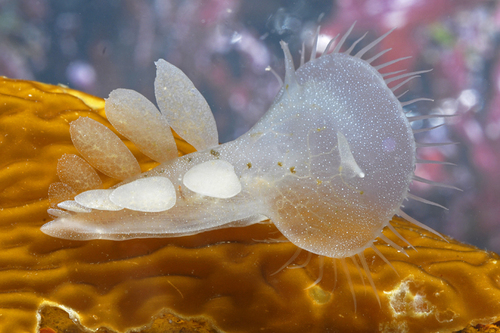
Melibe leonina (A. Gould, 1852) has a translucent body, which is usually colorless, pale yellow, or pale green. Its average body dimensions are 102 millimeters long and 25 millimeters wide. It has a large expandable oral hood, fringed with two rows of cirri. This oral hood is typically over 51 millimeters wide. This species of Melibe lacks jaws and a radula. A single pair of rhinophores sits on the oral hood, and each rhinophore contains four to six lamellae. Two rows of three to six pairs of flat, paddle-shaped cerata run along the body. Cerata vary in size, with the front-most cerata being the largest. Cerata of this species are capable of autotomy. At the base of each ceras, there are unique granule-filled cells not found anywhere else in the animal; these cells appear to be involved in breaking down connective tissue, alongside two special muscular sphincters. It is thought that after connective tissue is broken down, these sphincters contract to sever the ceras and then close the resulting wound. The anus and nephroproct are positioned before the second ceras. All other members of the genus Melibe have chitinous plates in the stomach, but these plates are absent in M. leonina. This species occurs in the eastern Pacific Ocean, ranging from Alaska to Baja California. It is the only member of the genus Melibe found on the Pacific coast of North America. Within its range, M. leonina is common on seagrass and Macrocystis kelp blades, from the lower intertidal zone down to approximately 37 meters depth. Melibe leonina is a simultaneous hermaphrodite, with both its female and male reproductive organs located on the right side of the body. Fertilization is internal, and an individual can lay up to 30,000 eggs at a time. Individuals produce protective egg ribbons secreted from a mucous gland. Each ribbon holds egg capsules, each containing 15 to 25 eggs. Eggs develop into larvae after about 10 days, then hatch as veligers. Newly hatched veligers initially have shells, but lose them after hatching. Mating has only been observed to occur during the day.