About Melaphis rhois (Fitch, 1866)
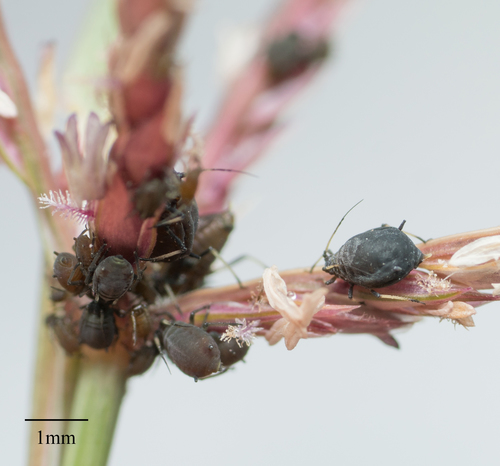
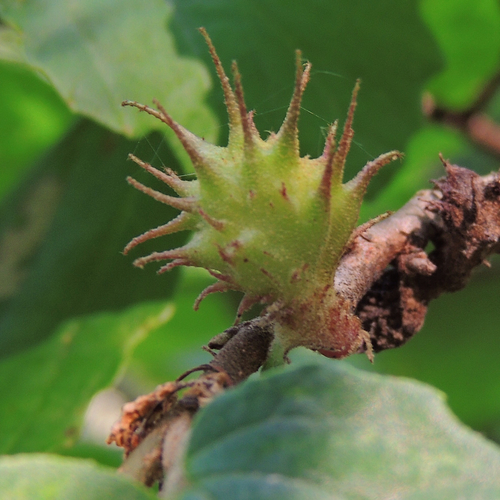
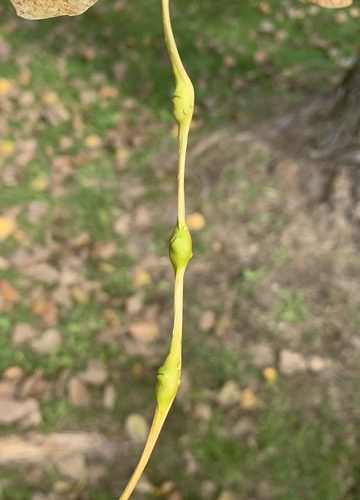
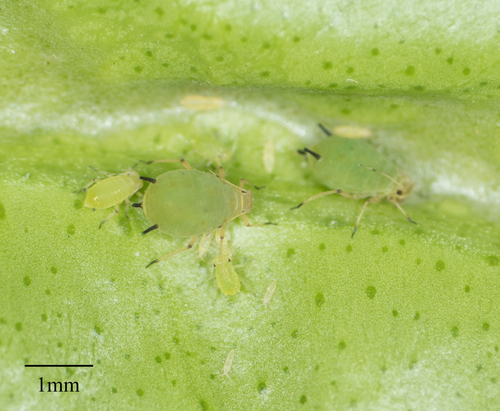
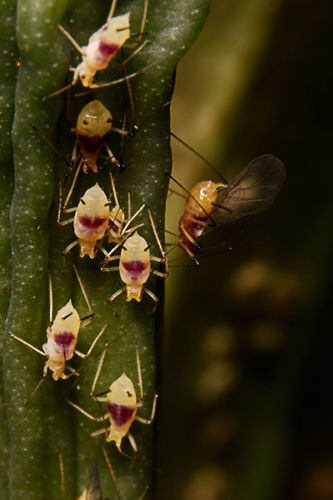
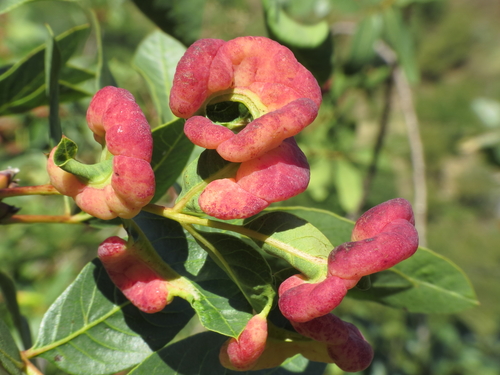
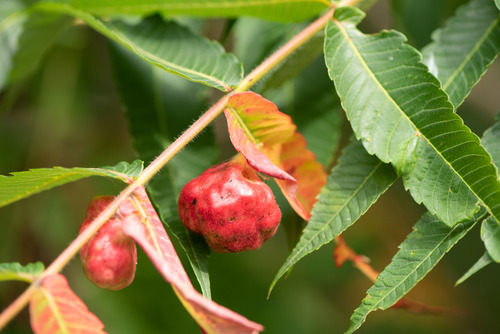
Melaphis rhois is an aphid species first formally identified by Asa Fitch in 1866. Commonly called the staghorn sumac aphid, it belongs to the genus Melaphis, and is classified as a type of woolly aphid. It is also one of the few aphid species that can induce the formation of plant galls. This aphid species produces galls on staghorn sumac (Rhus typhina), a sumac variety native to eastern North America, and is also found on smooth sumac (Rhus glabra). The induced gall has two common names: "sumac leaf gall" and "red pouch gall", the latter name referring to its occasional red coloration. Galls form when a female Melaphis rhois lays a single egg on the underside of a sumac leaf, which triggers the leaf to grow a sac-like gall around the egg. As documented by Hebert et al, the hatching egg gives rise to multiple parthenogenetic generations that all stay within the gall. In late summer, winged females exit the gall and fly to moss, where they establish asexually reproducing colonies. These colonies produce males and sexual females that go on to recolonize sumac plants each spring. In 1989, researchers reported that this aphid's use of alternate plant hosts dates back to 48 million years ago. At the time of discovery, this was the oldest documented insect-plant relationship known to science, though much older such relationships have been found since then.