About Melanotaenia splendida (Peters, 1866)
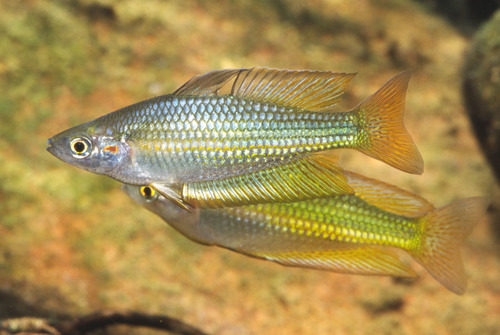
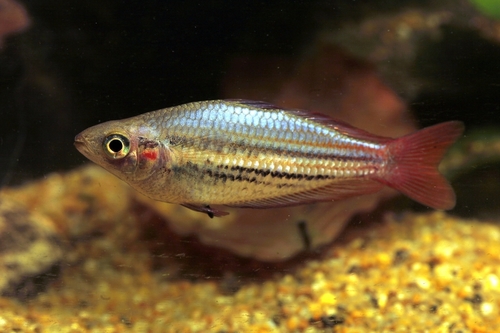
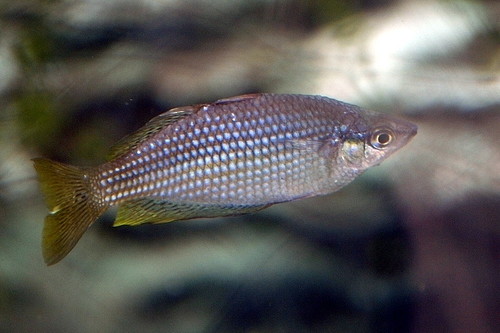
Melanotaenia splendida, commonly known as the Eastern rainbowfish, is a species of rainbowfish belonging to the subfamily Melanotaeniinae that is native to Australia. The species is divided into three recognized subspecies with distinct distributions. The chequered rainbowfish, subspecies M. s. inornata, is found in northern Australia, ranging from the Mary River east to the Cape York Peninsula and south to the Jardine River; it also occurs on some of the Torres Strait Islands. The nominate subspecies, the eastern rainbowfish M. s. splendida, lives in rivers east of the Great Dividing Range, from the Torres Strait Islands and Cape York Peninsula south to the Dawson River in Queensland. The desert rainbowfish, subspecies M. s. tatei, is endemic to the Lake Eyre drainage basin. Melanotaenia splendida typically inhabits areas near the surface of deep pools in small freshwater streams, and it also occurs in natural lakes and artificial reservoirs. These fish are most often found in large schools, and they can live in water that ranges from clear to turbid, and that may or may not host extensive aquatic vegetation. M. splendida is an omnivorous species. Its diet includes filamentous algae, aquatic and terrestrial insects, small crustaceans, and other small invertebrates. Like other rainbowfish species, Melanotaenia splendida displays sexual dimorphism. Breeding occurs year-round. Males and females form pairs during breeding: the female releases eggs, which the male then externally fertilizes. Each spawning produces 60 to 70 eggs. The eggs are round, golden in color, and attach to submerged vegetation via an adhesive filament. Larvae hatch approximately one week after fertilization. Newly hatched larvae are around 4 millimeters long, have a reduced yolk sac, and already have fully formed mouths and pectoral fins. Larvae begin feeding within 24 hours of hatching.