About Melanophila acuminata (DeGeer, 1774)
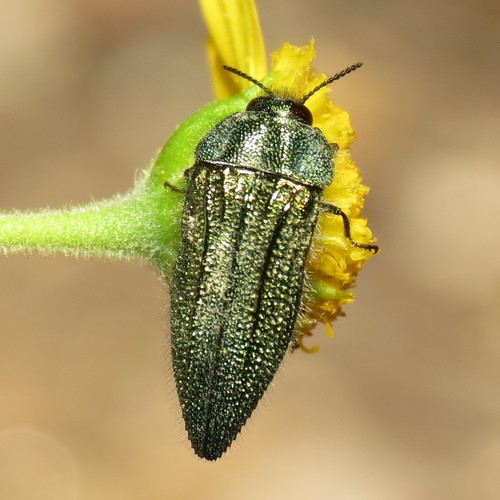
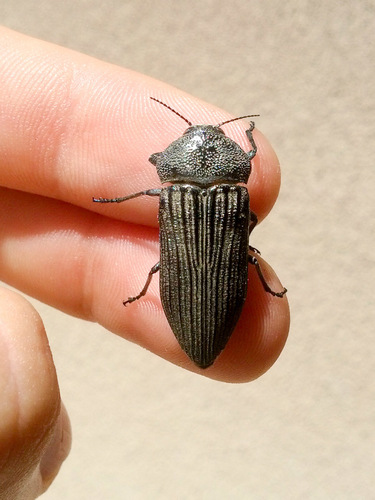
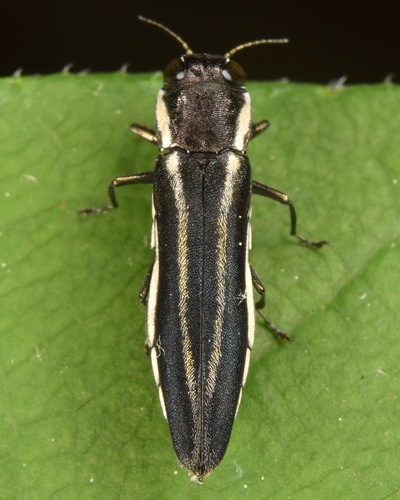
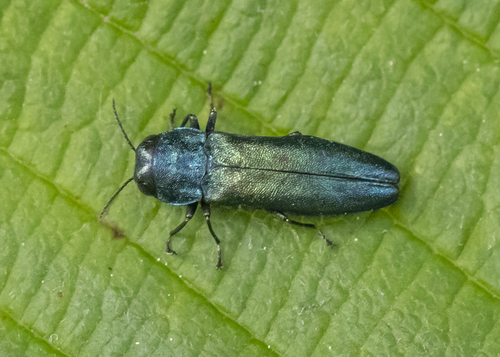
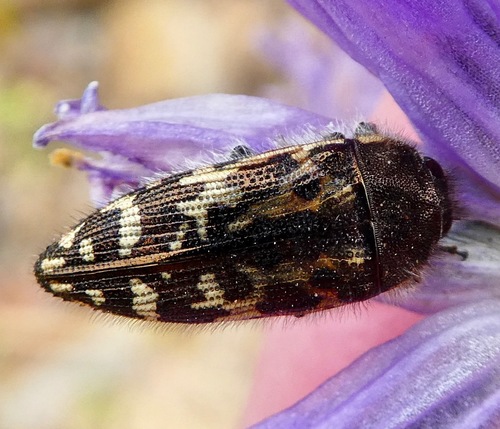
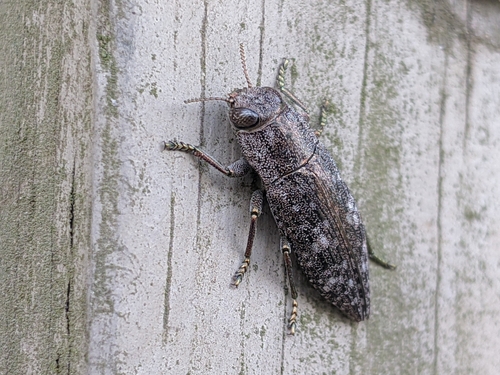
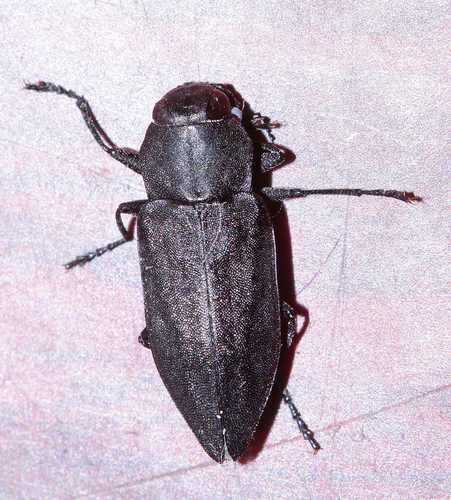
Melanophila acuminata (DeGeer, 1774), commonly called the black fire beetle or fire bug, is a species of metallic wood-boring beetle belonging to the family Buprestidae. It is recorded from the Caribbean, Europe, Northern Asia (excluding China), Central America, North America, and Southern Asia. The species gets its common name from its behavior of swarming freshly burned conifer trees, which it detects using sensors located on its thorax. Adult black fire beetles are solid black, and measure between 7 and 11 mm in body length. Researchers have suggested that this species may be the pyrotocon, a fire-born insect mentioned in Pliny the Elder's Natural History. This is the most geographically widespread species in its genus, with individuals found across the Holarctic region, Australia, Tasmania, New Guinea, Northern Africa, and the Caribbean, where it was most likely introduced. While its overall prevalence and abundance are relatively evenly distributed rather than concentrated in any single region, it occurs more sporadically in Europe and faces local risk of extirpation there. This threat is probably linked to strict fire suppression practices and the widespread dominance of commercial softwood forestry across Europe. In the Nearctic, adult beetles swarm to forest fires in extremely large numbers, and use coniferous species including pine and fir as host trees. Because the species uses a range of trees and other plants as hosts, it feeds primarily on these host plants, along with sap and other fluids from recently burned trees. Its specialized mouthparts are well adapted to this diet, which relies heavily on moisture and liquid for nutrition. Additional reported food resources include decaying organic matter found in post-fire areas, such as fungus, microorganisms, and animal flesh. To date, very little research has focused specifically on the food resources of Melanophila acuminata, as most researchers have prioritized studying the species' behavior and ecology instead.