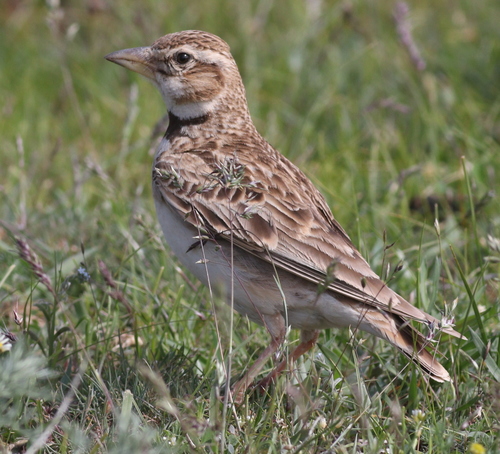
About Melanocorypha bimaculata (Ménétriés, 1832)
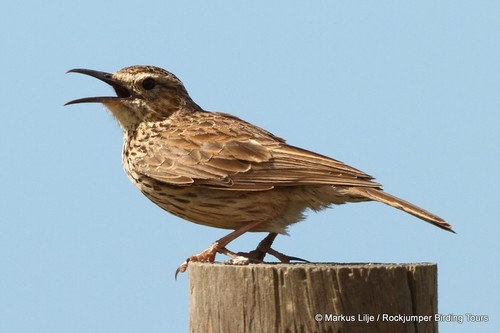
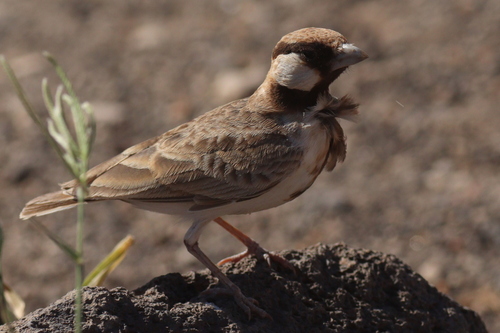
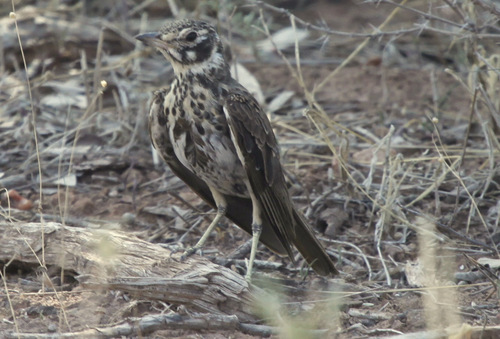
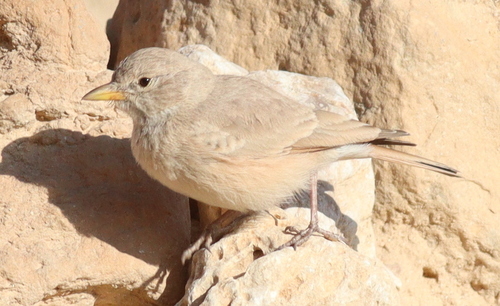
This species is a large, robust lark that measures 16–18 cm in length. When on the ground, it has an undistinguished appearance: it is mainly streaked grey on its upperparts and white on its underparts, and has two small black patches on the sides of the breast, which give the species its name. It also has a white supercilium. In flight, it displays short broad wings that are grey-brown on their underside, and a short tail with a white tip but no white edges. These wing and tail patterns distinguish it from its more westerly relative. Its song is a harsher version of the song of the calandra lark. Bimaculated larks occur from west-central Turkey to southern Kazakhstan, Kyrgyzstan, northeastern Iran and northern Afghanistan. They are also found in northern Israel, Lebanon, western Syria and northern Iraq. The species is mainly migratory, and winters in northeastern Africa, with a wide range across the greater Middle East extending to Pakistan, India and Tibet. It is a very rare vagrant in western Europe. This lark inhabits stony semi-desert and higher altitude cultivation. It builds its nest on the ground, and lays clutches of 3 to 4 eggs. It feeds on seeds and insects, with insects making up a particularly large part of its diet during the breeding season. It is gregarious in winter.