About Melanitta fusca (Linnaeus, 1758)
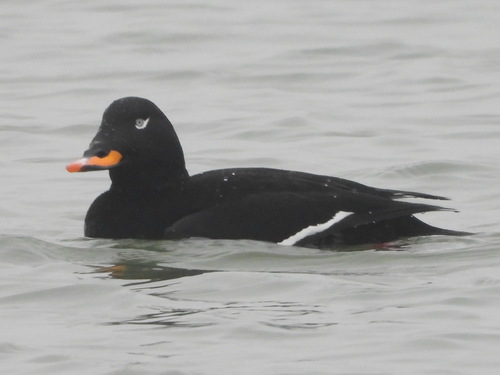
The velvet scoter (scientific name Melanitta fusca (Linnaeus, 1758)) measures 51–56 cm (20–22 in) in length, with a wingspan of 90–99 cm (35–39 in). It is a relatively large sea duck characterized by a thick neck, a long broad bill, and a pointed tail. Males have glossy black plumage, large white wing patches, small white patches behind the eye, and a partly orange bill. Females are similar in shape to males but have duller, browner feathers that lack the male's glossy sheen. Velvet scoters breed in northern Europe, ranging from Norway east to the Yenisey River in central Siberia, and also in northeast Kazakhstan. They winter further south in temperate zones, reaching as far south as Great Britain in Europe, and wintering on the Black and Caspian Sea. Small numbers of wintering birds reach France and northern Spain. On suitable coastal waters, velvet scoters form large, tightly packed flocks, and the birds tend to take off together. Lake Tabatskuri, located in the Samtskhe–Javakheti region of Georgia, hosts the last remaining breeding population of velvet scoters in the Caucasus. Studies of this population conducted in 2017–2018 recorded 25–35 pairs at the lake, with substantially fewer active nesting attempts. Competition for nesting locations, predation on velvet scoters by gulls, and human disturbance from fishing activities were all identified as factors contributing to what was considered poor reproductive rates. Velvet scoters dive to feed on crustaceans and molluscs.