About Melanchra picta Harris, 1841
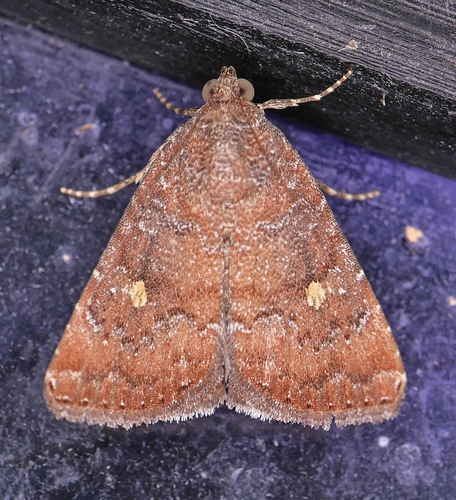
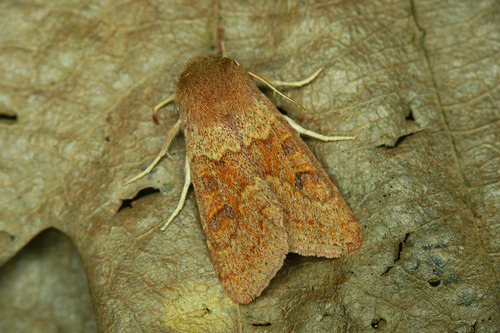
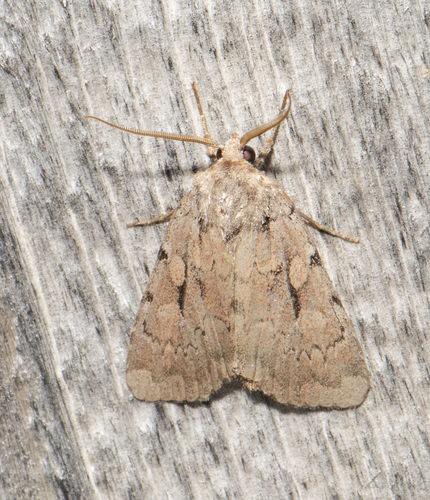
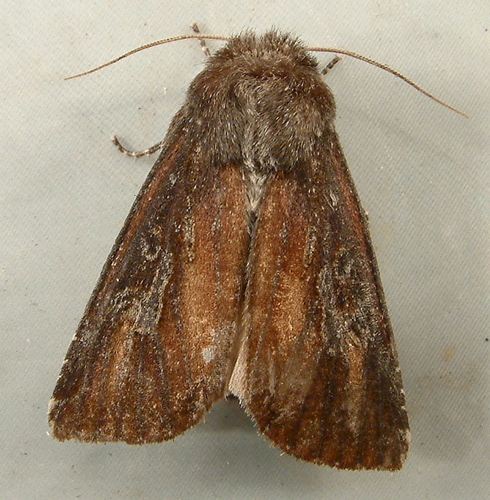
Zebra caterpillar is the larval stage of the American noctuid moth Melanchra picta (Melanchra picta Harris, 1841). The larvae feed on cabbages, beets, and other cultivated plants. Adult moths have chestnut- or reddish-brown heads, thoraxes, and forewings, with purplish brown mottling usually present on the wings. Their hind wings are whitish with pale brown margins, and their abdomen is light gray. Adults have a wingspan ranging from 35 to 40 mm (1.4 to 1.6 in). Newly hatched zebra caterpillar larvae are whitish, with dark heads and several scattered dark spots across their bodies. More mature caterpillars vary in color, often showing bright, conspicuous hues, and usually have prominent black and light yellow longitudinal stripes. The top stripe is black; the top-lateral stripe and the stripe below the spiracles range from cream to bright yellow; the spiracle stripe and bottom stripe are black and marked with numerous white lines and spots. The mid-dorsal line is pale, and may be either well developed or entirely absent. The underside and legs of the larvae are light red-brown or yellow. The larval head is reddish or reddish-brown, and lacks dark arcs or reticulations. Mature larvae reach a length of 35 to 40 mm (1.4 to 1.6 in). Young larvae feed together in small compact groups until they molt, after which they scatter across plant foliage. They feed during the day, and will roll up and fall to the ground if disturbed while on foliage. Zebra caterpillars live and thrive across the entire United States. In western U.S. states, they are known as general feeders, and usually become pests during late summer. Zebra caterpillars often occur in mixed populations alongside bertha armyworms and variegated cutworms.