About Melaleuca preissiana Schauer
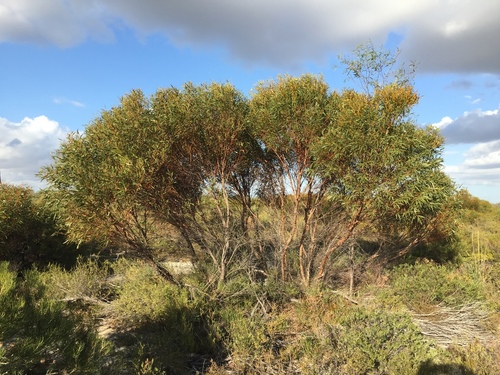
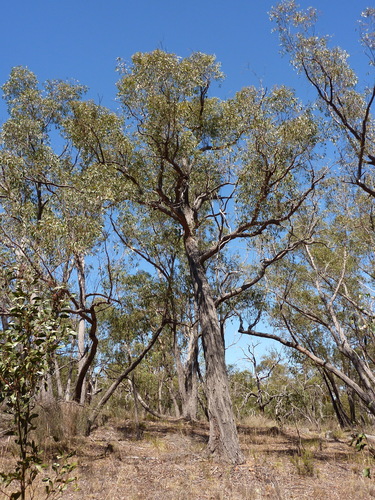
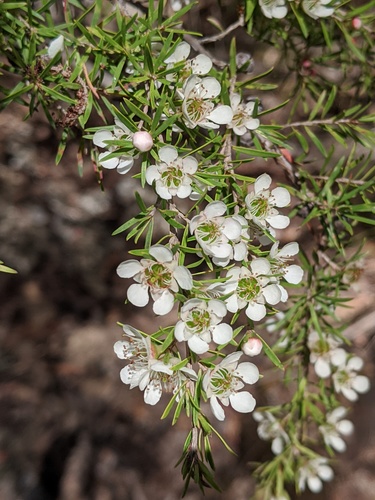
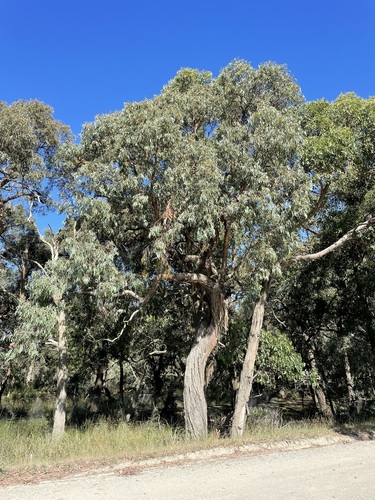
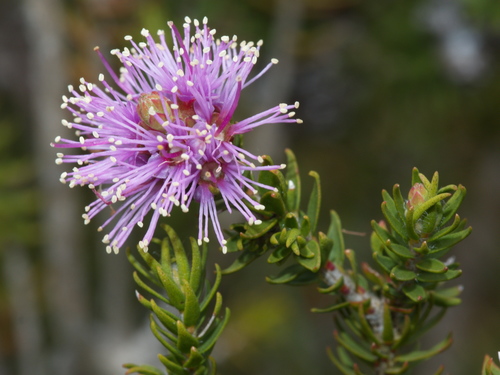
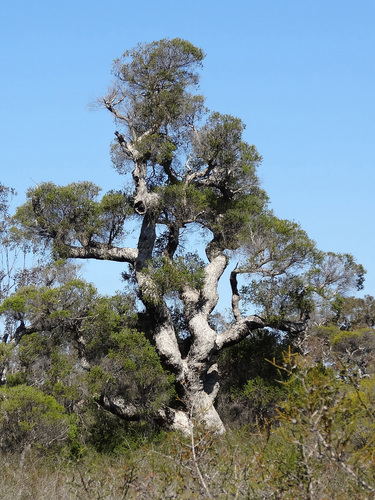
Melaleuca preissiana is a species of shrub or small tree that sometimes reaches 10 to 15 metres (30 to 50 feet) in height. It typically has papery bark, though some specimens have pale-colored hard bark. Its leaves are arranged alternately along the stems, measuring 6 to 14 millimetres (0.2 to 0.6 inches) long and 0.7 to 2.1 millimetres (0.03 to 0.08 inches) wide. The leaves are flat, shaped from narrow elliptic to narrow egg-shaped, and taper to a point at the end. The flowers are most commonly white, but may also be any shade of cream or yellow. They are arranged in spikes at the ends of branches, which continue to grow after flowering, and sometimes also appear in upper leaf axils. The flower spikes reach up to 20 millimetres (0.8 inches) in diameter, and hold 7 to 21 groups of three flowers each. The petals are 2.0 to 2.5 millimetres (0.079 to 0.098 inches) long and drop off as the flower ages. Stamens are arranged in five bundles around each flower, with 27 to 36 stamens in each bundle. Flowering takes place from August to March, and is followed by the development of fruit: woody capsules 2.5 to 3 millimetres (0.098 to 0.12 inches) long. This melaleuca is found in coastal regions between Jurien Bay and Albany, Western Australia, growing within the Avon Wheatbelt, Geraldton Sandplains, Jarrah Forest, Mallee, Swan Coastal Plain and Warren biogeographic regions. It is one of three typical tree species that grow in the peat of mound springs on the Swan Coastal Plain, which are ecological communities surrounding aquifer discharges of the Gnangara Mound.