About Melaleuca cuticularis Labill.
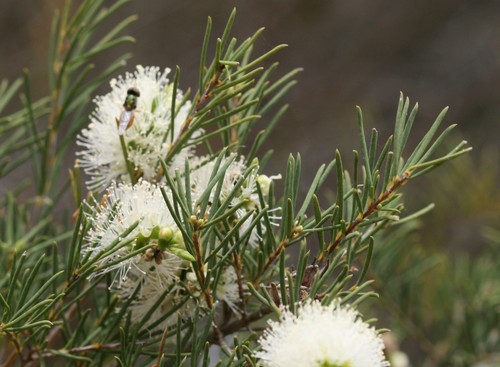
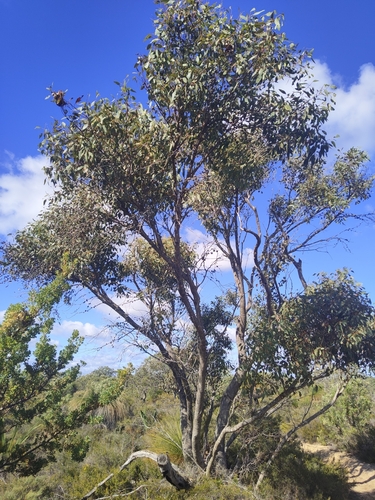
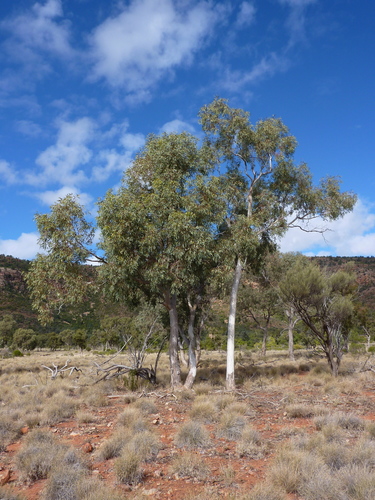
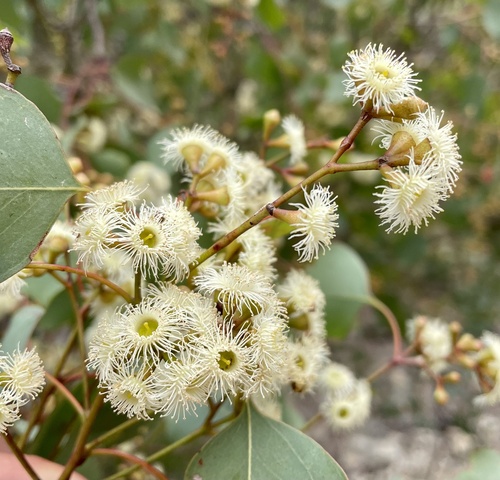
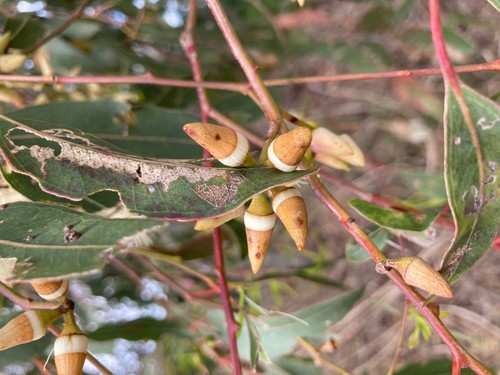
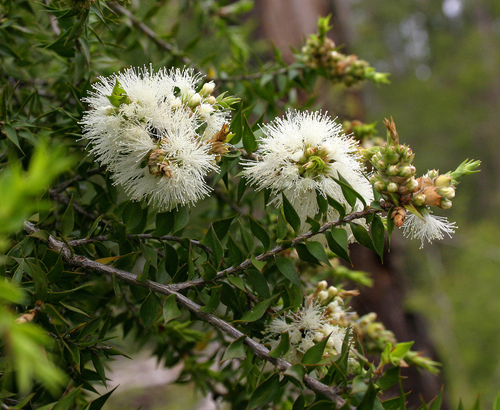
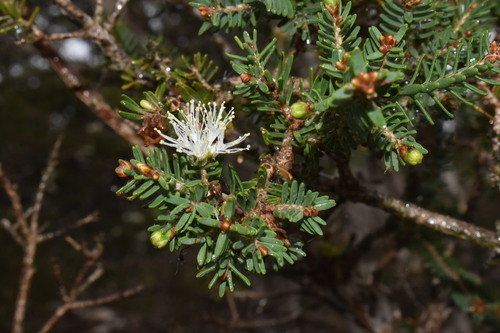
Melaleuca cuticularis Labill. is most often a shrub that grows 1 to 7 metres (3 to 20 feet) tall, but it can sometimes grow into a tree reaching 12 metres (40 feet) in height. Its leaves range from linear to oblong in shape, are grey-green to dark green in colour, and measure 4–12 mm (0.2–0.5 in) long and 1.5–3 mm (0.06–0.1 in) wide. The trunk of this species is covered in pale papery bark, and connects to rigid, twisted branches. Its flowers grow in groups of three, are white or cream in colour, form at the ends of branches, and are surrounded by overlapping brown bracts. Melaleuca cuticularis flowers between September and January. After flowering, it produces woody, star-shaped capsules when viewed from the end. These fruits are generally solitary and 6–11 mm (0.2–0.4 in) long. This species can grow in saline wetlands including swamps and estuaries. It is common in coastal regions from south of Perth to Israelite Bay, occurring in the Avon Wheatbelt, Esperance Plains, Jarrah Forest, Swan Coastal Plain and Warren biogeographic regions. It is also present, though uncommon, on Kangaroo Island in South Australia. In horticulture, Melaleuca cuticularis grows well in sandy clay, loamy clay and clay soils. It is commonly used for soil stabilisation and revegetation. It is tolerant of shade and drought, so it can be grown for hedges or windbreaks. It can also be used as a specimen plant, highlighting its attractive bark that contrasts with its light green foliage.