About Megophrys boettgeri (Boulenger, 1899)
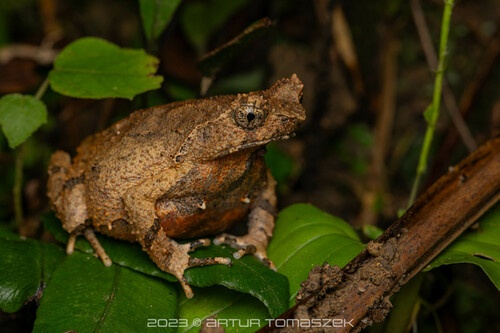
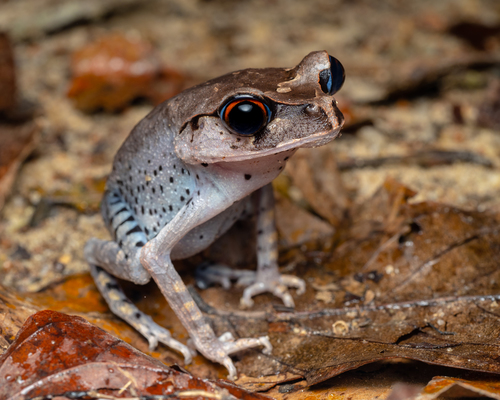
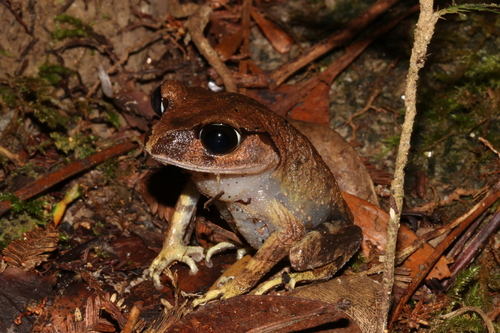
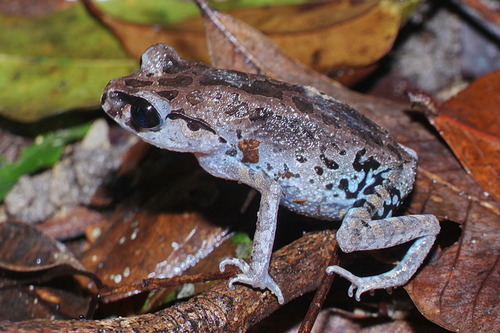
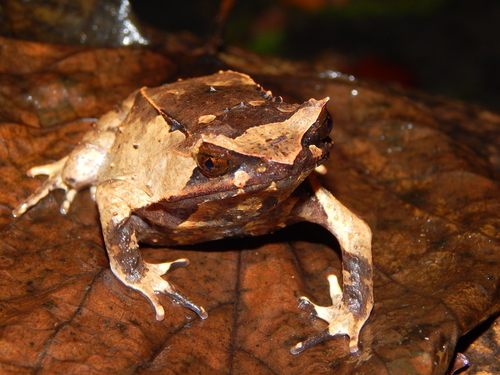
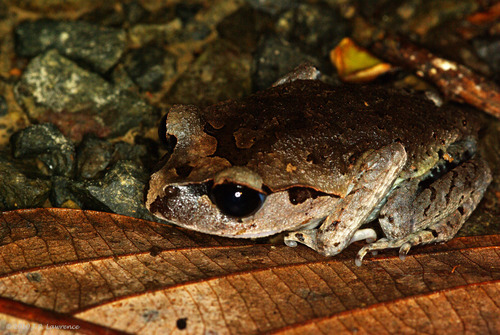
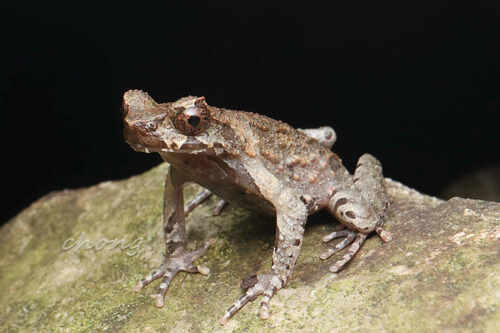
Boettger's horned toad (scientific name: Boulenophrys boettgeri, also referred to as Megophrys boettgeri (Boulenger, 1899)), is also commonly called Boettger's spadefoot toad or the pale-shouldered horned toad. This toad species is found in southern and southeastern China, where its northern range border runs roughly from Sichuan in the west to Shanxi in the north and Zhejiang in the east, as well as in northeastern India, specifically the states of Arunachal Pradesh, Sikkim, and Assam. A closely related, likely still undescribed species occurs in Tibet. The discovery history of this species is highly international. It was formally described by George Albert Boulenger, a Belgian zoologist who worked for most of his career at the Natural History Museum, London. He named Boulenophrys boettgeri to honor Oskar Boettger, a German zoologist. The description was based on specimens collected by Irish ornithologist J. D. La Touche at Guadun village in Wuyishan, Fujian, China. Mature males of this species reach a snout-vent length of approximately 36 mm (1.4 in), while females grow to around 43 mm (1.7 in). The dorsal side of these toads is dark grey or brown, with symmetrical blackish markings. Their skin is smooth, with small scattered warts on the head and back. Boulenophrys boettgeri is a reasonably common species that lives in evergreen forest habitats, closely associated with riparian vegetation, hill streams, and leaf litter. These frogs breed in streams, and their fully grown tadpoles measure 46 mm (1.8 in) in length.