About Megastraea undosa (W.Wood, 1828)
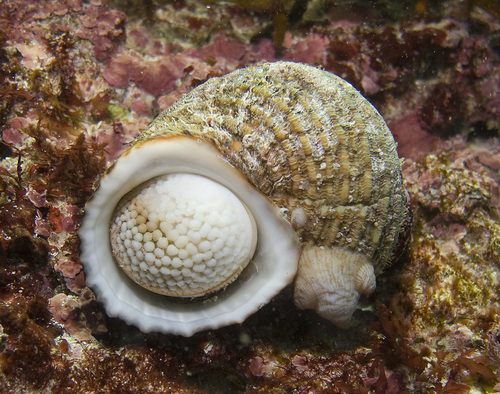
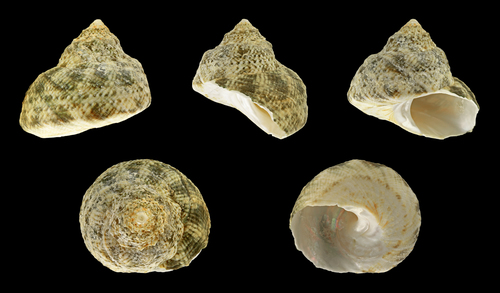
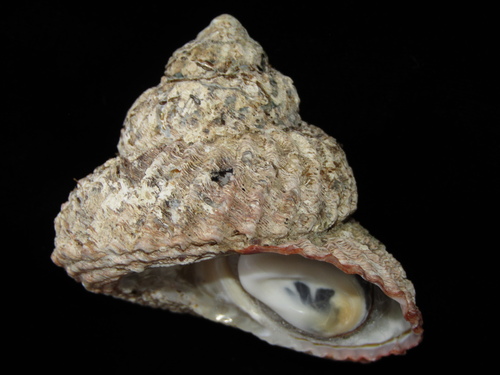
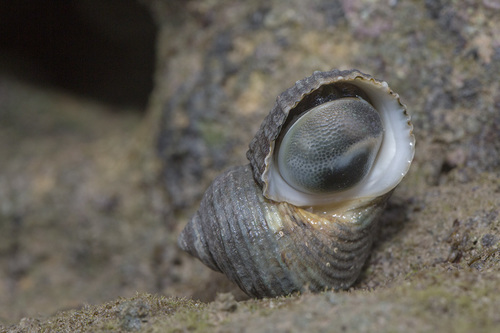
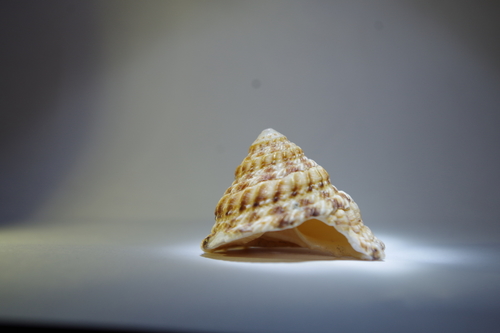
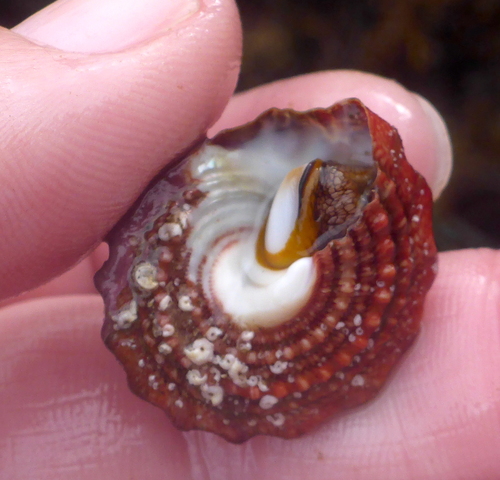
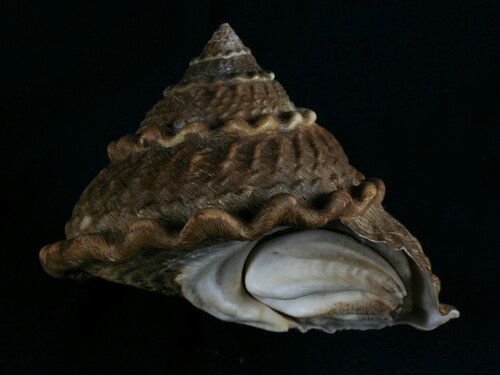
Megastraea undosa (W.Wood, 1828) is one of the largest gastropod species found on the Southern California coast. Adult shells of this species range in size between 40 mm and 145 mm. The shell has a turbinate-conical shape and lacks an umbilicus. Like other members of the family Turbinidae, its shell is made of a thick inner nacreous layer, which is covered by a thinner porcellanous layer. In living individuals, both of these layers are covered by a dark brown, shaggy periostracum. The periphery of the shell forms a twisted ridge along the outer edge of each whorl. Each whorl also features regular, coarsely sculpted rows of fine knobs and folds. The base of the shell is marked with several spiral cords that are concentric to the arcuated columella, which has a pearly groove. The unusual operculum has four strong ridges on its outer side; these ridges are decorated with hard shelly bristles that radiate in a curvilinear pattern from the operculum's pointed edge. This species occurs in the eastern Pacific Ocean, ranging from California, USA to Central Baja California, Mexico. This large snail lives on rocky shores in shallow water, generally in protected areas below the low tide level.