About Megaponera analis
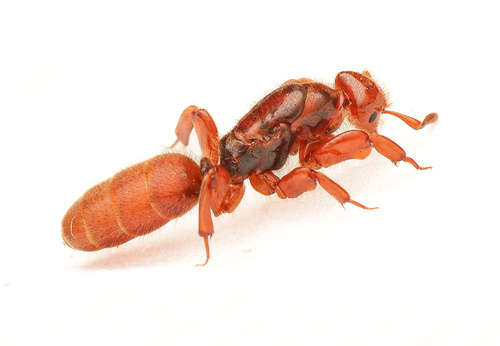
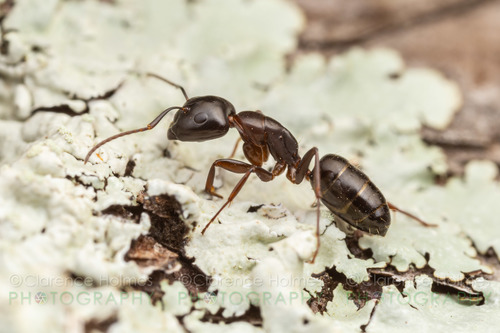
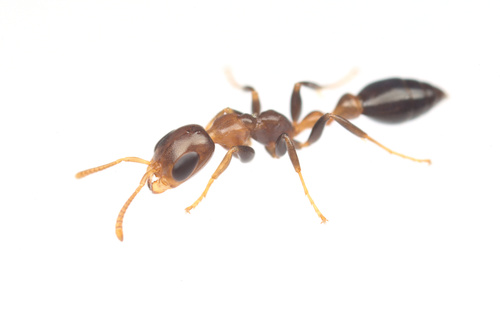
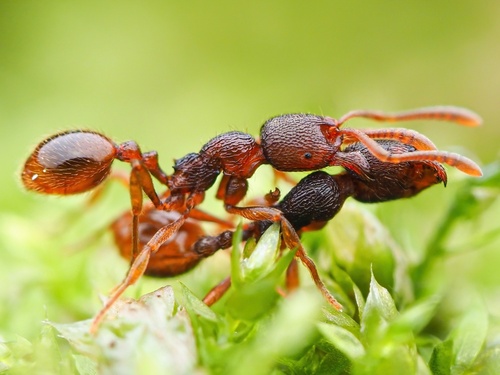
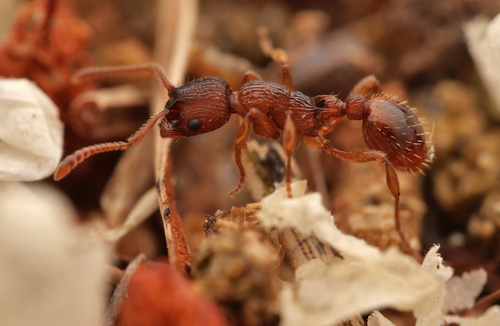
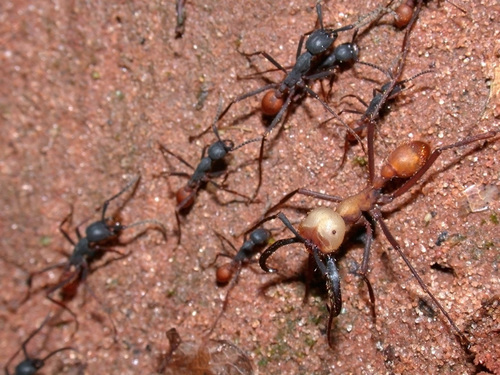
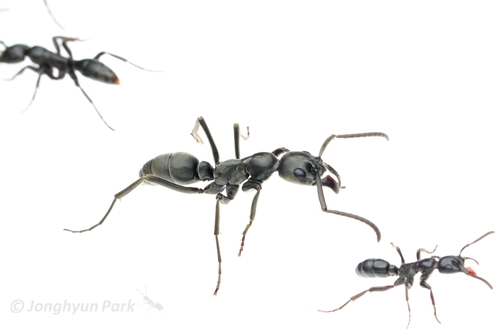
Morphology: Worker Megaponera analis ants range in size from 5 to 18 millimetres (0.20–0.71 in), and larger workers account for up to 50 percent of a colony. It has often been suggested that these larger ants also act as gamergates, but they have never been observed laying fertile eggs. Laying fertile eggs is a function restricted solely to the ergatoid queen. Although M. analis is frequently described as dimorphic, split into major and minor castes, its workers actually exhibit polyphasic allometry in size. Most variation between workers occurs in size and pubescence, with minor workers having less pubescence. Differences in mandibles have also been observed, with minor workers having smoother mandibles than major workers.
Range and habitat: Megaponera analis is found across sub-Saharan Africa, between 25° S and 12° N. Its nests are typically subterranean, reaching up to 0.7 metres (2 ft 4 in) deep, and are often situated beside trees, rocks, or abandoned termite hills. While a nest may have more than one entrance, it only contains one chamber that holds the eggs, larvae, cocoons, and queen. Individuals of the frog species Phrynomantis microps are sometimes found in these ant nests; these frogs have evolved a skin secretion that inhibits the ants' aggression.
Colony size and reproduction: Colony size ranges from 440 to 2300 adult ants, varying based on the colony's location and age. Very little is known about the reproduction of M. analis. Alate males of M. analis are often observed entering and leaving nests of established colonies, using pheromone trails from previous foraging raids as guides to the nest. M. analis colonies are obligate termite hunters, so a lone queen cannot establish a new nest on her own, as she cannot conduct a raid against termites without an existing worker army. For this reason, it is assumed that new colonies are always formed through colony fission, where a new queen takes a portion of workers from the original colony to start a new colony.