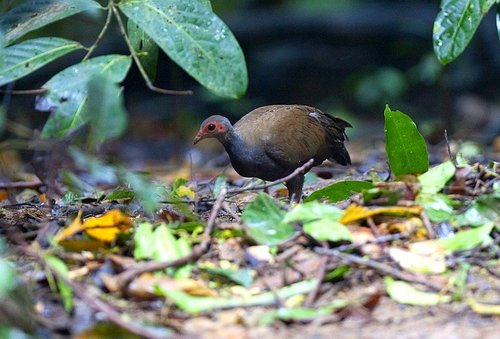
About Megapodius cumingii Dillwyn, 1853
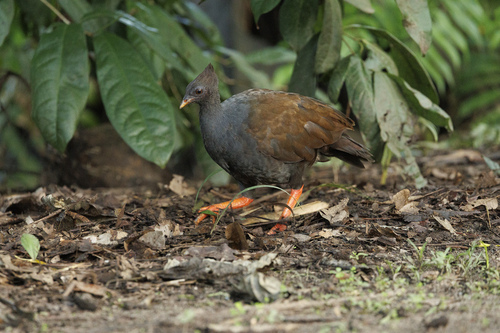
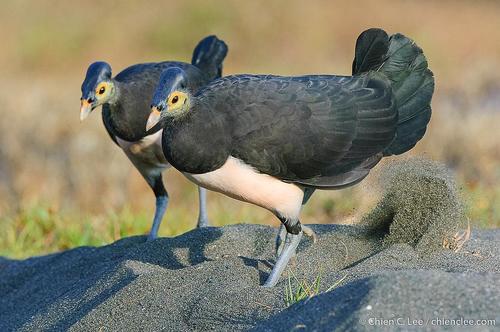
eBird describes Megapodius cumingii as an odd-looking, partridge-like bird with a stunted head, brown wings, gray underparts, and a yellow bill. It is found on small offshore islands, and in hilly and montane forests on larger islands. It forages on the ground, scraping through leaf litter and detritus. Its call consists of long, drawn-out wails that are somewhat similar to the sirens of emergency vehicles. Like other megapodes, it builds mounds and digs burrows to incubate its eggs. This species was formerly considered conspecific with the dusky megapode, but is differentiated by its lighter brown plumage, lighter legs, and prominent red facial skin. Its habitat includes forested hill and mountain zones, beach forest, coastal scrub, small islands, and even agricultural areas. The International Union for Conservation of Nature currently assesses this species as Least Concern; it was previously classified as Near Threatened. Although the species is not currently considered threatened, its population is declining due to habitat loss, introduced species that prey on its eggs, egg collection, and hunting by humans. Ecologically, it feeds on insects, mostly larvae, beetles, termites, worms, and snails, and also eats fallen fruits and seeds. Breeding seasons vary by subspecies: it breeds year-round in Sabah, from March to May in Sulawesi, and from June to August in Palawan. Nest building habits also differ across its range: it is mostly a mound nester across most of its range, but is a burrow nester in Palawan, Negros, and Panay. In Palawan and Sabah, females are known to nest communally.