About Megaphasma denticrus (Stål, 1875)
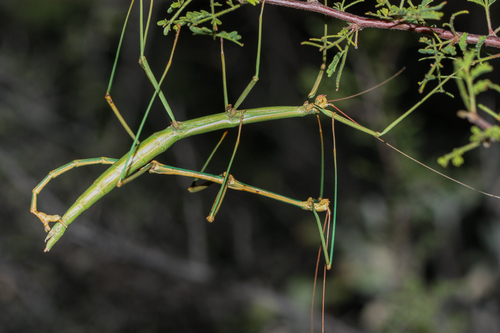
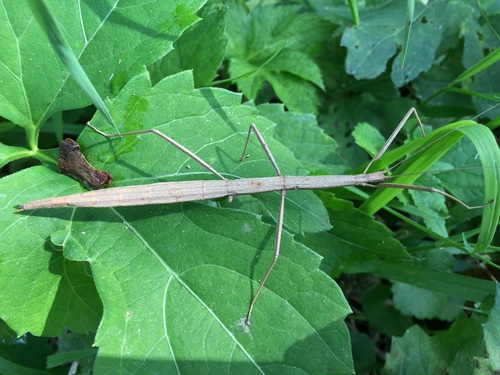
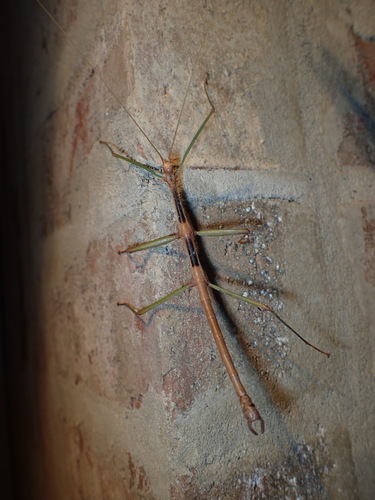
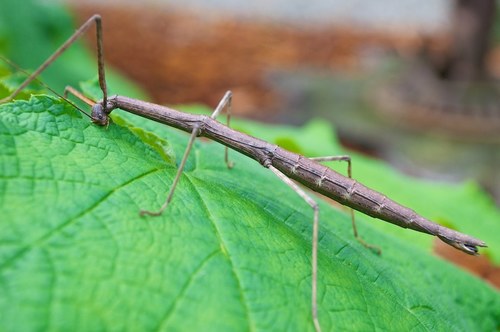
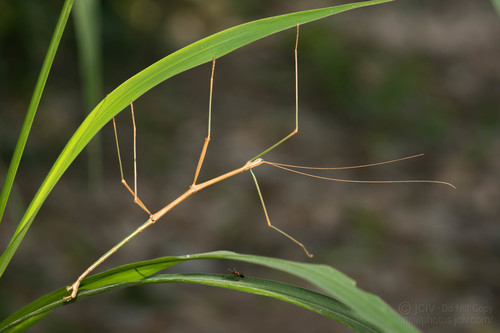
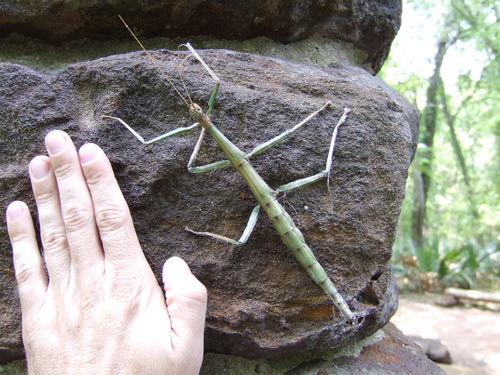
Megaphasma denticrus, commonly known as the giant walkingstick, is the largest insect species native to North America, reaching up to 7 inches in total length. This species displays clear sexual dimorphism: females are generally much larger than males, and males tend to have brighter coloration than females. Their body color ranges across various shades of green and brown. Giant walkingsticks have spines on their middle and hind legs, while males only carry one larger spine on each hind leg. This insect is distributed across a broad area of North America: it occurs as far east as Indiana, Alabama, and Kentucky; as far north as Wisconsin; as far west as New Mexico; and extends south into Mexico. It is most commonly found in wooded areas of Texas, Oklahoma, and parts of Mexico. Giant walkingsticks feed on the foliage of their preferred host plants, which include grasses, grapevines, oak trees, elm trees, and mesquite trees. They rely on camouflage to blend into the woody vegetation of their habitat. Evidence from captive rearing indicates that this species' dietary preferences shift as it develops: younger nymphs prefer understory plants, while adult giant walkingsticks prefer taller food plants. Two instances of unusually large groups of this species were recorded in Texas during June 1981 and June 2000, but the exact cause of these large groupings has not been identified. Megaphasma denticrus can reproduce both sexually and asexually. Research shows that older sexually reproducing females lay more eggs than older asexually reproducing females; this difference is not observed in younger individuals. The ploidy of offspring produced through asexual reproduction in this species is not well understood, and the species' egg incubation period also remains poorly studied. Some professional researchers have recorded incubation periods as long as two years, but amateur naturalists rearing the species report an average incubation period of approximately 10 months. Despite this long egg incubation period, adult giant walkingsticks only live for around 50 days. Individual females of this species commonly exhibit polygyny.