About Megalurus cruralis Vigors & Horsfield, 1827
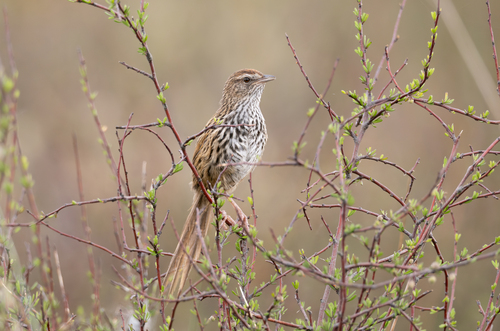
This species, Megalurus cruralis Vigors & Horsfield, 1827, commonly known as the brown songlark, shows extreme size-based sexual dimorphism. Adult males measure 23–25 cm in length, while adult females are 18–19 cm long. Males may weigh up to 2.3 times as much as females; the reported average weight of males is 74.8 g (2.64 oz), and the average weight of females is 32.4 g (1.14 oz). It is thought to be the passerine species with the largest size difference between sexes worldwide, and is also likely the largest species in the family Locustellidae.
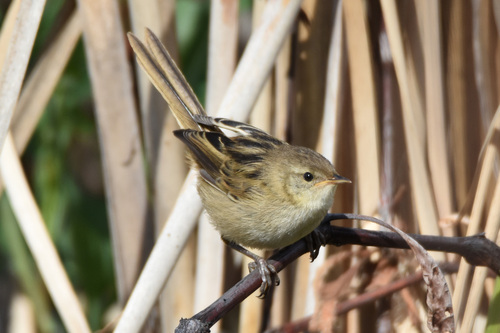
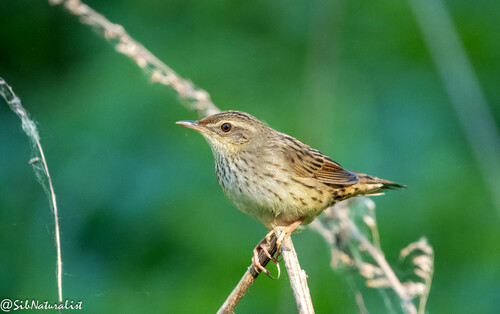
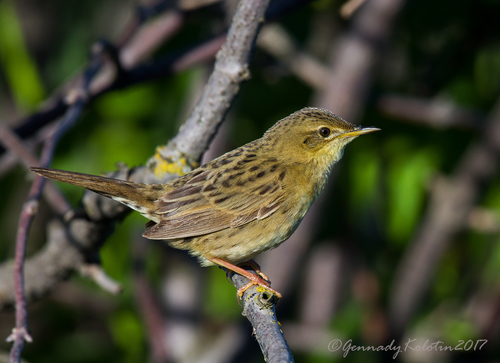
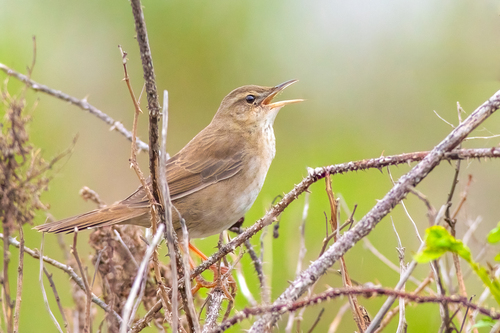
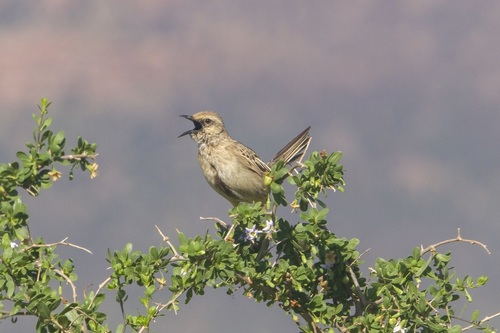
Overall, brown songlarks have dusky plumage that is pale streaked with darker brown, and they have pale eyebrows. Females have brownish-white underparts, while males have darker brown underparts. Breeding males may show a cinnamon color. Their eyes and bill are black, and their legs are grey. Juveniles are smaller and paler than adults, with pinkish-brown bills.
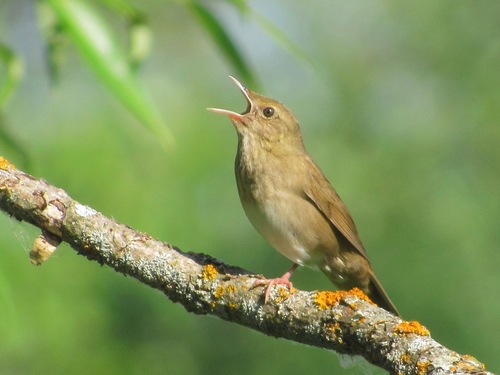
The call of the brown songlark is described as loud and creaky. Males are the main singers, and call from perches or when flying up above their breeding territory.
Brown songlarks are found across most of Australia, excluding parts of the far north and Tasmania. Dense populations are especially common in southern Australia. They prefer open pastures and grassy scrub habitats, feeding on seeds and insects. This species is highly nomadic; local population numbers fluctuate based on rainfall, and the birds often leave areas affected by drought. The species has a large range between 1,000,000 and 10,000,000 km². While its total population size has not been quantified, it is reported to be common. The IUCN lists the brown songlark as a species of least concern, and Australian authorities classify it as "secure".
Nesting for this species takes place from August to December. The nest is a deep cup constructed from herbaceous plant material, well hidden in shrubbery or tall grass. Brown songlarks typically produce one clutch per breeding season, which contains 2 to 5 pale pink eggs that measure 23 mm × 17 mm and have reddish brown spots and flecks. Females provide most of the parental care for offspring. Foxes and snakes prey on brown songlark nests.