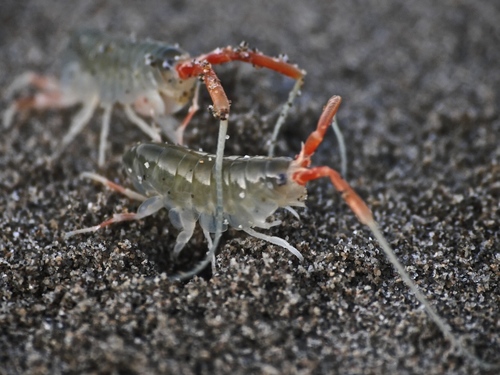
About Megalorchestia californiana Brandt, 1851
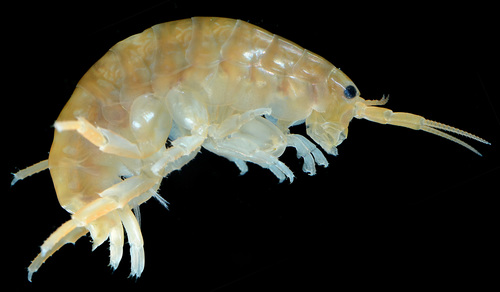
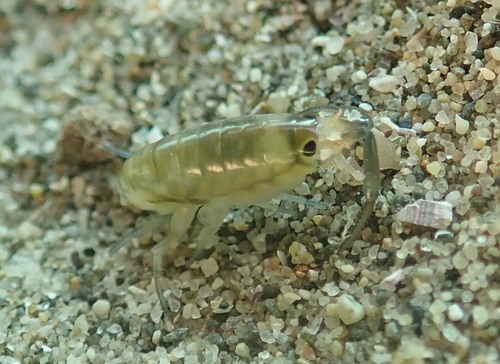
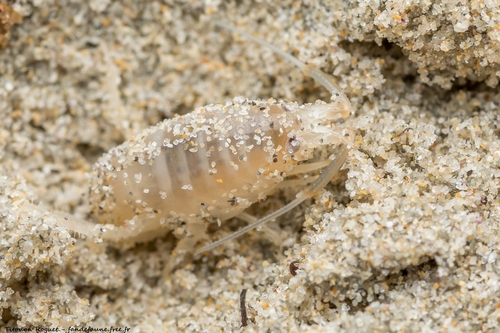
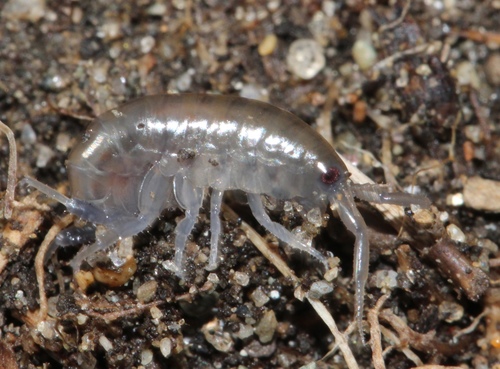
Megalorchestia californiana Brandt, 1851 grows to approximately one inch in length. Individuals have a gray-white or ivory body that is usually semi-transparent, becoming opaque just before molting. Adult beach hoppers of this species have red antennae, while juvenile antennae are typically more orange in color. This species is native to the west coast of North America, with a range stretching from Vancouver Island in British Columbia to Laguna Beach, California. It inhabits slightly sloping sandy beaches, and retreats to areas far up the beach. This habitat preference differs from that of the closely related short-horned beach hopper Megalorchestia corniculata, which lives on steeply sloping sandy shores and does not occur as high up the beach. During the day, Megalorchestia californiana usually hides in shallow burrows or under piles of dead seaweed. It emerges to feed at night or during dull weather, consuming decaying seaweed or organic debris left by beach visitors. Just before dawn, these beach hoppers retreat back under the sand. Males can sometimes be observed fighting over existing burrows, as they prefer to claim an existing burrow rather than dig a new one.