About Megalopyge opercularis (J.E.Smith, 1797)
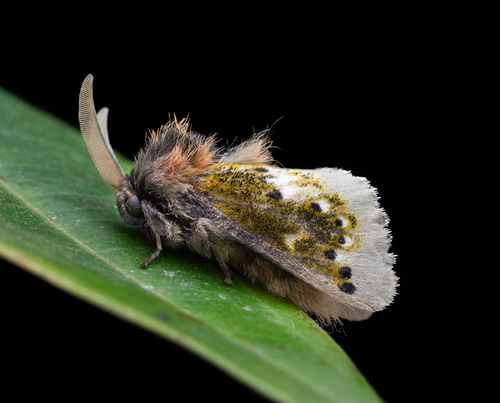
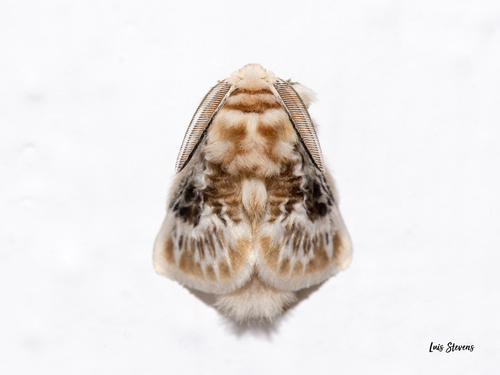
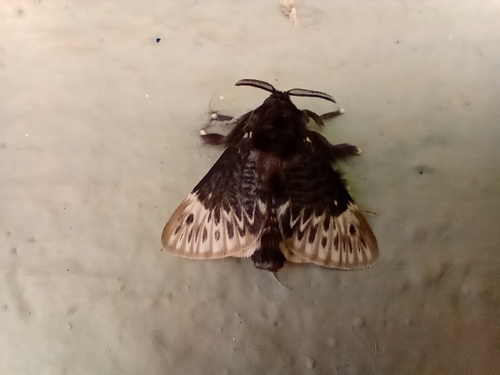
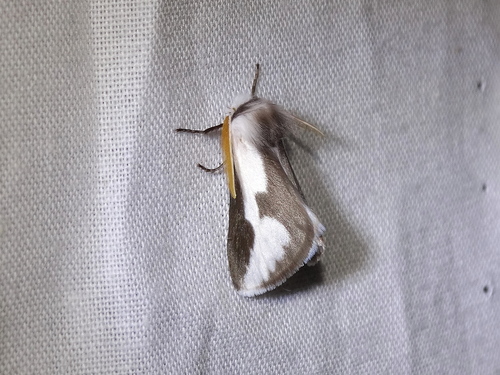
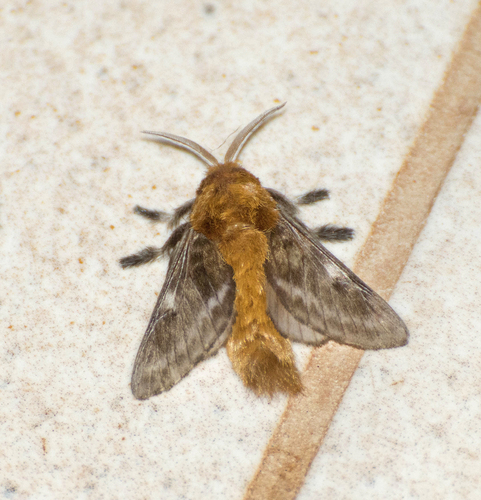
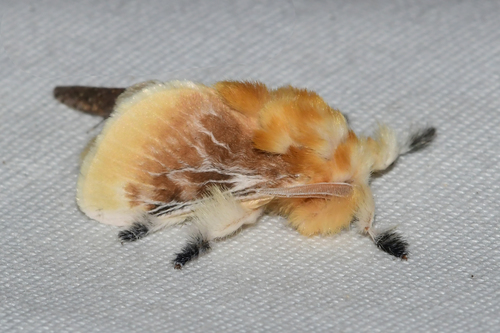
The larva of Megalopyge opercularis is around one inch long, and is thickly covered in long, lush hair-like setae. This coating makes the larva look like a tiny Persian cat, a feature that likely gave it the common name "puss". The larva varies in color, ranging from downy grayish white to golden brown to dark charcoal gray, and often has a long bright orange streak running along its body. Early-stage larvae sometimes have extremely curly "fur", which gives them a cottony, puffed appearance. Unlike the related species Megalopyge crispata, the body of M. opercularis tapers into a tail that extends well past the main body. Middle instar larvae have a messier, "bad-hair-day" appearance and lack this distinctive tail. The larva's "fur" holds venomous spines that cause extremely painful reactions on human skin when touched. The adult moth is covered in long fur, with colors ranging from dull orange to lemon yellow, and has hairy legs and fuzzy black feet. Cocoons from which these caterpillars emerge range in size from 1.3 to 2.0 centimeters. They have small pockets of hair on their back, and a flattened front end that covers the operculum at least until the operculum is fully formed. Megalopyge opercularis can be found feeding or living on oak, elm, wild plum, and many common garden plants including roses and ivy. Its distribution covers the Eastern United States between extreme southeastern Virginia and Florida, the Southern United States, Mexico, and parts of Central America and South America. This species produces two broods of caterpillars each year: one in summer, and one in fall. Late-season larvae may remain inside their cocoons throughout the entire winter, and emerge as adults in late spring.