About Megalonaias nervosa (Rafinesque, 1820)
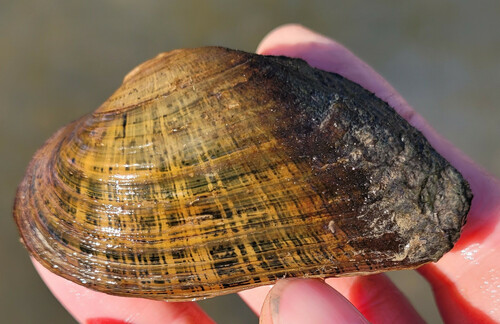
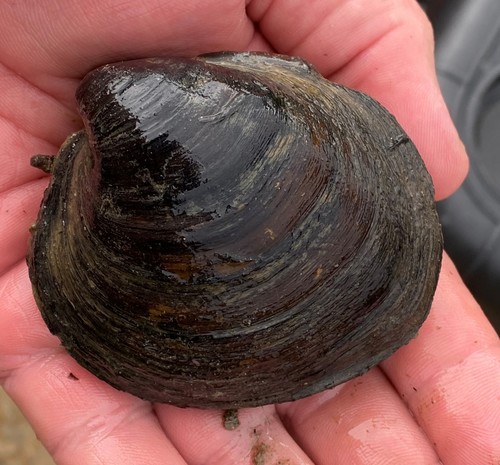
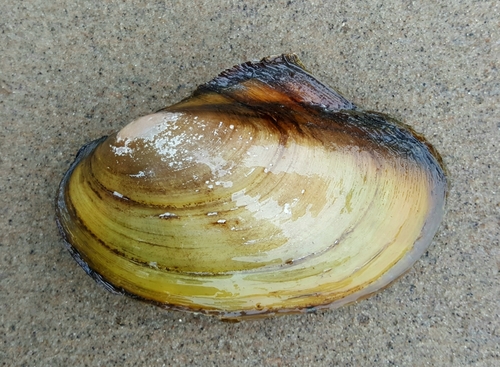
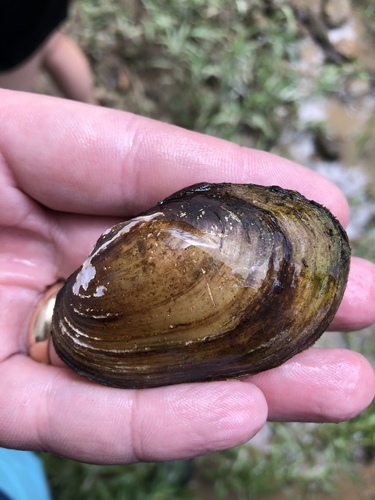
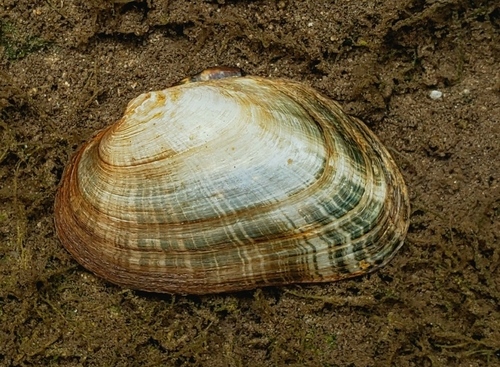
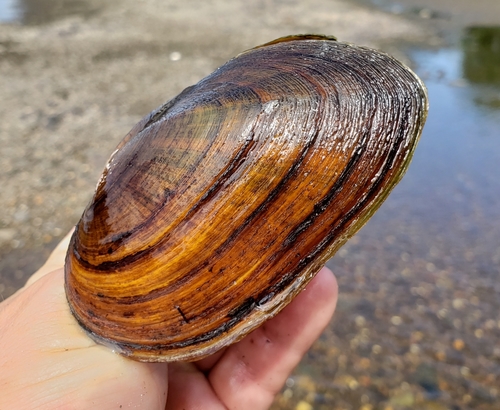
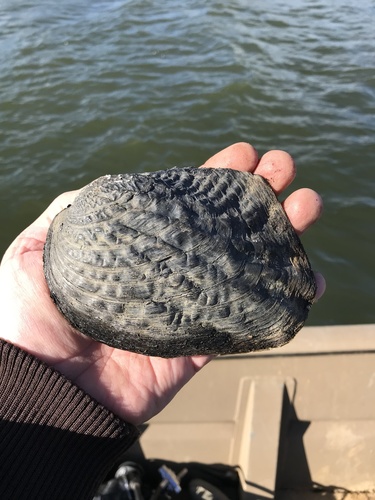
Megalonaias nervosa (Rafinesque, 1820) is a species of freshwater mussel. Its shell is made of two hinged valves; it is thick, rectangular in shape, and can be either compressed or inflated. The species’ umbos do not extend above the hinge line. Its cardinal teeth are large and serrated, while its lateral teeth are long and curved. The outer shell ranges in color from dark brown to black, covered in small bumps and fluted ridges; the inner nacre is colored white to gray. This species can be found in both small and large rivers, across a variety of substrates including mud, sand, and gravel. Its distribution covers the Mississippi drainage, and the Gulf drainage from the Ochlockonee River system west to the Rio Grande, extending into northeastern Mexico. It does not occur in Canada. It is morphologically similar to Amblema plicata and Arcidens confragosus. While Megalonaias nervosa is currently classified as a species of least conservation concern, mussel populations have suffered habitat loss caused by pollution, invasive species, and water impoundment. Low water temperatures have caused reduced reproduction rates for the species in some areas, and confirmed studies confirm water temperature influences reproduction: mussels will not reproduce if water temperatures are too low. Individuals reach sexual maturity around 8 years of age, and are late tachytictic breeders. Males are mature from July to October, and females carry eggs from August through October. Males release sperm into the water, which females draw in through their incurrent siphon to fertilize eggs internally. This species has a parasitic larval life stage called glochidia. The adult mussel uses a lure to attract host fish, and releases glochidia when a fish is close enough. The glochidia attach to the host fish’s gills or fins, and feed on the fish’s blood until they develop into juvenile mussels. Documented host fish species for Megalonaias nervosa include longnose gar, largemouth bass, yellow perch, longear sunfish, bluegill, slender-head darter, and log perch. Once glochidia are released, the parent mussel provides no further care. Megalonaias nervosa are filter feeders that expel waste through the excurrent siphon. They are sedentary, and remain either anchored to or buried within the substrate.