About Megachile policaris Say, 1831
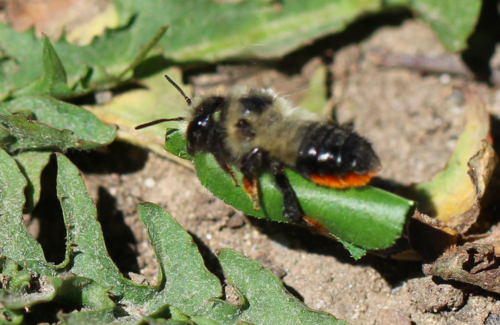
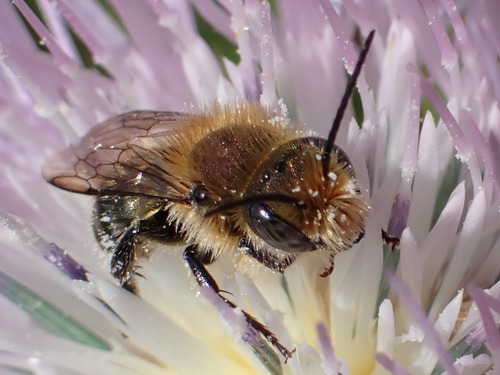
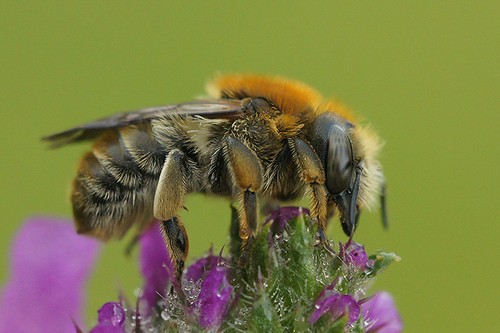
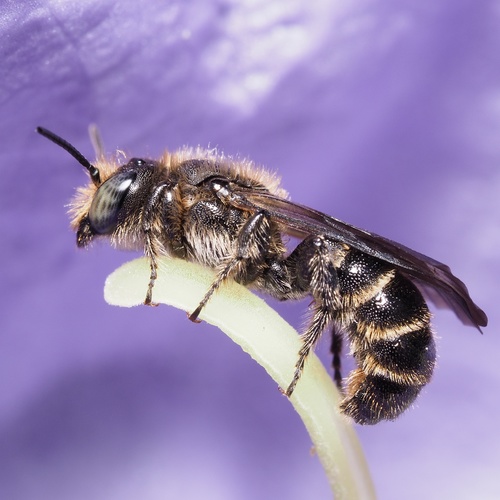
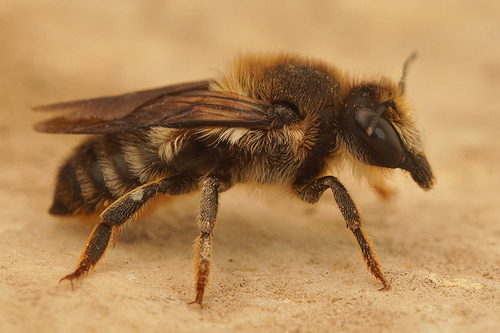
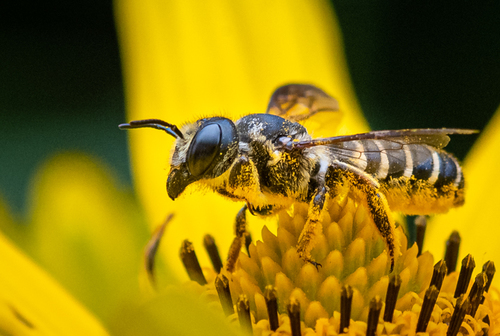
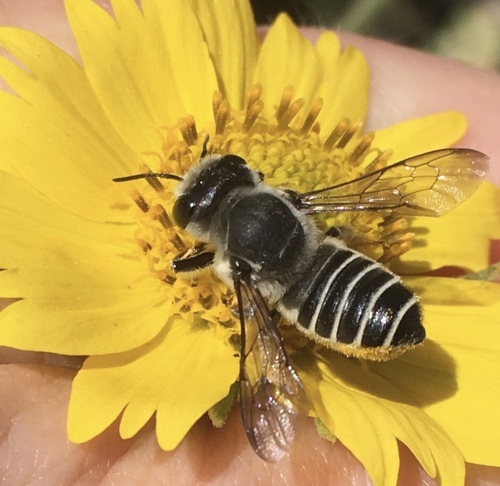
Megachile policaris Say, 1831 is a species of solitary, robust, non-metallic leaf-cutter bee. Individuals are small to medium-sized, and solid black in color. The basal section of the tergum is concave toward the front and lacks ridges. The dorsal metathorax (metanotum) sits almost perpendicular to the rear of the propodeum, the posterior margin is roughly straight, and the scutellum is broad. This species has no carinae (elevated ridges) on its tubercles or pleura, and it has linear notaulices. In males, the front coxae are often spinose, and the front tarsi are larger than those of females. The two recurrent veins of the front wings attach to a submarginal cell. Mandibles are dentate, and they are especially large in females. This species has four visible abdominal sternites (ventrites) and four hidden abdominal sternites. Like all species in the genus Megachile, it has three maxillary palps. The genus name Megachile derives from Greek words meaning "large" and "lips", referring to the characteristic mouthparts of species in the genus. Females of this species carry pollen under their abdomens. Females collect pollen and nectar to bring back to their nests, where they combine these materials with saliva to create a food source called "bee loaf". Once a sufficient amount of bee loaf is prepared, the female deposits an egg on it, then chews leaves to form a small, round cavity around the bee loaf and egg. She repeats this process until her nest is completely filled with eggs, then builds a thick outer wall for the nest out of leaves. When the eggs hatch, young bees feed on the stored bee loaves until they mature, then gnaw through the nest walls the following spring to emerge. As a leaf-cutter bee, females may cut oval or circular sections of leaves to line the cells of their nests. Alternatively, they may line their nest cells with dried plant resin, which they carry in their mandibles. This species builds nests in soil, inside plant stems, inside twigs, or by tunneling through rotting wood. This species does not produce honey, and has a weak sting it uses only for defense. Megachile policaris pollinates both wild plants and agricultural crops.