About Megachile perihirta Cockerell, 1898
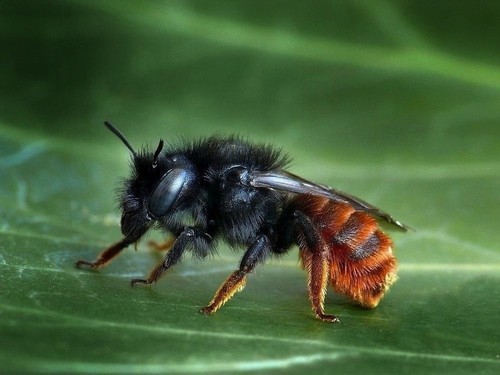
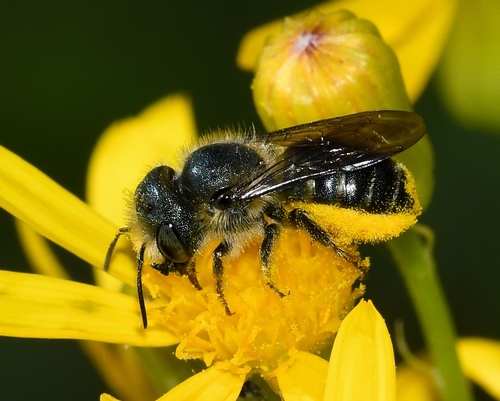
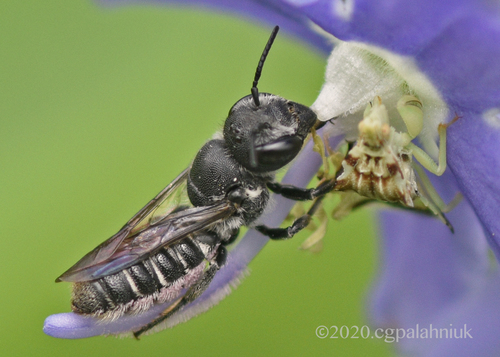
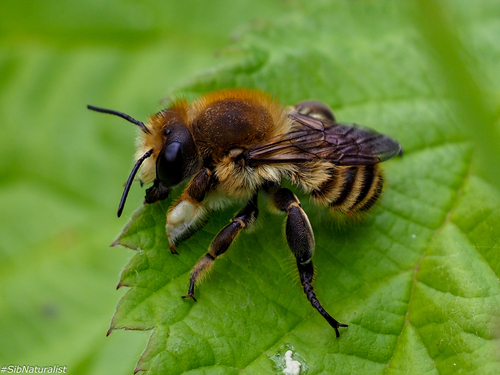
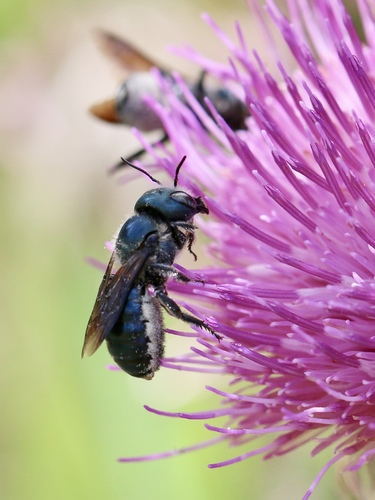
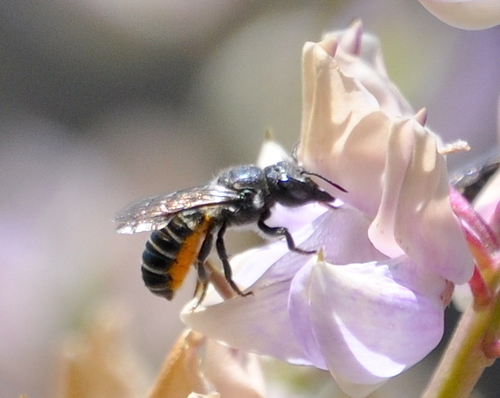
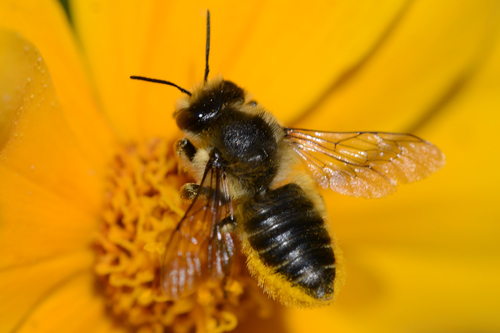
Megachile perihirta, commonly known as the Western leafcutting bee, is a bee in the genus Megachile. This species is native to western North America, with a range stretching from Nebraska to Texas and Mexico, west to California, and north to British Columbia and Alberta. It typically lives in meadows and orchards. The bee has a black body covered with long whitish-yellow hair, and this hair is denser below the thorax and abdomen. Most of the abdomen is mostly bare, though each segment has scattered whitish hair. Its wings are clear, while their veins are black. The pollen basket under the abdomen is bright red. Like most bees, adult Western leafcutting bees drink nectar, while their larvae feed on both nectar and pollen. To build nests, a small group of these bees work together to dig small burrows in sand, gravel, soil, rotting plants, or rotting wood. Inside the burrow, the bees build a series of cells lined with leaf fragments. Each cell holds pollen and nectar, and one egg is laid inside each cell. Adult Western leafcutting bees are usually seen from July to August, and the bee has a total lifespan of around one year.