About Megachile centuncularis (Linnaeus, 1758)
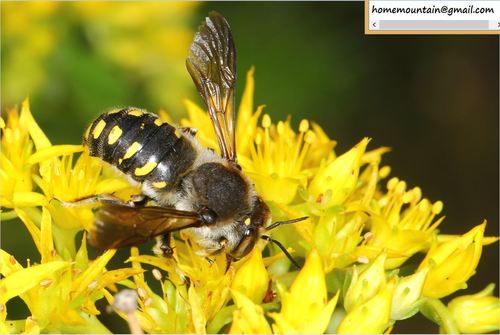
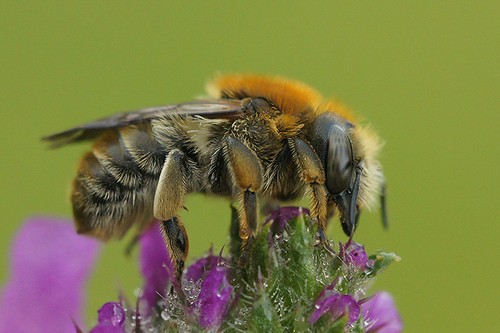
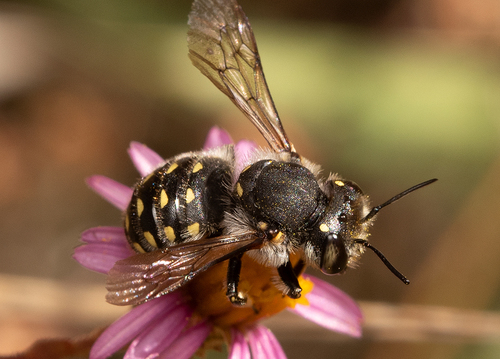
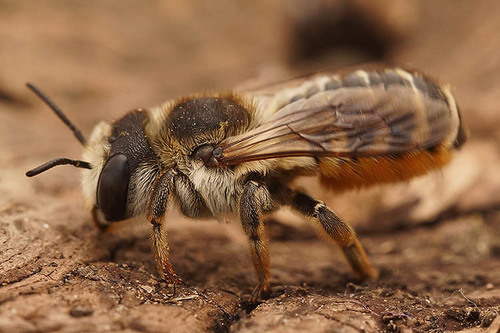
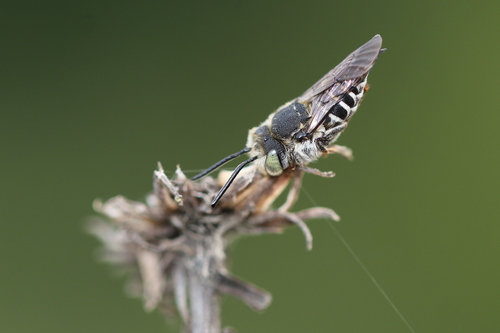
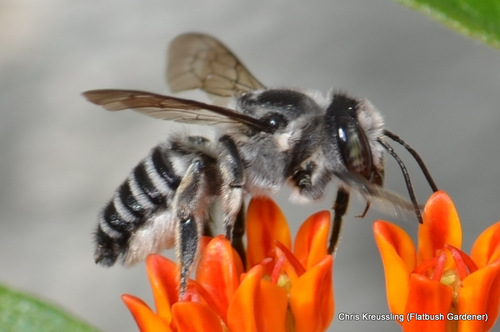
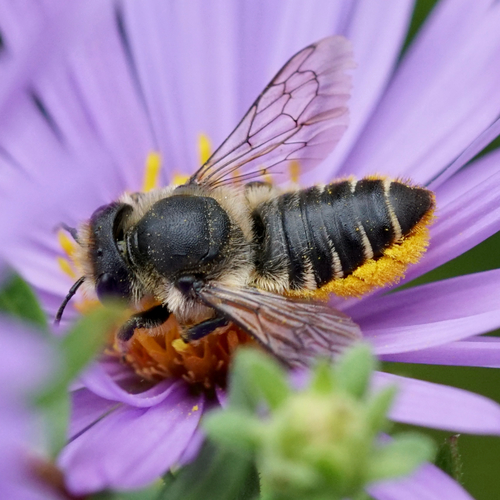
Megachile centuncularis (Linnaeus, 1758) is a species of bee in the family Megachilidae. Megachilids are long-tongued solitary bees defined by a rectangular labrum, the flap-like structure at the front of the mouth, and carry pollen on hairs located on the underside of the abdomen. This species reaches about two centimetres (0.79 in) in length, and is mostly black in color. Its abdominal segments are fringed with golden hairs, and the underside of its abdomen is covered in orange hairs. This bee is native to the northern hemisphere, and is present in both North America and Eurasia. In western Europe, its range extends south from Norway, Sweden and Finland to Spain and Italy. It occurs in eastern Ireland, and in Britain, it is found especially in the southern part of the country. It is generally a common species, and visits gardens in both rural and urban areas. Adult Megachile centuncularis feed on nectar from various flowers, particularly thistles and brambles. They collect pollen from a wide range of flowering plants to provision their nests, including species from the plant families Asteraceae, Fabaceae and Hypericaceae. This bee builds its nests in a variety of locations: in wood, hollow stems, wall cavities or crevices, and even soil, and has been recorded using an upturned flowerpot as a nesting site. The bee uses its jaws like scissors to cut leaf pieces to line the nest, most often using rose leaves, but also using leaves from honeysuckle, horse chestnut, ash, birch or lilac. At the nest site, the leaf pieces are rolled up, filled with pollen, and one egg is laid inside each rolled leaf package. Finally, the nest entrance is sealed with around six leaf discs. Like other bees native to temperate regions, M. centuncularis overwinters inside the nest before emerging, spending the winter either as a pupa or as a fully developed larva.