About Megachile angelarum Cockerell, 1902
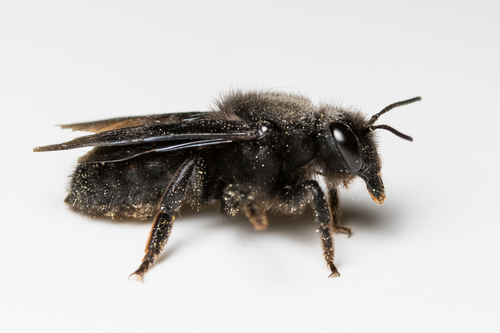
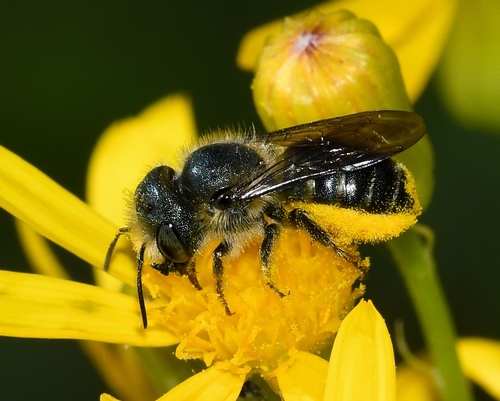
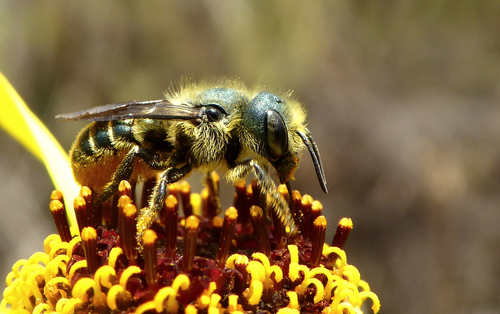
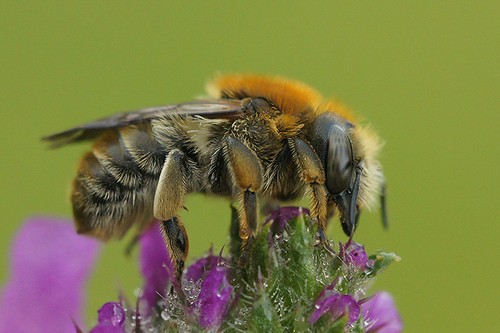
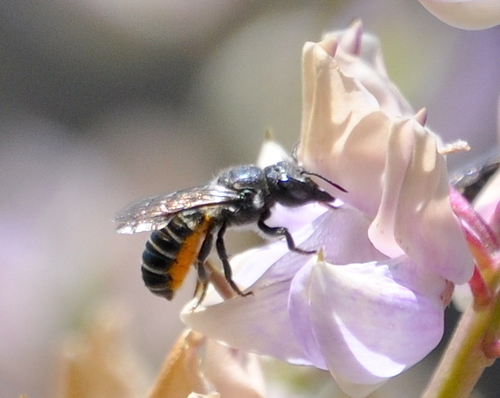
Megachile angelarum Cockerell, 1902 is a species of bee with identifiable morphological traits that distinguish it from similar related species. Female individuals of this species can be recognized by their parallel-sided metasoma (abdomen). The mandibles of M. angelarum lack cutting edges, unlike many other bees. This species is also characterized by complete apical white fasciae on tergites T1 to T5, the visible segments of the abdomen. Additional identifying features include an abdominal scopa (a specialized brush of hairs) on the underside of the abdomen, deep grooves on tergites T2 to T4, and a distinct turned-up lip at the end of the last visible abdominal segment T6 in females. M. angelarum most closely resembles the species Megachile campanulae, but female M. campanulae lack the apical white fascia on T5, allowing for differentiation between the two. This bee species occurs across North America, in Southern British Columbia, Canada; California, Arizona, and New Mexico in the United States; and Baja California, Mexico. Records compiled by Ascher and Pickering (2014) map the species' range from southern British Columbia south to Tijuana, Mexico, with the majority of records coming from California. Within its range, M. angelarum lives in a variety of natural landscapes, including forests, grasslands, and urban areas. It nests in sheltered cavities, including cavities in wood and hollow plant stems. Megachile angelarum is a cavity-nesting solitary bee. As a solitary species, it constructs its nest independently, with no colony structure to support brood rearing, unlike social bee species. It collects resin and gum to build its nest. While it resembles leafcutting bees, it does not cut leaves or petals like other leafcutting bees do. This native bee acts as an important pollinator, contributing to the reproduction of many different plant species. Its solitary lifestyle lets the bee focus on individual nesting and foraging activities.