About Megabunus diadema (Fabricius, 1779)
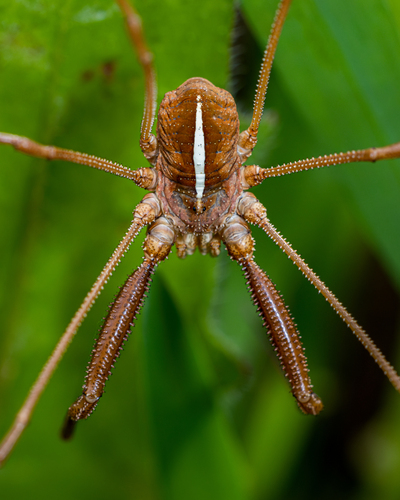
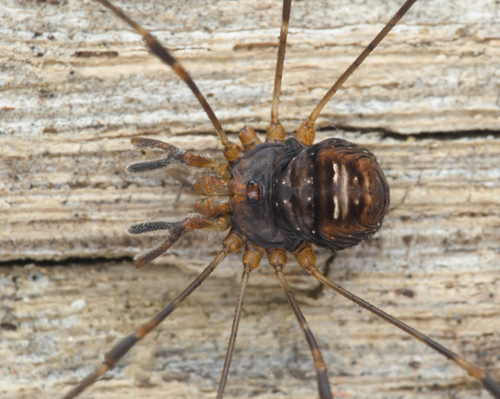
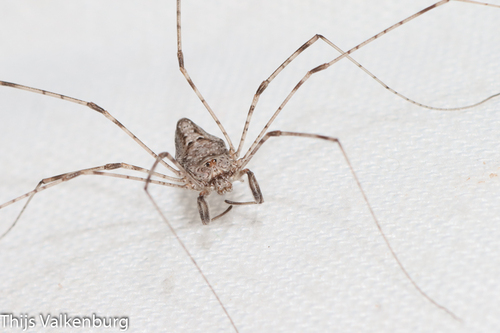
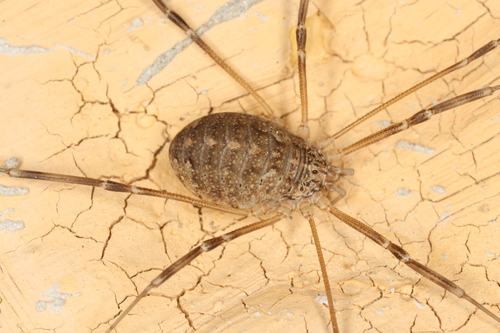
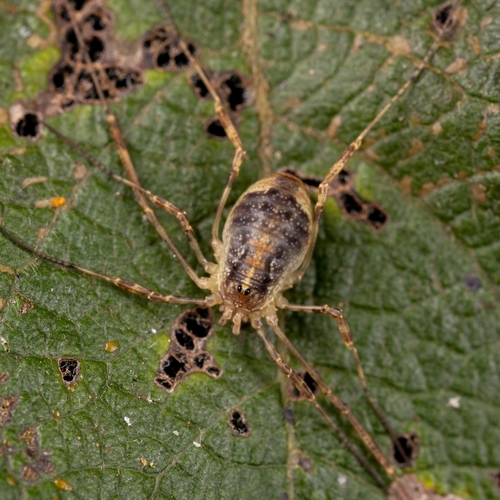
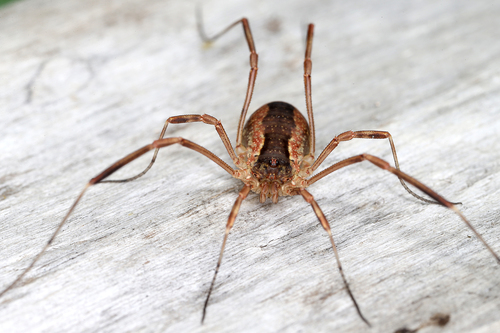
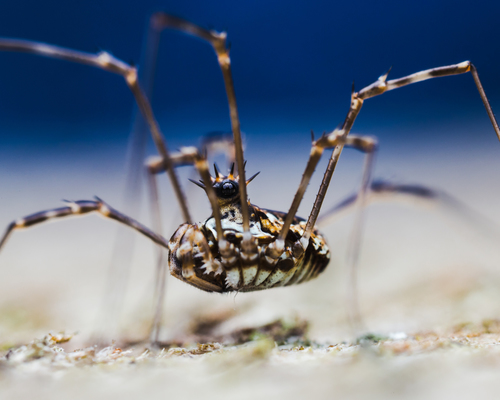
Megabunus diadema is a species of harvestman belonging to the family Phalangiidae. This species is distributed across Western Europe, with confirmed records from Iceland, the Faroe Islands, Western Norway, Great Britain, Western France, Belgium, and Northern Spain. It is most commonly found living among moss and lichens. It has cryptic coloration that blends into this habitat, making it almost invisible when it is not moving. The second pair of its legs can reach a length of up to 35 mm. Its prominent pair of eyes bears a spiny, crown-like structure. Megabunus diadema has been recorded feeding on chironomid flies. Two species of gregarines, Actinocephalus megabuni and Doliospora repelini (in the order Eugregarinorida), and the mite Leptus beroni have been found parasitizing this species. Activity patterns vary by location: in a study of Scottish woodland, the species was most active during March, June to July, and December; in montane regions of Wales, it was only found in August; in English woodland, it can be found year round, with activity peaking from May to August. Megabunus diadema is mainly parthenogenetic. It lays three batches of eggs per year, with roughly 30 eggs per batch, deposited in leaf litter or on top of soil. Like many other species in the suborder Eupnoi, its larvae have an egg tooth. Males of this species have 28 chromosomes.