About Megabalanus tintinnabulum (Linnaeus, 1758)
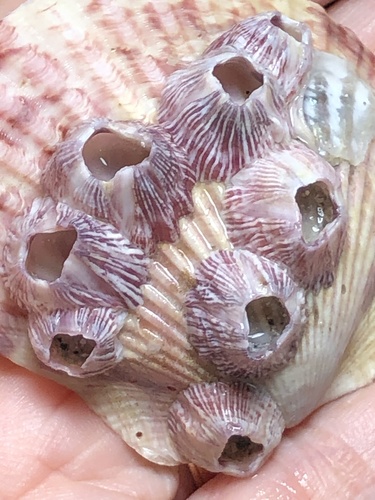
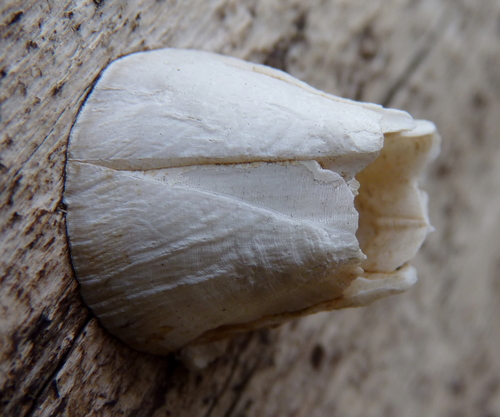
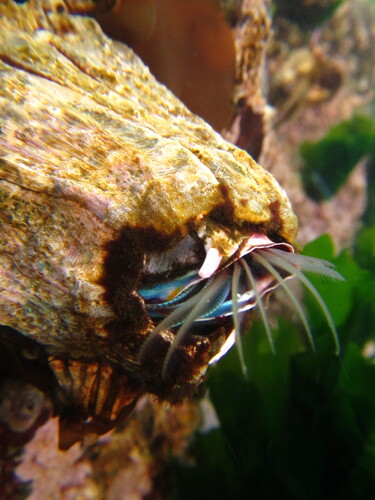
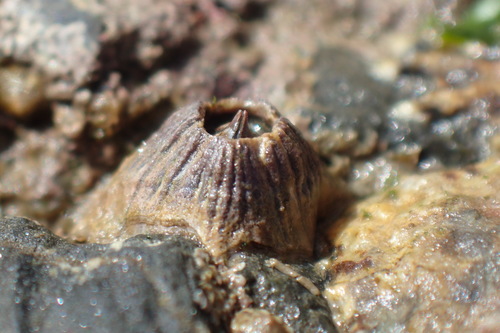
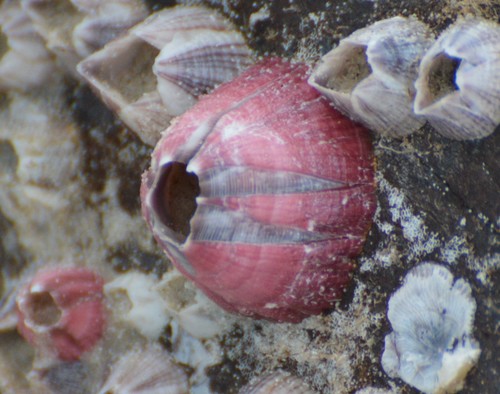
Megabalanus tintinnabulum is a large barnacle with a barrel-shaped or narrowly conical form, growing up to 5 cm (2 in) tall and 6.5 cm (2.6 in) in diameter. It can be distinguished from other species in the Megabalanus genus by two key features: ungrooved growth ridges on its scutum, and parietes that have no spines or spiny projections. Its parietes may be rough or smooth, and are sometimes slightly folded. The basal margin of its shell is either straight or slightly sinuous. Its color is a pale reddish or bluish purple; it is sometimes streaked longitudinally with darker or lighter shades, and sometimes marked with transverse color bands. Megabalanus tintinnabulum is thought to be tropical in origin, and may be native to West Africa and parts of the Indo-Pacific. It is common on both the eastern and western coasts of India. It has spread to other regions around the world by attaching to the hulls of ships. It was observed on ship hulls in the Netherlands in 1764, and in 1998 it was found attached to buoys off the Belgian coast. It was first recorded in Western Australia in 1949, and had reached the east coast of Australia by 1990. It inhabits reefs, bedrock, boulders, and timber structures at depths of up to around 40 m (130 ft). Megabalanus tintinnabulum occurs at or below the low-tide mark in the littoral zone, and is a member of the fouling community. It is found on ship hulls and man-made port structures. It is a long-lived species with a stable population structure and a low mortality rate. In the South China Sea, molluscs and acorn barnacles including Megabalanus tintinnabulum are primary foulers of ship hulls and other man-made structures. Their presence creates conditions that allow algae, hydrozoans, and bryozoans to colonize these surfaces. Empty, still-attached shells of M. tintinnabulum are sometimes occupied by the tessellated blenny (Hypsoblennius invemar). The blenny uses the shell as a refuge, and male blennies brood their eggs inside the shell.