About Medinilla magnifica Lindl.
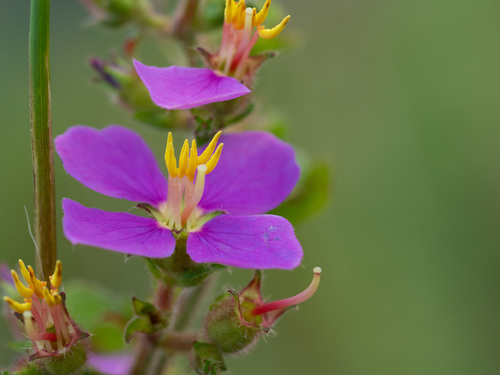
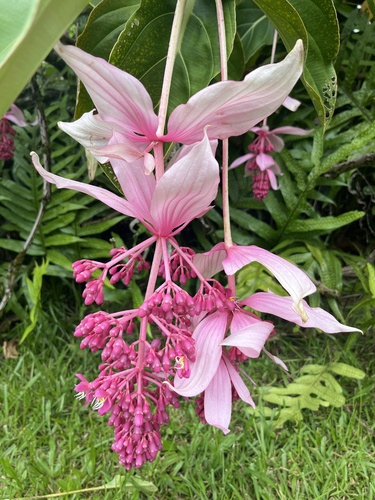
Medinilla magnifica Lindl. grows up to 3 meters tall. It produces opposite, firm, leathery ovate leaves that end in a short point, reaching 20 to 30 centimeters in length. Its flowers form in panicles up to 50 centimeters long, with pink ovoid bracts. Individual flowers are up to 25 millimeters across, and range in color from pink and red to violet. The fruits are violet, fleshy berries approximately 1 centimeter wide. In the Philippines, this species grows in the forks of large trees. It is an epiphyte: a plant that grows on other trees, but does not draw nutrients from its host the way parasites do. When a fertilized seed of this plant is deposited or lands in accumulated leaf debris, moss and other plant detritus in the crook of a larger tree or plant, it sprouts, roots and anchors itself, getting all its nutrition from the decaying detritus around its base. In tropical regions, Medinilla magnifica is grown as a perennial. It is also a common houseplant in cooler climates. King Baudouin of Belgium was an enthusiastic admirer of this plant; he grew it in the royal conservatories, and it was depicted on the 10,000 Belgian franc bank note. In temperate zones, this plant must be grown as an indoor houseplant or kept under year-round protection, as it cannot survive temperatures below 15 °C (59 °F). It can be kept outdoors year-round in USDA hardiness zones 10 to 12, but it requires protection from excessive hot sun, wind and cold. This plant needs high humidity, and prefers bright indirect light, with shade and protection from direct sun especially during the hottest part of the day. It has been awarded the Royal Horticultural Society's Award of Garden Merit.