About Mediaster aequalis Stimpson, 1857
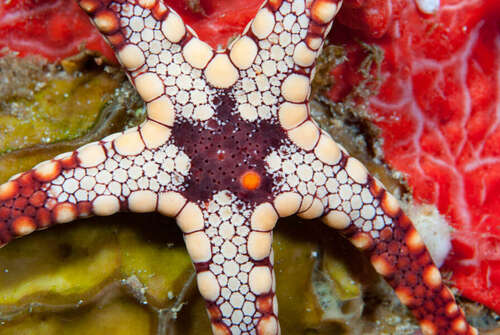
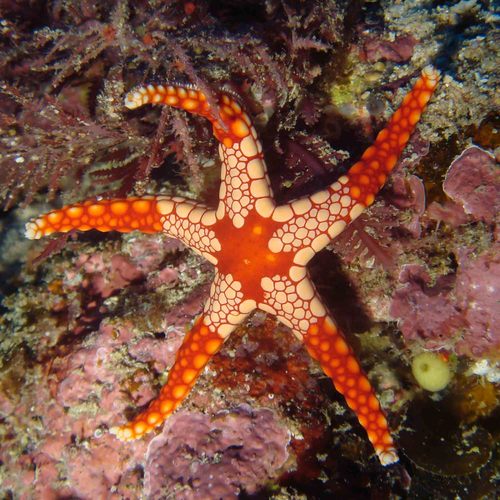
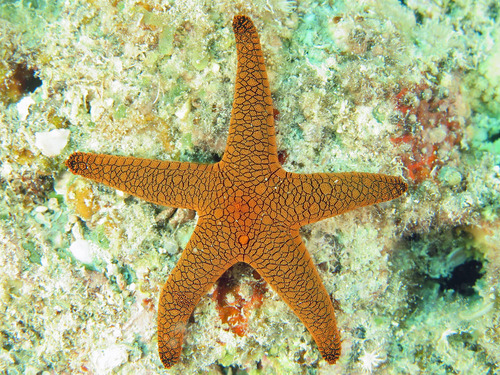
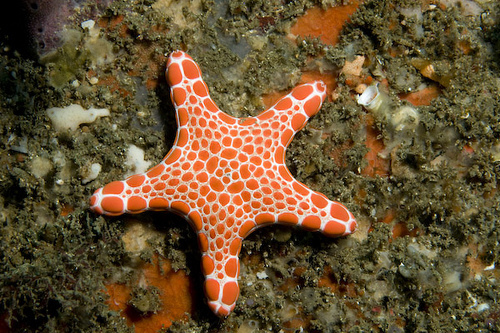
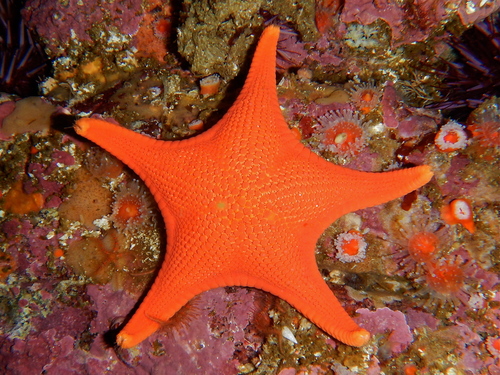
Mediaster aequalis, also known as M. aequalis, typically has five stumpy arms, though it occasionally grows four or six. It reaches a maximum diameter of 20 cm (8 in). Its aboral, or upper, surface is bright red, while its oral, or under, surface is orangey-red, and its tube feet are red. A row of noticeable marginal plates runs along the edge of the arms on the aboral surface. The central disc holds many flat-topped ossicles, which are platelike calcareous structures. Each of these ossicles contains a central group of granules, surrounded by a ring of about twenty-five marginal granules. This species is native to the western coast of North America. Its range extends from Chignik Bay in Alaska southward to Baja California. It most often lives on rocky substrates, at depths ranging from the low intertidal zone to around 500 m (1,600 ft). M. aequalis is an omnivorous predator that also scavenges dead animals and detritus. In addition to eating algae, it preys on tunicates like sea pork, sea pens, sponges, bryozoans, brachiopods, and polychaete worms. This sea star is itself preyed on by the larger morning sun star. It can move at 40 cm (16 in) per minute, a fast speed for a starfish. Juvenile M. aequalis often gather among the tubes of the tube-dwelling worm Phyllochaetopterus prolifica. Research conducted in Washington state found that M. aequalis larvae are highly selective about settlement location, and exclusively choose to settle on these worm tubes.