About Mecyna asinalis Hübner, 1819
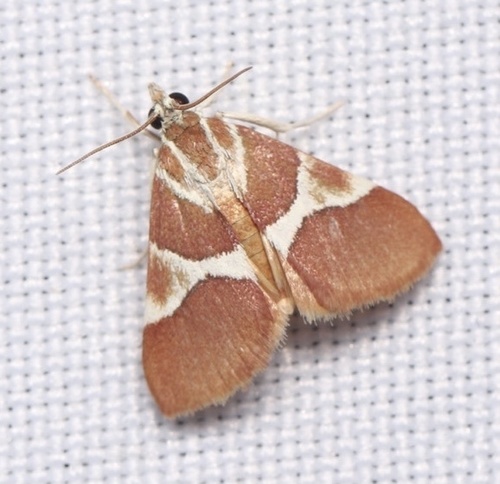
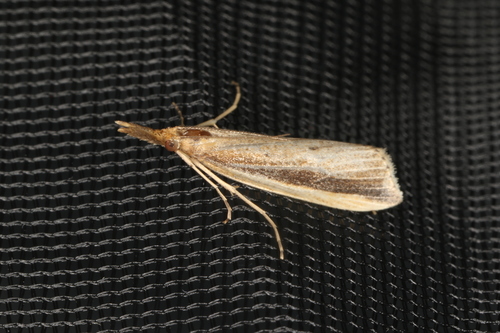
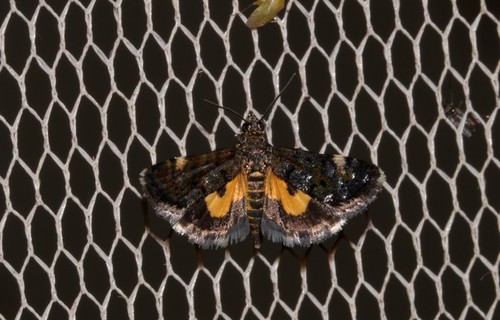
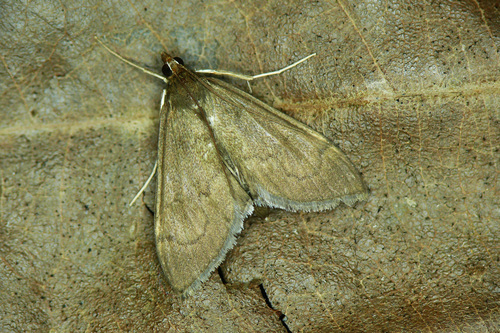
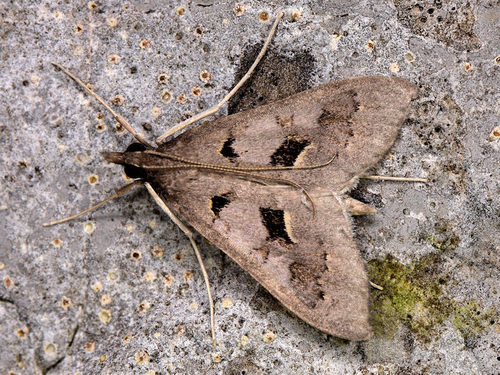
This species is Mecyna asinalis Hübner, 1819. Adults have a wingspan of 25–29 millimetres, which equals 0.98–1.14 inches. Their forewings are grey, with darker lines. The first line is indistinct, and is sometimes followed by a dark fuscous triangular subdorsal spot. The second line is sometimes dotted with blackish, is curved, and has a deep abrupt inward sinuation below its middle; it is often preceded by a brownish or dark fuscous trapezoidal subdorsal spot. A very large orbicular discal spot and a somewhat paler reniform discal spot are present, and the reniform discal spot is preceded and followed by faint brownish, sometimes dark-edged spots. Hindwings are grey, with a darker postmedian line. Mature larvae are yellow-brownish, with a reddish-brown dorsal line, a broader brown subdorsal line, a brown lateral line, and black spots. Adult moths fly from May to October, producing two generations per year. Larvae graze on the leaves of their foodplants, eating the leaf parenchyma and leaving a "window" in the upper leaf epidermis. Recorded foodplants are taupata (Coprosma repens), crosswort (Crucianella maritima), and wild madder (Rubia peregrina). This moth is distributed across western and southern Europe, including Ireland, Britain, the Iberian Peninsula, France, Germany, Switzerland, Italy, Albania, Croatia, Greece, and the islands of Sicily, Sardinia, Malta, Madeira, Corsica, as well as the Azores and the Canary Islands.