About Meandrina meandrites (Linnaeus, 1758)
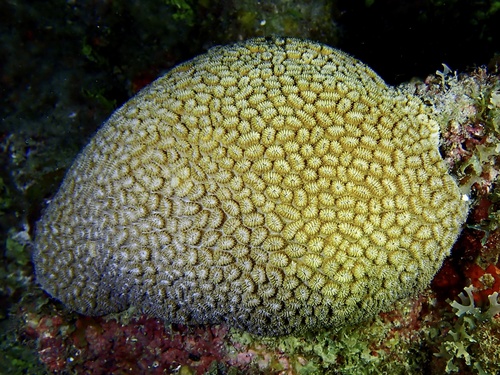
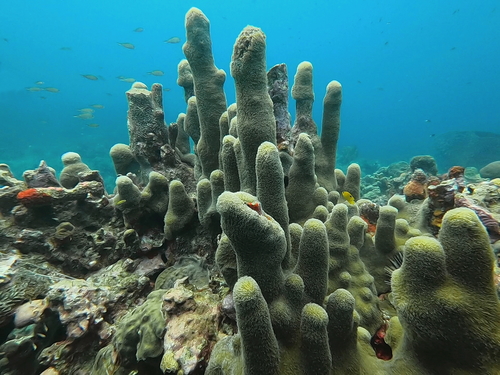
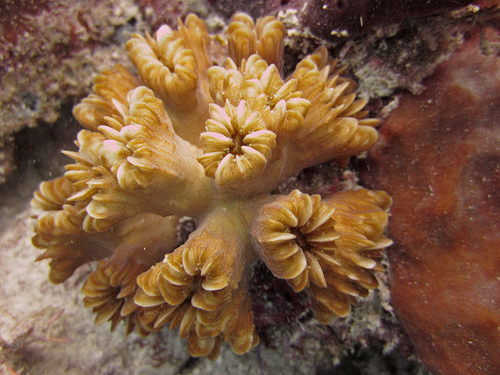
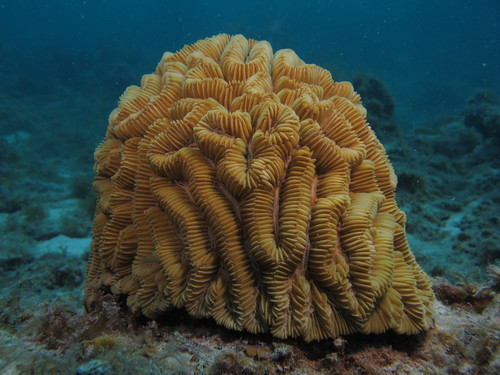
Meandrina meandrites typically forms massive hemispherical heads or grows into large flat plates, and can reach almost 1 metre (3 ft 3 in) in diameter. Some small colonies are cone-shaped and do not attach to the substrate; these resemble young colonies of rose coral (Manicina areolata), and can be found in sandy or muddy areas a moderate distance from reefs. Corallites – the calcareous cups secreted by this coral's polyps – are 1 to 2 cm (0.4 to 0.8 in) wide. The raised walls between corallites are made of fine but widely spaced transverse ridges called septa, and follow a meandering path across the coral's surface. A slight indentation runs along the crest of the walls where septa from adjacent corallites meet. The polyps of Meandrina meandrites are large, but only extend outward at night, when they cover and hide the coral's underlying skeleton. Meandrina meandrites is distributed in Bermuda, Florida, the Caribbean Sea, the Gulf of Mexico, and the Bahamas. It grows primarily on the seaward sides of reefs, and is also found on reef back slopes. Its preferred depth range is 8 to 30 metres (26 to 98 ft), but it can grow at any depth shallower than 80 metres (260 ft). This species tolerates habitats with high sedimentation and turbidity, and it is typically the most commonly encountered coral in the deeper portions of its range.