About Mauritia flexuosa L.f.
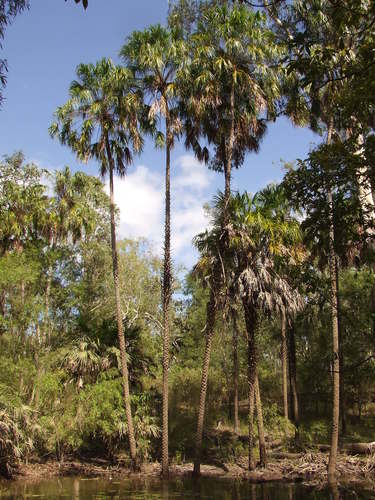
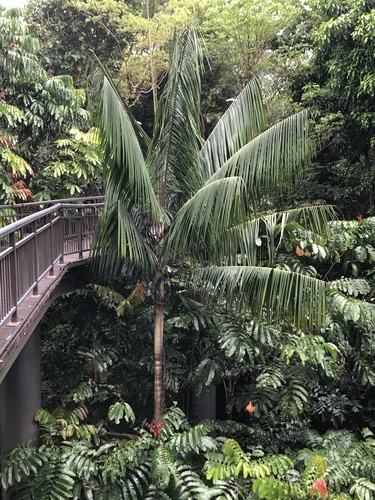
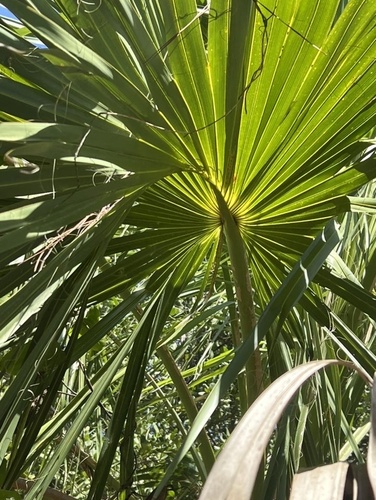
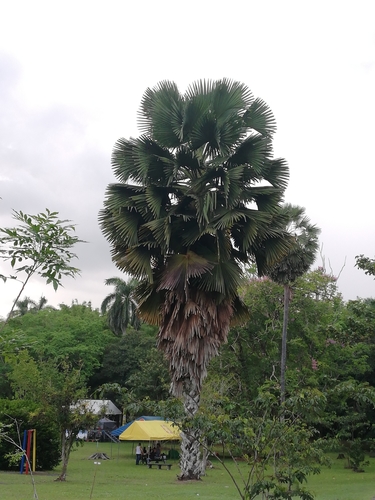
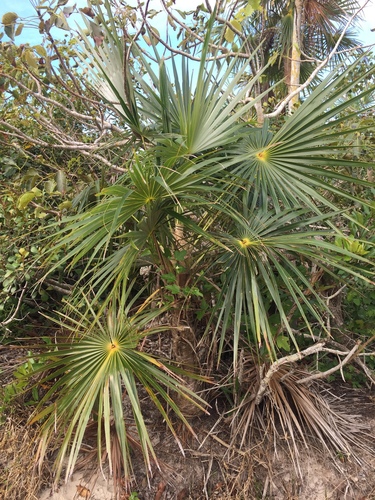
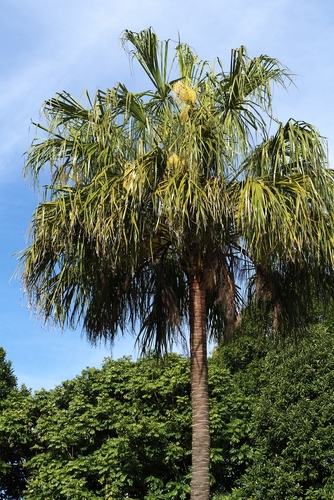
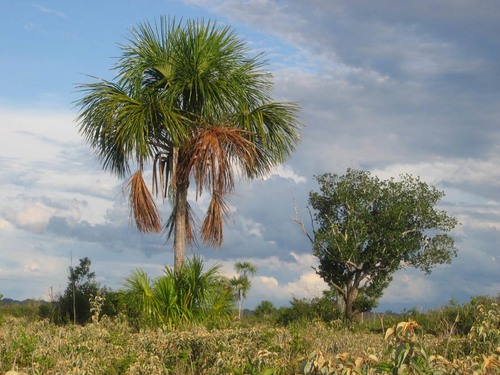
Mauritia flexuosa L.f., commonly known as moriche palm, ité palm, ita, buriti, muriti, miriti in Brazil, canangucho in Colombia, morete or acho in Ecuador, palma real in Bolivia, and aguaje in Peru, is a species of palm tree. It grows in and adjacent to swamps and other wet areas throughout tropical South America. Reports of maximum height vary: most sources note it can reach up to 35 m (115 ft), while Henderson and McBride report a maximum height of 50 m (164 ft). Its trunk can reach up to 70 cm (28 in) in diameter at breast height. Large leaves form a rounded crown on mature trees. This species produces pneumatophores that can develop up to 30 metres (98 ft) away from the trunk, indicating it has a very extensive root system. Yellowish flowers bloom from December to April. Fruit develops from December to June; it is chestnut-colored, covered in shiny scales, with yellow flesh surrounding a hard, oval nut. The tree propagates via floating seeds, which carry offspring away from the parent plant. Natural populations of this palm often reach very high densities. In the wild, Mauritia flexuosa occurs in Bolivia, Brazil, Colombia, Ecuador, French Guiana, Guyana, Peru, Suriname, Trinidad, and Venezuela. This palm is ecologically important to a wide range of animal species. Multiple bird species including the red-bellied macaw, sulphury flycatcher, and moriche oriole use it for nesting and as a food source. Tapirs, peccaries, fish, and monkeys rely on its fruit for food. In 1800, Alexander von Humboldt documented this tree and the unique ecosystem it supports while traveling through the Llanos region of Venezuela. He observed with astonishment how many organisms and ecological processes are connected to the existence of this single plant. Humboldt called the species the "tree of life" and effectively described it as a keystone species, despite the formal concept of a keystone species not being explicitly defined until 1969 by Robert T. Paine.