About Mauremys sinensis (Gray, 1834)
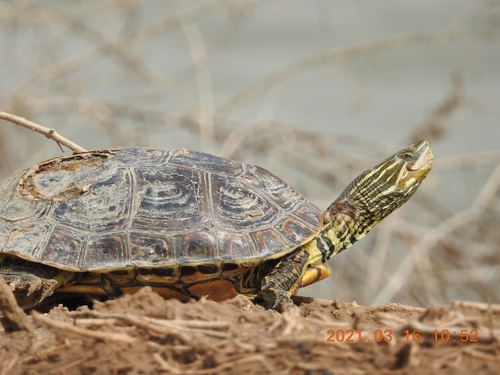
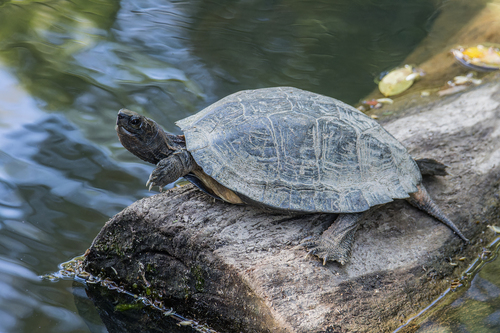
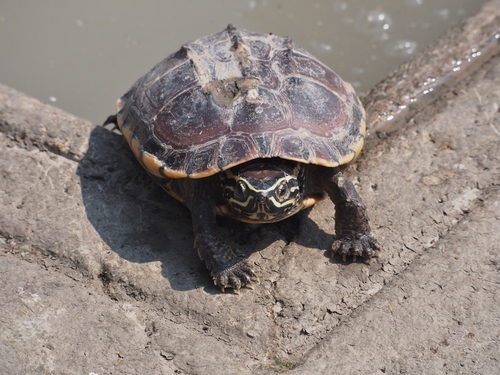
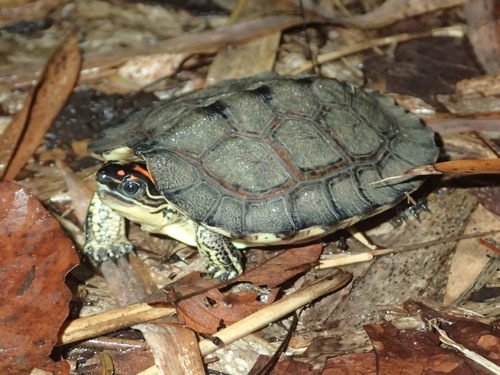
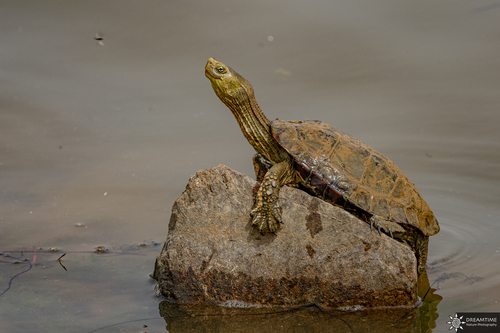
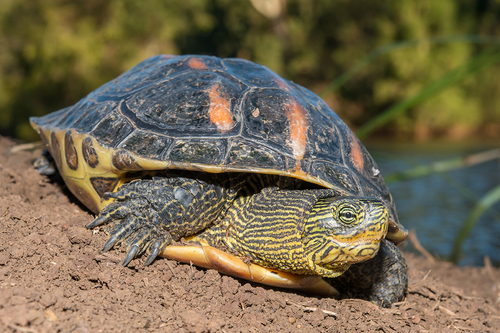
The Chinese stripe-necked turtle, with the scientific name Mauremys sinensis (Gray, 1834), has a green body. Juveniles have a grayish-green carapace with three distinctive ridges. As the turtle reaches adulthood, the carapace color fades to brown, and two of the three ridges gradually disappear. The plastron is ivory-colored with small black spots. Males have thicker, longer tails than females, and adult females grow larger than males: males reach a body length of around 20 cm, while females reach around 26 cm. This species feeds on small animals including small shrimp, small fish, aquatic snails, and mosquito larvae, as well as aquatic plants including duckweed and water spinach. Chinese stripe-necked turtles prefer lowland freshwater habitats such as ponds, canals, and slow-moving rivers. Climate is an important factor for successful invasion by this species, as it only becomes naturalized in areas with a suitable climate. The native distribution of the Chinese stripe-necked turtle covers China (Hainan, Guangdong, and Fujian provinces), Taiwan, and northern and central Vietnam. Hatchlings of this species have been recorded in the Torre Flavia wetland on the coast of central Italy, leading to the hypothesis that a local naturalized population exists here. After mating, female Chinese stripe-necked turtles lay clutches of 5 to 20 eggs, which hatch after approximately 60 days of incubation.